5.12
Watch clearances around the truck and load as you travel. Raise the
forks or attachment only to pick up or stack a load. Look out for obstruc-
tions, especially overhead.
Be aware that exaggerated tail swing, when turning while traveling
forward, is a characteristic of lift trucks that are steered by the rear
wheels. Accordingly, you need to become accustomed to tail swing
and always check the tail swing area of the counterweight to be sure
it is clear before you turn.
Always be concerned about the stability of your lift truck. When attach-
ments are used, extra care should be taken in securing, manipulating,
positioning, and transporting the load. Because attachments generally
add extra weight and complexity to the truck, operate trucks equipped
with attachments as partially-loaded trucks when not handling a load.
Picking Up and Moving Loads
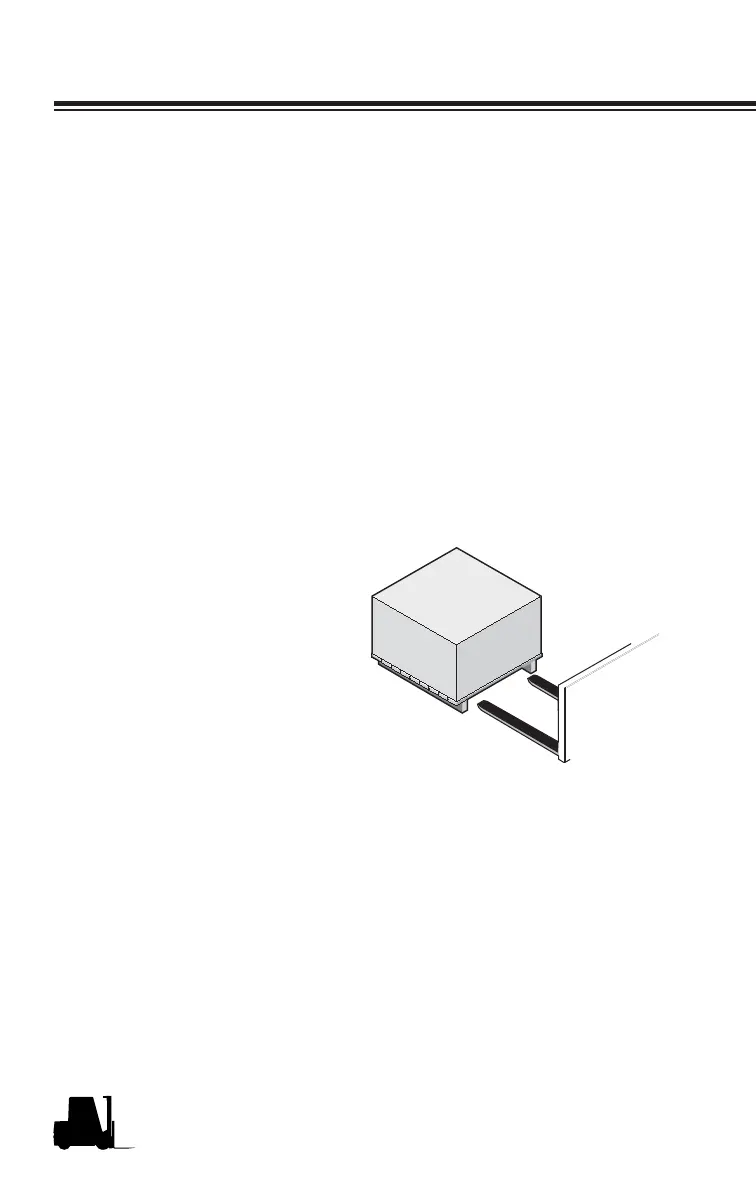
When picking up a load from the
ground, approach the load slowly
and carefully align the truck square
with the load. The forks should
be adjusted to fi t the load or pal-
let being handled and spread as
wide as possible to provide good
stability and balance. With the lift
and tilt controls, adjust the forks
to the correct height and angle for
freely engaging the load pallet.
Move forward until the forks are squarely and completely under the
load. Before lifting, be sure the load is centered and the forks are fully
under and supporting the load. Fork length should be at least 2/3 of
load length.
NOTICE
Be sure that the forks do not extend beyond the load, caus-
ing damage or tipping of other adjacent loads or materials
behind the load being moved.
718044
Picking Up and Moving Loads



 To Next Page