®
www.climacoolcorp.com
32
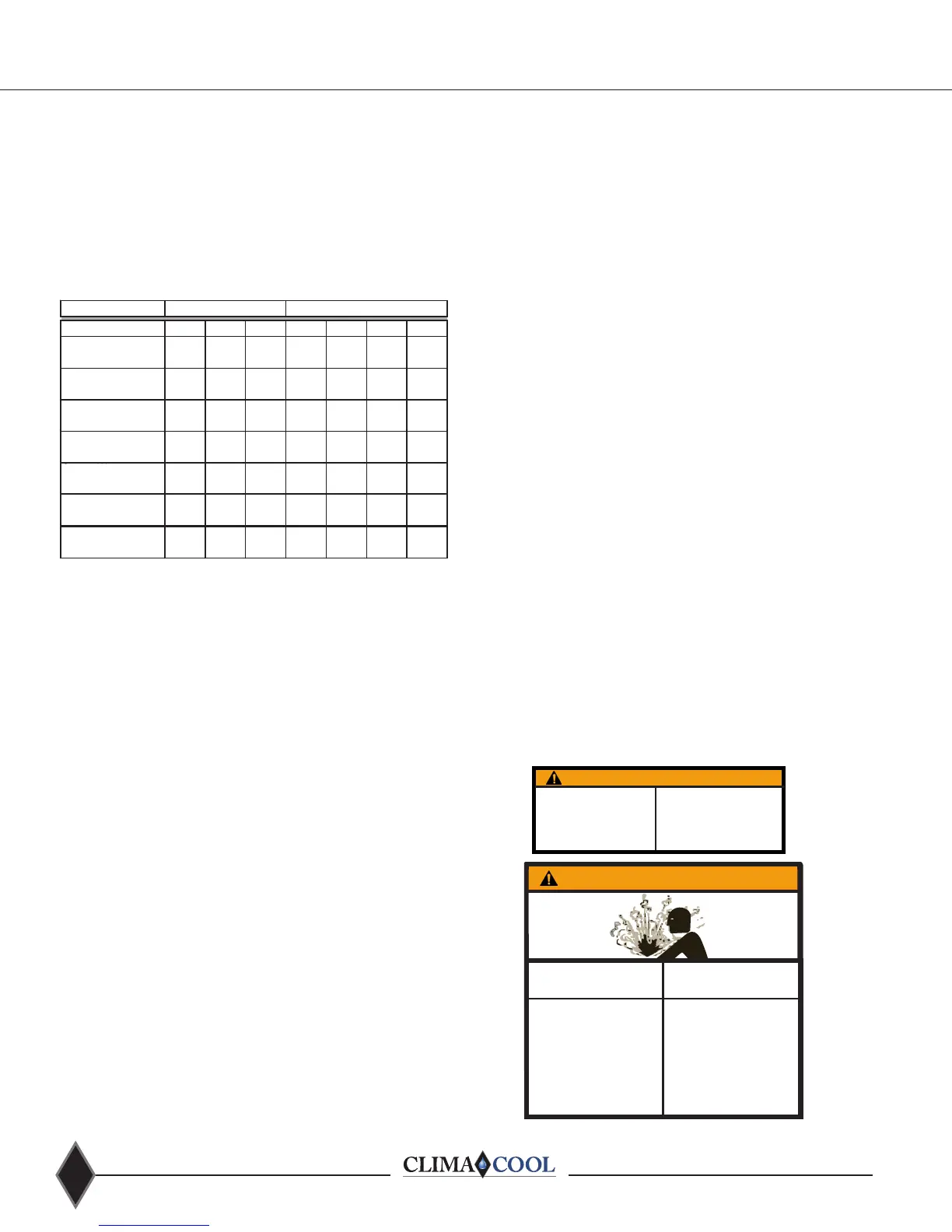
Pressure and Temperature Log
A log of temperatures and pressures should be taken
regularly. Periodically conduct a visual inspection of the
chiller to identify problems before they reach the point of
failure. As with any mechanical system, it is necessary to
the chiller.
Chiller Operation and Maintenance
WARNING/AVERTISSEMENT
WATER AND REFRIGERANT
SYSTEMS UNDER PRESSURE
• Isolate/Lockout source
and relieve pressure
BEFORE servicing
equipment.
• Failure to relieve pressure
may result in property
damage, serious bodily
injury or death!
EAU ET FRIGORIGÈNE
EQUIPEMENTS SOUS
PRESSION
• Isoler la source / de
verrouillage et de
soulager la pression
avant entretien de l’équi-
pement.
• Le défaut de soulager la
pression peut entraîner
des dommages matériels,
des blessures corporelles
graves ou la mort!
SUN MON TUE WED THU FRI SAT
Temperature
Temperature
Condenser Water
Entering Temperature
Leaving Temperature
Source Water
Entering Temperature
Source Water Leaving
Temperature
Chilled Water
Pressure Drop
Condenser Water
Pressure Drop
Source Water
Pressure Drop
Faults: Note By
Module Number
SUN MON TUE WED THU FRI SAT
Chilled Water Entering
Temperature
Chilled Water Leaving
Temperature
Condenser Water
Entering Temperature
Condenser Water
Leaving Temperature
Source Water
Entering Temperature
Source Water Leaving
Temperature
Pressure Drop
Pressure Drop
Source Water
Pressure Drop
Faults: Note By
Module Number
SUN MON TUE WED THU FRI SAT
Chilled Water Entering
Temperature
Chilled Water Leaving
Temperature
Condenser Water
Entering Temperature
Condenser Water
Leaving Temperature
Source Water
Entering Temperature
Source Water Leaving
Temperature
Chilled Water
Pressure Drop
Condenser Water
Pressure Drop
Source Water
Pressure Drop
Module Number
Maintaining a Daily Log
Daily
• A daily operational log should be kept.
• Perform visual inspection.
• Record entering and leaving chiller water and
condenser water temperatures and pressures.
• Properly document all data taken.
• Note any problems that may exist and immediately
plan for further investigation. If repair is
necessary, schedule for the earliest possible date.
Weekly
• Review daily log from previous week.
• Perform visual inspection.
• Properly document all data taken.
• Note any problems that may exist and immediately
plan for further investigation. If repair is necessary,
schedule for the earliest possible date.
Quarterly
• Check Master Control Panel operating parameters
and set points.
• Check temperature drop/rise on each individual
heat exchanger. *
• Check compressor oil level.
• Check compressor oil color.
evaporator and condenser heat exchangers.
• Properly document all data taken.
• Check all electrical connections for tightness.
compressors) heat exchanger is generally 10°F. If only
one compressor is running the temperature drop/rise
will be approximately 5°F. Some projects are designed to
have a higher or lower temperature drop on either the
evaporator or the condenser depending on application.
project for these values. If the temperature drop/rise
is greater than the design, your heat exchanger may
be cleaned.
Annual
suspected use only ClimaCool recommended
page 32).
• Remove and clean all waterside strainers.
• Manually operate all waterside isolation valves,
if provided, on each module.
• Check all electrical connections for tightness.
• Perform leak check on all refrigerant circuits.
• Check all header piping couplings for tightness.
• Check oil level and color on each compressor.
• Check and test all refrigerant safeties for
proper operation.
• Check all peripheral systems for proper operation.
• Check and test CoolLogic Control System.
• Verify set points, sensors and general control
• Properly document all data taken.
Very Hot Water!
L’eau Trés Chaude!
WARNING/AVERTISSEMENT


 To Next Page