3ConMet
2. Inspection (continued)
5. Check the lubricant condition.
Lubricant that is darkened,
milky, shows water in it or has
large metallic particles in it is
indicative of contamination
or a part failure and must
be replaced. Contaminated
lubricant may be an indication
of a leaking seal that should be
replaced.
- On oil lubricated hubs
equipped with a ll plug in
the hubcap or barrel of the
hub, place a magnet (or
inspect the magnetic ll plug)
in the lubricant and check
for signs of large metallic
particles picked up by the
magnet. On drive axles,
it is normal to nd a small
amount of very ne metallic
particles from the carrier
housing on the magnetic
ll plug. These particles
should be removed from the
magnet anytime the plug is
removed for inspection. If
larger particles or chunks
of metal are found, the hub
should be removed from the
spindle and the bearings and
other components should
be inspected for signs of
damage or excessive wear.
- In vehicles without a ll
plug in drive hubs inspect
the lubricant volume and
condition from the ll plug in
the axle carrier housing.
- For vehicles lubricated with
semi-uid grease, inspect
annually or every 100,000
miles. First, remove the
hubcap and inspect the
lubricant condition and
volume. Verify the lubricant
covers the ends of the
bearing rollers. If the lubricant
condition is good, add
lubricant through the ll plug
in the barrel of the hub to
cover the ends of the bearing
rollers. If the lubricant has a
dry and caked appearance,
remove the wheel end from
the vehicle and clean and
inspect all components.
Replace damaged or worn
components as necessary.
Rell hub with semi-uid
grease amount per chart on
page 42.
6. If regular scheduled
maintenance requires wheels/
axle to be lifted, perform steps
7 and 8.
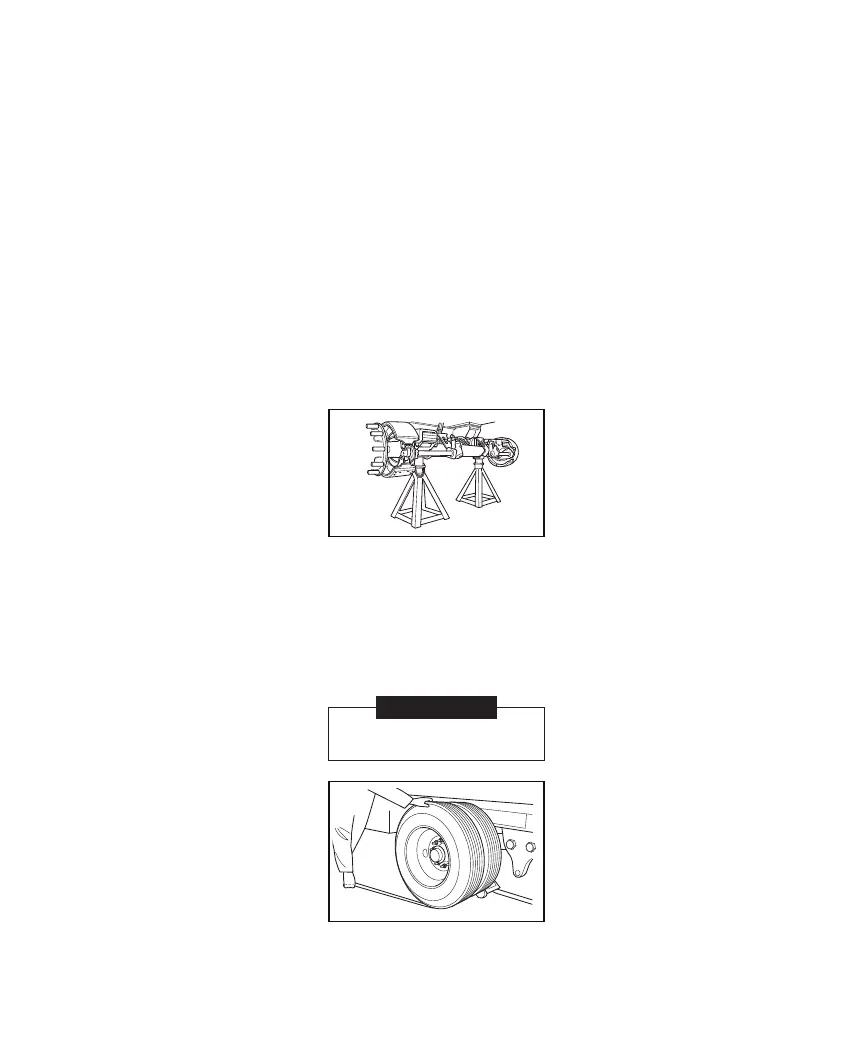
7. Lift and support the axle (see
gure 8). Rotate the wheel.
Check that the wheel rotates
freely and smoothly. Listen
and feel for any signs of rough
bearing operation or vibration.
1003159a
FIGURE 8
8. Place your hand on the top of
the tire and use a pry bar to lift
the bottom of the tire to check
for loose bearings or “chucking”
(see gure 9). If excess
movement or “chucking” is
found, wheel end service is
required.
Before you check for chucking, be sure to grease
the king pins.
NOTE
106878a
FIGURE 9
If any of the above conditions
are found, place the vehicle out
of service until the item can be
repaired.
Service Interval
Inspection results at driver pre-
trip, in-route and preventative
maintenance will indicate whether
further service is required.
When inspections indicate that
service is necessary, follow the
recommended service, inspection,
reassembly and reinstallation
instructions found in the following
sections of this manual.
Lubrication Analysis
Beyond the recommended visual
inspection and inspection with
a magnet, develop a lubrication
testing and replacement program.
This program will depend on
vehicle application, and lubrication
type. A lubricant supplier should
be consulted for additional
lubricant inspection and testing
recommendations.


 To Next Page