Gamma radiation
Gamma radiation is electromagnetic radiation that is released
from nuclear reactions. X-rays, radio waves and light are some
other examples of electromagnetic radiation. Gamma rays and
visible light have no electrical charge or mass and travel at
speed of light. Unlike visible light, gamma rays are very
energetic and can penetrate several inches of solid material.
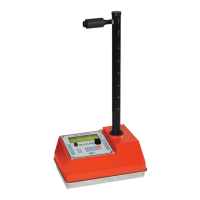
The gamma source in the Elite gauge in the process of
decaying to Ba-137 releases beta particles which will be
stopped by the capsule wall. The Cs-137 releases gamma ray
energy of 0.662 Mev. This gamma energy is used to determine
the density of the material.
Half-Life
An important characteristic of radioactive material is that its
activity decays with time. The half-life (T1/2) of a radioactive
material is the time it takes for half the atoms in any given mass
of the material to decay. Half-lives vary from fractions of a
second to millions of years. After ten half-lives only 1/1,000th of
the radioactivity remains.
The two sources in the MC-3 Elite model are Cesium-137 for
density measurements and Americium-241/Be for moisture
measurements. Cs-137 has a half-life of 30 years, while Am-241
has a half-life of 432.2 years.
To correct for decay, a standard count is taken each day of
use and the ratio of the measured count on a material to the
standard count, defined as Count Ratio, is obtained. The count
ratio automatically corrects for any decay in the source when
making a density measurement.


 To Next Page