Distance
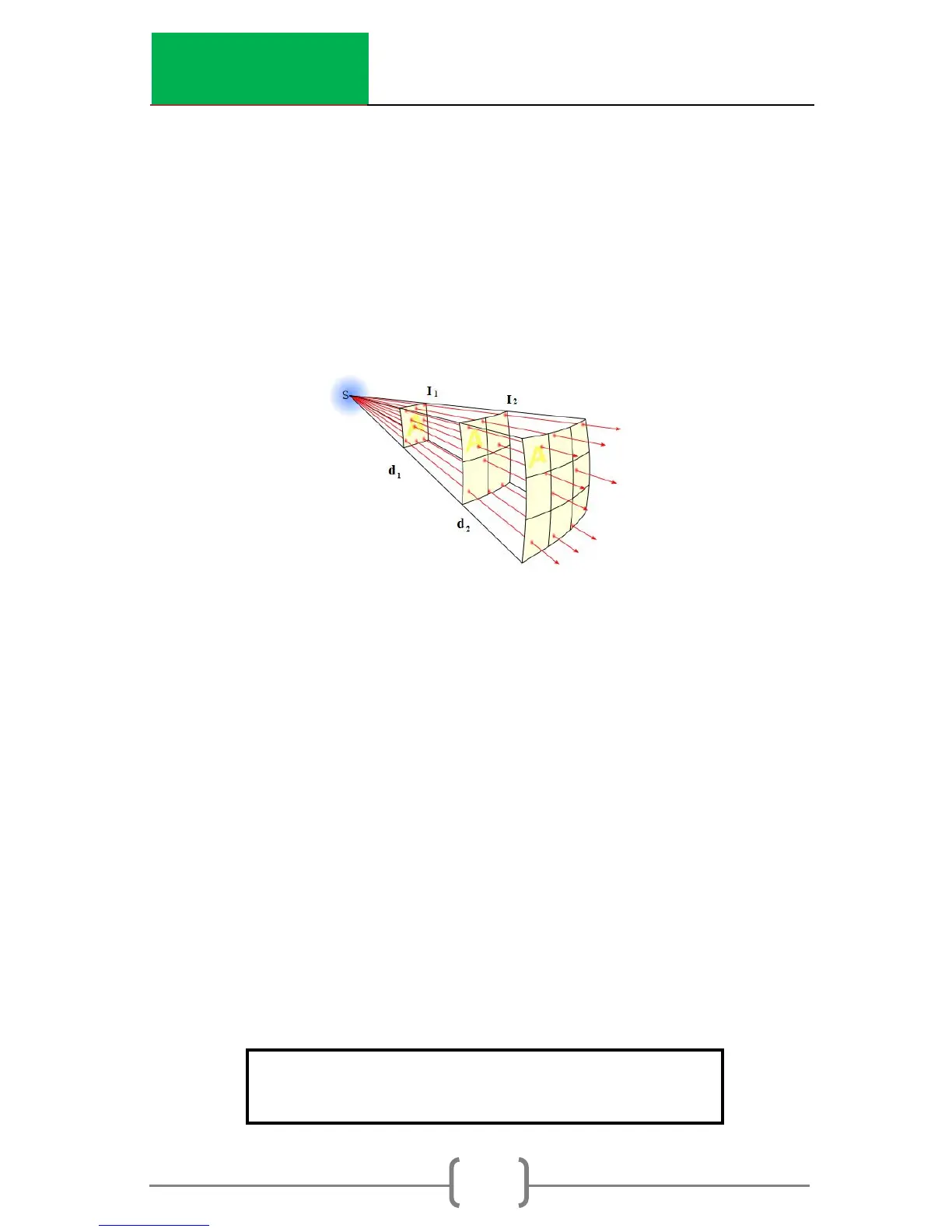
Distance is one of the most effective ways to reduce radiation
exposure. Radiation starts from a point source and as the
distance increases spreads out on a spherical surface. Its
intensity at any distance from the source depends upon the
square of the distance from the source.
I
1
x (D
1
)
2
= I
2
x (D
2
)
2
Doubling the distance will reduce the dose rate to one/fourth.
Cutting the distance in half will increase the dose rate by four
times.
Shielding
Shielding is an effective way to reduce radiation exposure.
Alpha particles can be stopped by a single sheet of paper;
however, gamma and neutron radiation cannot be completely
stopped by shielding, but can only be reduced. Polyethylene—
which contains a very high concentration of hydrogen—is
usually used for shielding neutrons. Lead or tungsten is used for
shielding gamma rays.


 To Next Page