
 Need help?
Do you have a question about the Cricket A600 and is the answer not in the manual?
Provides overview of manual content and usage instructions.
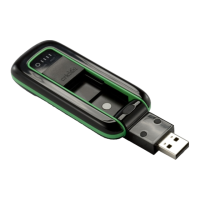
Introduces the Cricket A600 as a high-speed wireless device for internet connectivity.
Lists all items included in the Cricket A600 product package.
Explains the purpose and use of the Cricket A600 USB modem for internet access.
Details key features like power management, antenna design, and supported bands.
Provides guidelines on proper handling and care of the Cricket A600 modem.
Outlines the initial setup steps, including software installation.
Guides on installing the Cricket Broadband software, including warnings and notes.
Initiates the software installation process for Windows users.
Details the step-by-step process of the Windows installation wizard.
Guides on installing Cricket Broadband on Mac OS X systems.
Lists WWAN specific and other general features of the broadband service.
Explains how to launch and begin using the Cricket Broadband application.
Describes the main interface for managing broadband connections and signal strength.
Provides instructions on establishing an internet connection using the modem.
Explains the details displayed on the status bar regarding network connection.
Details how to use the data connection and explains dormancy behavior.
Explains the text messaging capabilities and how to send/receive messages.
Describes how text messages are displayed, managed, and viewed.
Provides detailed instructions on composing and sending text messages.
Configures startup options, splash window, and tray minimization for the application.
Sets up various WWAN connection parameters and web browser behavior.
Configures VPN options like None, Microsoft VPN, or External VPN.
Specifies how to choose and configure an external VPN client application.
Configures text message delivery options like window pop-ups and confirmations.
Manages software updates, allowing manual or automatic checks.
Introduces features not covered in basic sections, like the Status Bar.
Covers connection status, modem status, throughput, and elapsed time.
Describes the options available in the session menu for managing connections.
Details the Log and its customization options, and how to clear it.
Explains the activation process for the modem and its required information.
Includes finding and testing the WWAN device for troubleshooting.
Describes the function of the "Internet" and "Email" buttons to launch applications.
Covers accessing the Help menu and connection preferences.
Lists the minimum system specifications required for installation and use.
Explains the modem's indicators like power status LED and signal strength.
Provides instructions on safely removing the USB modem from the computer.
Details the process for safely ejecting hardware in Windows 2000.
Details the process for safely ejecting hardware in Windows XP.
Details the process for safely ejecting hardware in Windows Vista.
Provides instructions on physically removing the modem from the laptop.
Explains how to use the Y cable for improved performance or clearance.
Addresses issues like LED not lighting, software errors, no device, and connection failures.
Covers care for dryness, dust, temperature, and physical handling of the device.
Advises on proper cleaning methods, painting, and antenna usage for the device.
Details the terms and conditions of the one-year limited warranty for the product.
Lists conditions for warranty claims, proof of purchase, and exclusions.
Specifies conditions voiding warranty and the process for returning the product.
Details limitations on liability and expresses the 'as is' nature of the product.
Explains how state laws affect warranty and confirms this document as the complete agreement.
States compliance with government requirements for radiofrequency (RF) exposure.
Explains SAR, FCC limits, and provides the highest SAR value for the modem.
Safety precautions for use in potentially explosive environments.
Advises on potential RF interference with medical devices and usage restrictions.
Provides guidance on RF energy exposure and proper antenna usage.
Presents the FCC statement regarding radio frequency interference for the device.
Recommends measures to correct interference if it occurs, ensuring compliance.

 To Next Page
 General