EN - 61SE-DV64-HE
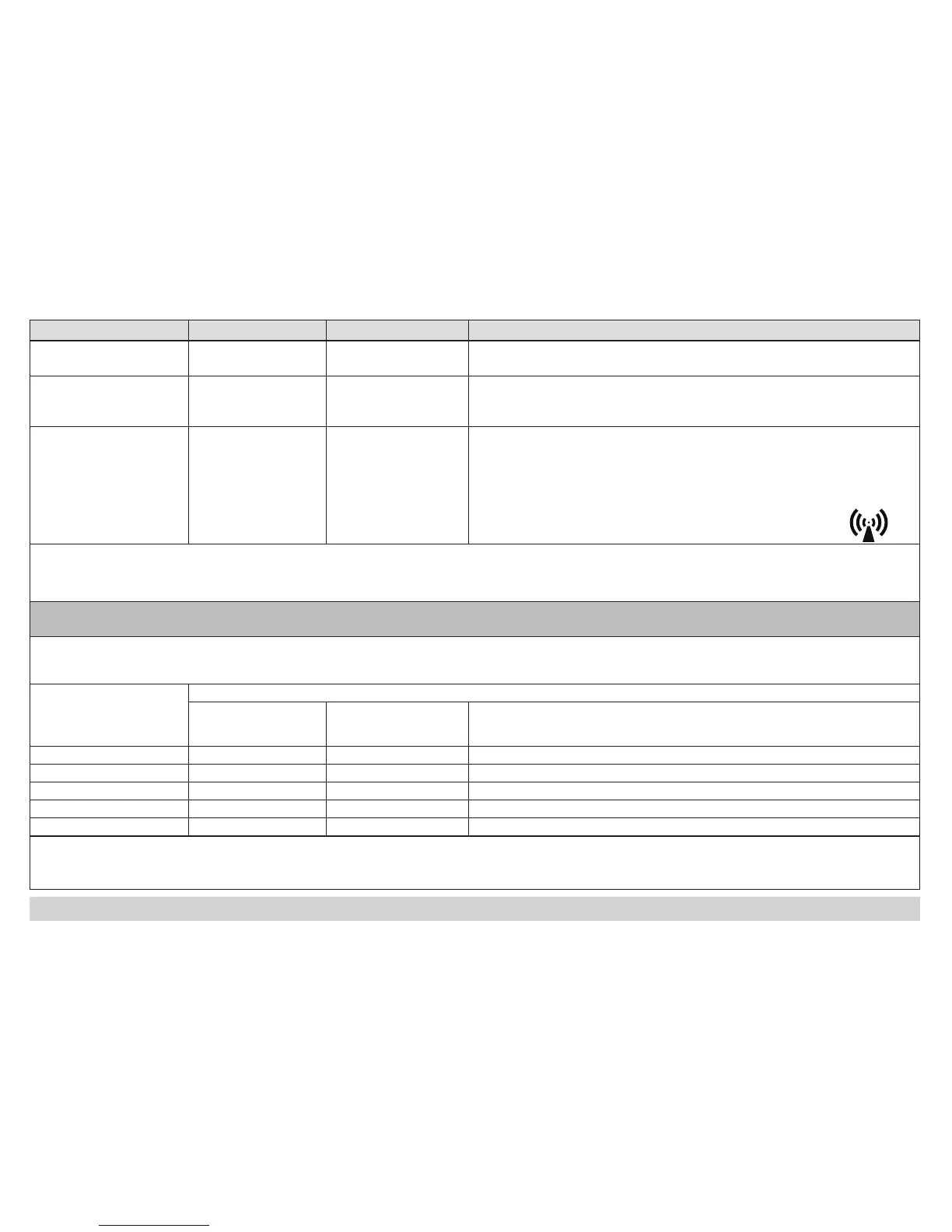
Immunity Test IEC 60601 Test Level Compliance Level Electromagnetic Environment - Guidance
Power Frequency 50/60Hz
Magnetic Field IEC 61000-4-8
30 A/m 30 A/m
Power frequency magnetic elds should be that of a typical location in a typical commercial
or hospital environment.
Conducted RF
IEC 61000-4-6
3 Vrms from
150 kHz to 80 MHz
V1 = 3 Vrms
6 Vrms on ISM & Amateur
Bands
Portable and mobile RF communications equipment should be separated from the device
by no less than the recommended separation distances calculated/listed below:
D=(0.4)√
P
Radiated RF
IEC 61000-4-3
10 V/m
80 MHz to 2.5 GHz
E1 = 10 V/m
D=(0.4)√
P
80 to 800 MHz
D=(0.7)√
P
800 MHz to 2.5 GHz
Where P is the maximum power rating in watts and D is the recommended separation
distance in meters.
Field strengths from xed transmitters, as determined by an electromagnetic
site survey, should be less than the compliance levels (V1 and E1).
Interference may occur in the vicinity of equipment marked with the following
symbol:
For transmitters rated at a maximum output power not listed above, the recommended separation distance D in meters (m) can be estimated using the equation applicable to the
frequency of the transmitter, where P is the maximum output power rating of the transmitter in watts (W) according to the transmitter manufacturer.
Note 1: At 80 MHz and 800 MHz, the separation distance for the higher frequency range applies.
Note 2: These guidelines may not apply in all situations. Electromagnetic propagation is affected by absorption and reection from structures, objects, and people.
Recommended Separation Distances Between Portable and Mobile RF Communications Equipment and this device. This
device and system are NOT Life-Supporting
This device is intended for use in the electromagnetic environment in which radiated disturbances are controlled. The customer or user of this device can help prevent electromagnetic
interference by maintaining a minimum distance between portable and mobile RF Communications Equipment and the device as recommended below, according to the maximum
output power of the communications equipment.
Rated maximum output
power of transmitter W
Separation distance according to frequency of transmitter M
150 kHz to 80 MHz
outside ISM bands
D=(0.4)√
P
80 to 800MHz
D=(0.4)√
P
800 MHz to 2.5 GHz
D=(0.7)√
P
0.01
0.04 0.04 0.07
0.1 0.11 0.11 0.22
1 0.35 0.35 0.70
10 1.1 1.1 2.2
100 3.5 3.5 7.0
For transmitters rated at a maximum output power not listed above, the recommended separation distance D in meters (m) can be estimated using the equation applicable to the frequency of the
transmitter, where P is the maximum output power rating of the transmitter in watts (W) according to the transmitter manufacturer.
Note 1: At 80 MHz and 800 MHz, the separation distance for the higher frequency range applies.
Note 2: These guidelines may not apply in all situations. Electromagnetic propagation is affected by absorption and reection from structures, objects, and people.



 To Next Page