OPERATING PRINCIPLES
25
4. OPERATING PRINCIPLES
4.1. Impedance Method
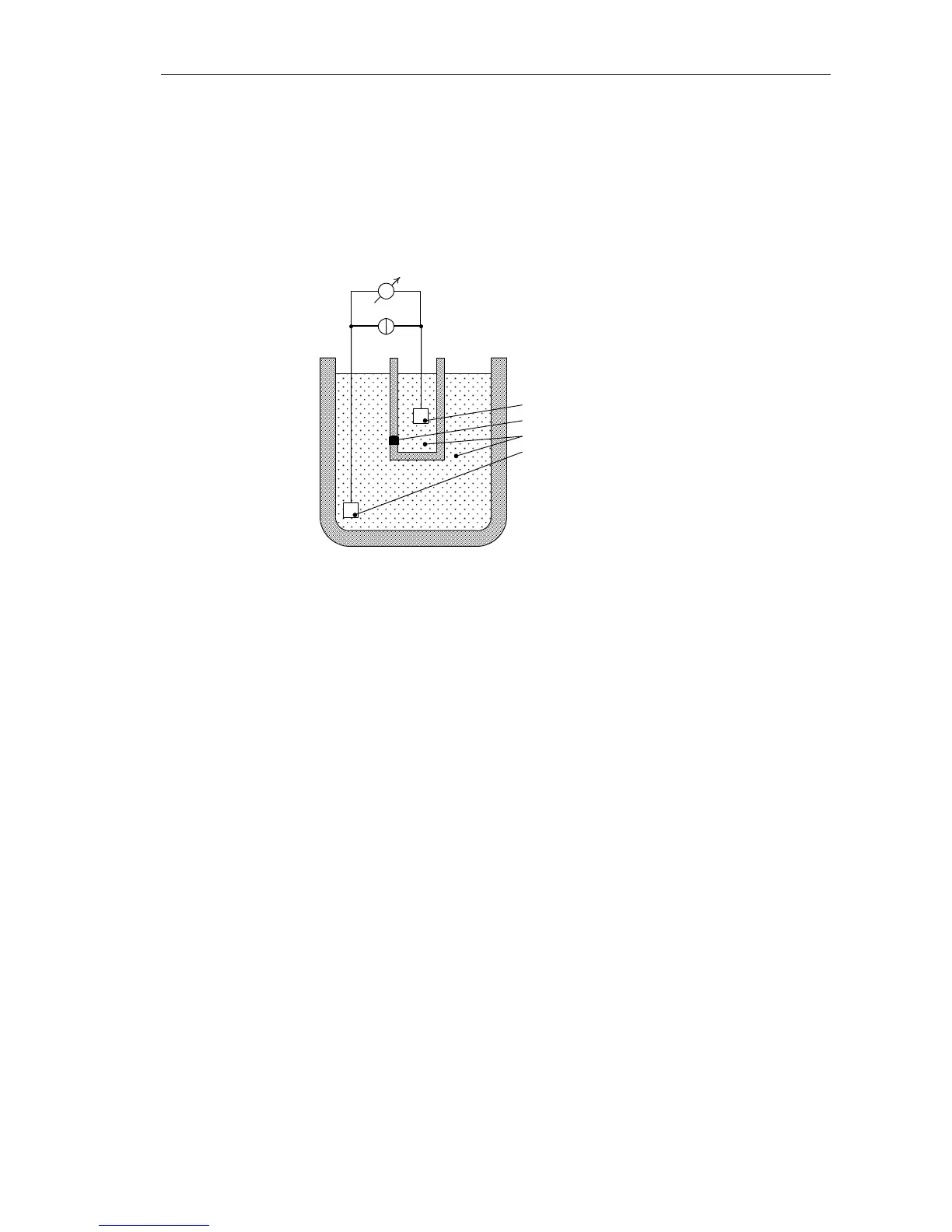
The impedance method (a.k.a. Coulter-method) counts and sizes cells by detecting
and measuring changes in electrical impedance when a particle in a conductive liquid
passes through a small aperture.
Figure 7. Impedance method
Each cell passing through the aperture – there is a constant DC current flowing
between the external and internal electrodes – causes some change in the
impedance of the conductive blood cell suspension.
These changes are recorded as increases in the voltage between the electrodes.
The number of pulses is proportional to the number of particles. The intensity of each
pulse is proportional to the volume of that particle. The volume distribution of the cells
are displayed on diagrams: WBC, RBC, and PLT histograms.
4.2. Principle of HGB Measurement
The lysed sample dilution can be measured by a photometric method. The reagent
lyses the red blood cells, which release hemoglobin. The chemical process forms a
stable form of methemoglobin. This is measured by a photometer on the chamber.
All Diatron branded reagents are cyanide free, and thus are environment-friendly.
However, some reagents from other manufacturers may contain cyanide. In that
case, cyanide and any other chemical composition formed using cyanide is
environmentally dangerous. Contact the reagent manufacturer for safety measures.
The manufacturer is not liable for any damage caused by using cyanide based
reagents with any of its analyzers.


 To Next Page