OP000506Safety
1-22
BEFORE STARTING ENGINE
Work Site Precautions
Before starting operations, thoroughly check the area for any
unusual conditions that could be dangerous.
Check the terrain and condition of the ground at the work
site, and determine the best and safest method of operation.
Make the ground surface as hard and horizontal as possible
before carrying out operations. If there is a lot of dust and
sand on the work site, spray water before starting
operations.
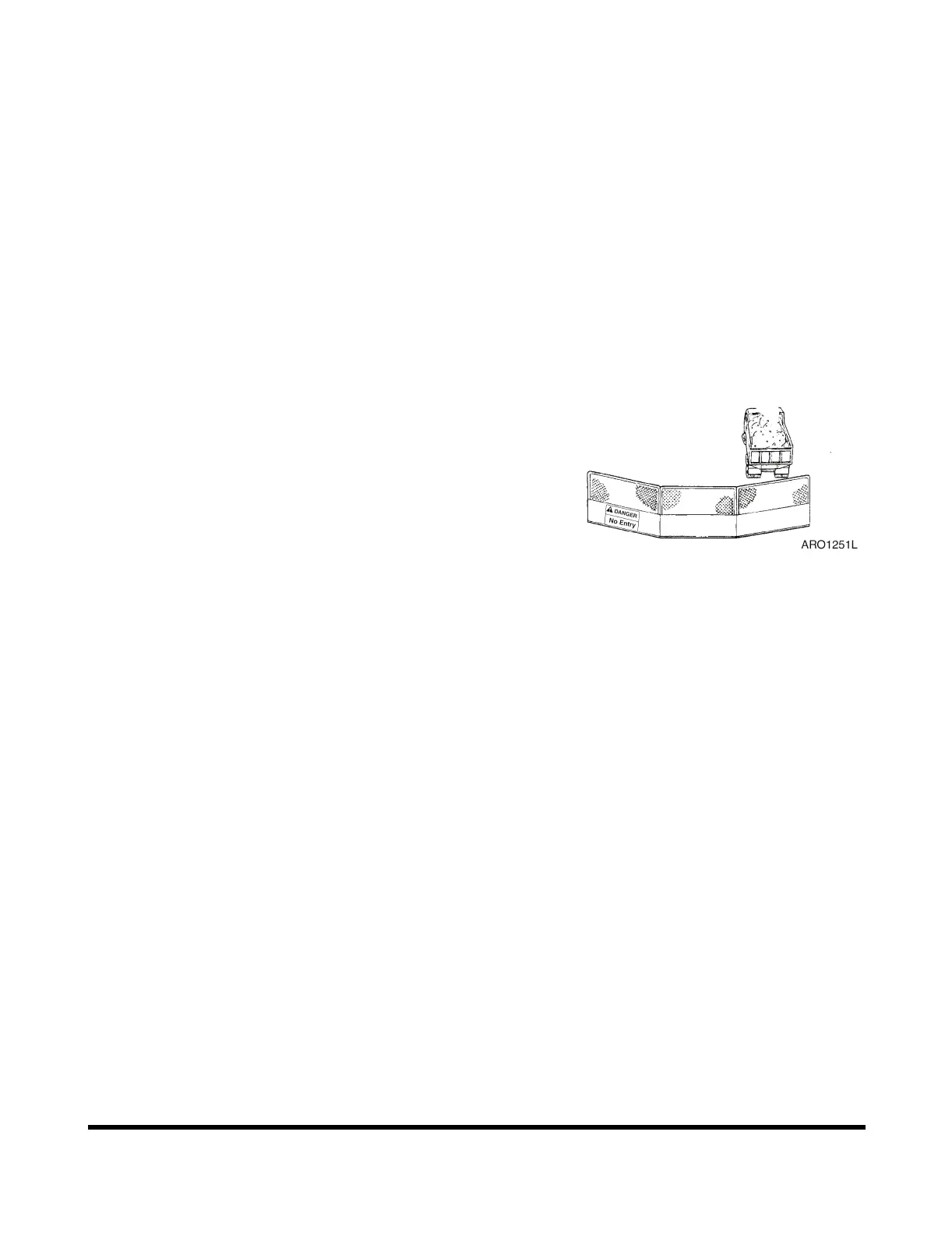
If you need to operate on a street, protect pedestrians and
cars by designating a person for work site traffic duty or by
erecting fences and posting "No Entry" signs around the
work site.
Erect fences, post "No Entry" signs, and take other steps to
prevent people from coming close to or entering the work
site. If people come close to a moving machine, they may
be hit or caught by the machine, and this may lead to
serious personal injury or death.
Water lines, gas lines, phone lines and high voltage
electrical lines may be buried under the work site. Contact
each utility and identify their locations. Be careful not to
damage or cut any of these lines.
Check the condition of the river bed, and the depth and flow
of the water before operating in water or crossing a river.
NEVER be in water that is in excess of the permissible
water depth. Refer to “Allowable Water Depth” on
page 3-22.
Any type of object in the vicinity of the boom could
represent a potential hazard, or cause the operator to react
suddenly and cause an accident. Use a spotter or signal
person working near bridges, phone lines, work site
scaffolds, or other obstructions.
Minimum levels of insurance coverage, work permits or
certification, physical barriers around the work site or
restricted hours of operation may be mandated by governing
authorities. There may also be regulations, guidelines,
standards or restrictions on equipment that may have to be
followed for local requirements. There may also be
regulations related to performing certain kinds of work. If
there is any question about whether your machine and work
site complies with the applicable standards and regulations
contact your local authorities and agencies.
Avoid entering soft ground. It will be difficult for the machine
to escape.
Figure 13


 To Next Page