23
6 - COMBUSTION AIR AND VENT PIPING
Note
Venting manufacturer's use a device to secure
single wall twin pipe polypropylene vent pieces
to each other. Proper application of the securing
mechanism is necessary for any use of twin pipe
polypropylene venting on exhaust or air intake.
Securing mechanism is for indoor use only and
should not be used in outdoor applications.
Follow venting manufacturer’s instructions for
applying the securing mechanism on twin pipe
polypropylene venting.
6.3 Denitions
1.
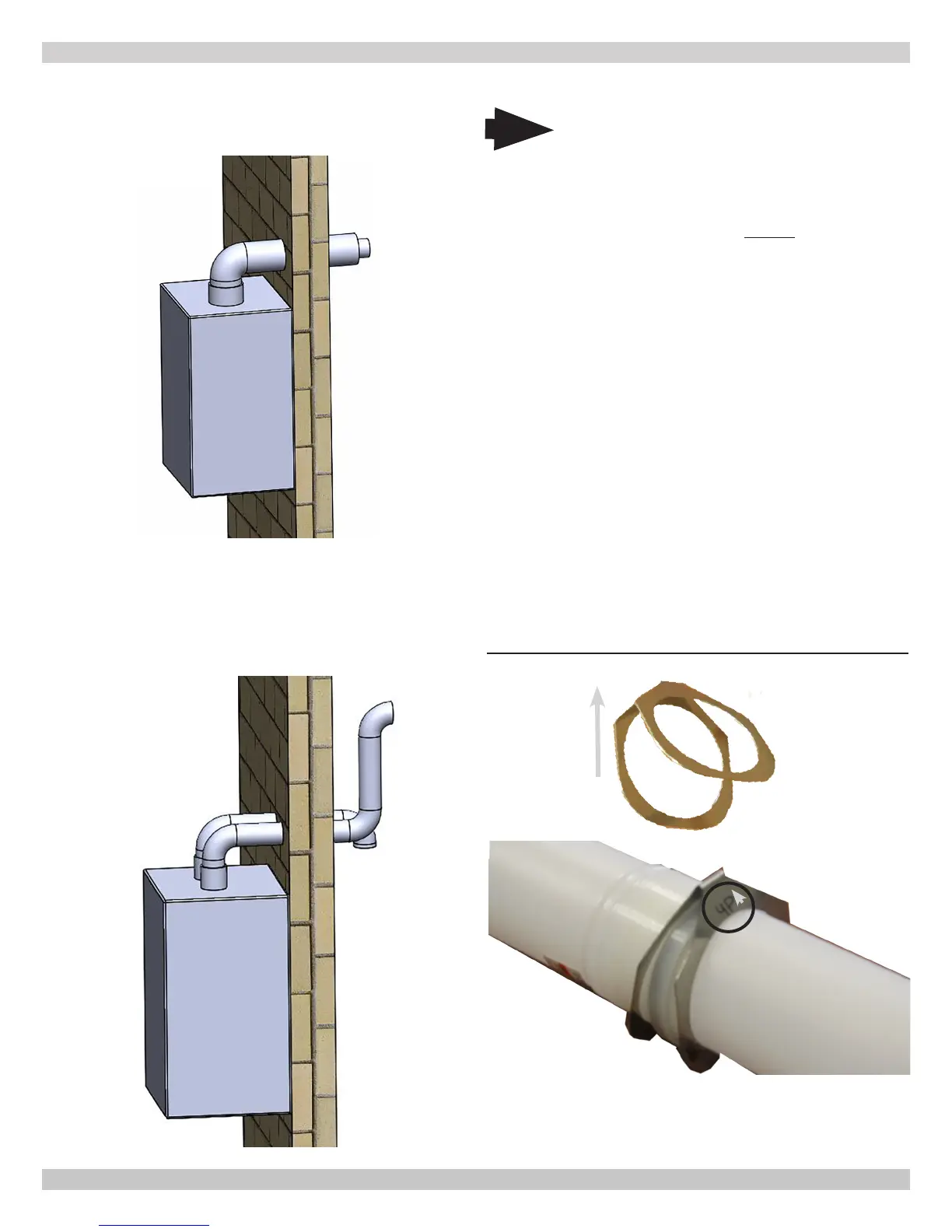
Coaxial piping – Figure 6-1 exhaust and air intake pipe
have a common axis.
Example for Natalini venting system.
(For other venting system suppliers see their instructions.)
1.
Place clamp so etched "UP" is facing up.
2.
Open clamp slightly by separating circular areas from each
other.
3.
Slide male end of rst pipe through open clamp so the
shoulder of the female end of the pipe stops the clamp
from sliding off the pipe.
4.
Insert the male end of of the second pipe into the clamp
on the "up" etched side. Force the two pipes together.
5.
Verify the two pipes are secure together with clamp in
place.
6.4 Securing Twin Pipe Polypropylene Venting
2.
Twin Pipe – Figure 6-2 Exhaust and intake air are
separate pipes, can be terminated using single wall
terminals from the vent manufacturer or eld built
conguration using elbows or tees.
Figure 6-3 - Natalini Clamp
UP
UP
UP
240011947 REV B, [03/31/2018]


 To Next Page