50
K800000000EJ 020650A0 170512
5.0 SENSORS
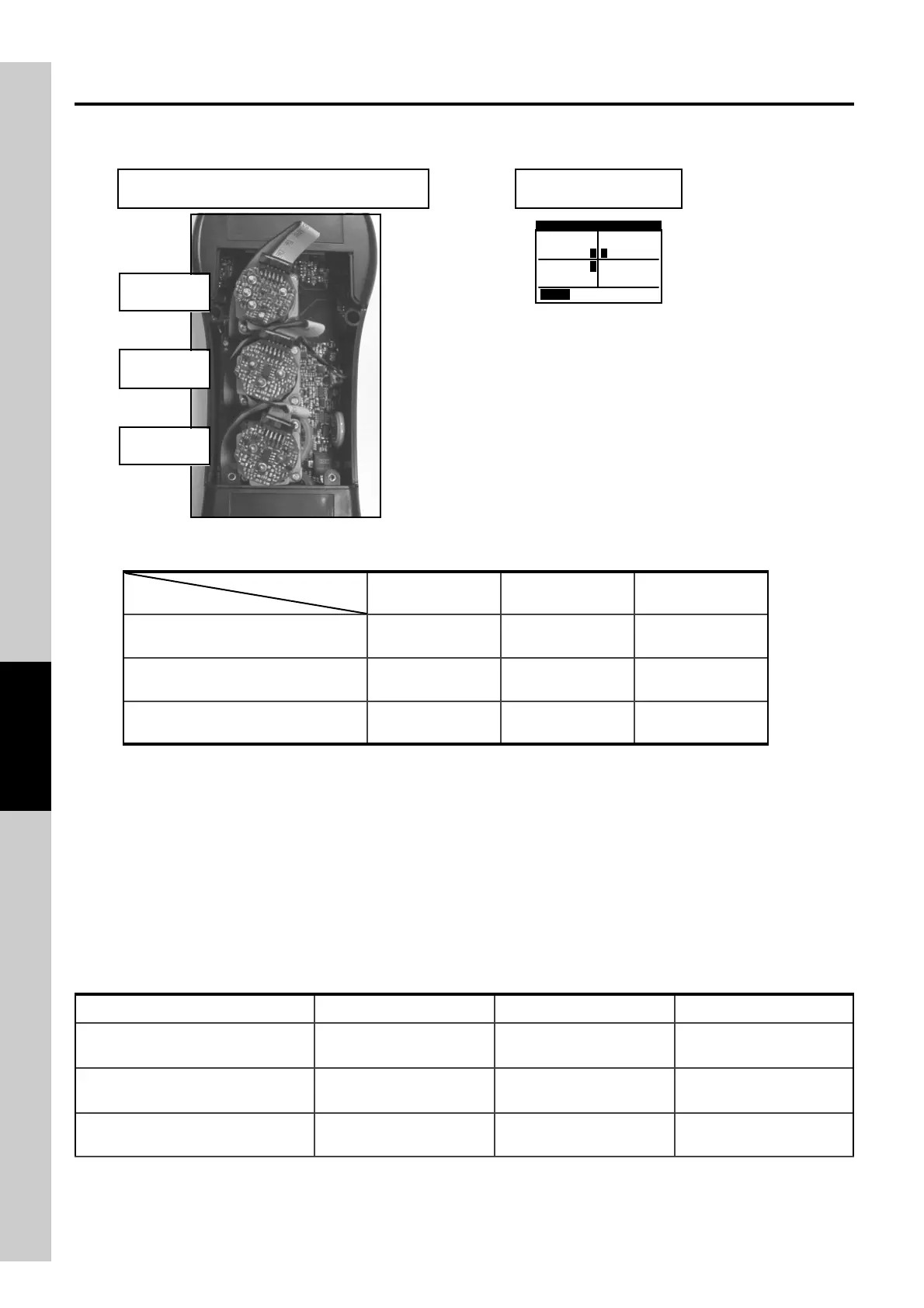
5.1 Sensors arrangement
5.2 Sensor types and relevant positioning
5.3 Gas sensor life
The gas sensors used in this instrument are electrochemical: thus, when the relative gas is detected, a chemical
reaction takes place inside them that generates an electrical current.
The electrical current acquired by the instrument is then converted into the corresponding gas concentration.
Sensor life is strongly related to the consumption of the reagents within.
Sensor characteristics diminish as the reagents are consumed and when these have been used up completely
the sensor must be replaced. The sensors must be recalibrated on a regular basis to assure measuring
accuracy: recalibration can only be performed by a qualified E Instruments Service Center. Chart 5.4 illustrates
the characteristics inherent to each sensor.
5.4 Gas sensors life table
Notes:
(1) UNI 10389-1 standard requires for the instrument calibration once per year to be performed in a laboratory
authorized to issue calibration certificates.
S1 S2 S3
FLEX-Sensor O
2
Cod. AAC SE15
FLEX-Sensor CO (Low H
2
)
Cod. AAC SE20
FLEX-Sensor NO
Cod. AAC SE10
CODE
POSITION
GRAPHICAL DISPLAY
OF ARRANGEMENT
SENSORS TYPE
QUIT
1 3
2
O
2
NO
CO
SENSORS ARRANGEMENT INSIDE
THE SENSORS COMPARTMENT
POSITION
S2
POSITION
S1
POSITION
S3
CODE MEASURED GAS AVERAGE LIFE RECALIBRATION
FLEX-Sensor O
2
Cod. AAC SE15
O
2
Oxygen
>24 months not necessary
FLEX-Sensor CO (Low H
2
)
Cod. AAC SE20
CO
Carbon Monoxi de
>36 months Yearly
(1)
FLEX-Sensor NO
Cod. AAC SE10
NO
Nitrogen Oxide
48 months Yearly
(1)


 To Next Page