Introduction
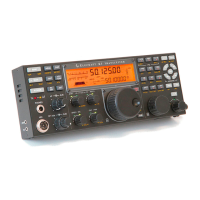
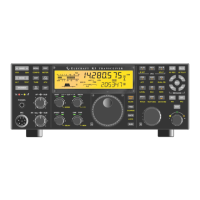
This comprehensive manual covers all the features
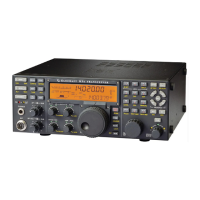
and capabilities of the Elecraft K3S transceiver. We
recommend that you begin with the Quick-Start
Guide (pg. 4). The Front Panel section (pg. 11)
and Rear Panel section (pg. 17) are for general
reference. Basic Operation (pg. 23) and Advanced
Operation (pg. 35) fill in the details.
Anytime you add new filters or options, refer to
Configuration (pg. 48) for setup instructions.
K3S Features
The K3S offers a number of advanced features to
enhance performance and versatility:
Receiver
• Up to five crystal roofing filters with
bandwidths as narrow as 200 Hz (pg. 25)
• Optional high-performance sub receiver,
also with up to five crystal filters, allows
true diversity receive (pg. 39)
• Second preamp for weak-signal work on
12-6 meters (pg. 25)
• Three attenuation settings (pg. 25)
• Narrow ham-band front-end filters, plus
wider band-pass filters for general-coverage
receive with KBPF3A option (pg. 47);
KPF3A also provides good sensitivity
down to 100 kHz, including 2200-m and
630-m bands (pg. 41)
DSP
• 32-bit I.F. DSP for advanced signal
processing, including full stereo and other
binaural effects (pg. 37)
• Passband tuning and programmable
DSP/crystal filter presets (pg. 14)
• 8-band transmit and receive EQ (graphic
equalization) (pg. 37)
• Versatile digital voice recorder (DVR)
option (pg. 31)
CW and Digital Modes
• Built-in digital-mode demodulation with
text displayed on the LCD (CW, RTTY,
PSK31/PSK63) (pg. 35)
• APF (audio peaking filter) for digging out
weak signals in CW mode (pg. 32)
• Internal CW-to-RTTY or CW-to-
PSK31/PSK63 encoding for casual digital-
mode QSOs without a computer (pg. 36)
• CW decoded and displayed as you send –
great for improving CW skills (pg. 35)
• Automatic CW/data signal spotting and
manual fine-tuning display (pg. 32)
User Interface
• Dual VFOs with independent modes,
bands, and filter settings (pg. 14)
• 100 memories with alphanumeric labels,
plus 4 quick-memories per band (pg. 16)
• Dedicated message play controls for use in
CW, data, and voice modes (pg. 32)
• Real-time clock/calendar with alarm and
automatic power-on (pg. 38)
• Utility displays show voltage, current drain,
RIT/XIT offset, front panel temperature,
PA heat sink temperature, etc. (pg. 38)
• Built-in menu help text (pg. 23)
• Programmable switch “macros” to
automate often-used operations (pg. 46)
• Custom “power-on banner” can be
displayed on power-up (set up using the K3
Utility program)
Connectivity
• Remote control via USB or RS232 (pg. 46)
• Line-level analog audio jacks, plus digital
audio via the USB port (pg. 17)
• Firmware upgrades via the Internet (pg. 47)
• Front and rear mic and headphone jacks
• Full stereo audio with two speaker outputs
Options and Accessories (pg. 47)
• ATU, sub receiver, digital voice recorder,
100-W PA, 2-meter module, external
reference lock, and other internal options
• Fully integrated P3 Panadapter, 500+ W
KPA500 amplifier and KAT500 automatic
antenna tuner, K3/0-Mini remote control
panel, and other accessories




 To Next Page