Parameter Initialization
Menu parameters are stored in non-volatile memory (EEPROM and/or FLASH). It is possible, though rare, for
parameters to become altered in such a way as to prevent the firmware from running correctly. If you suspect
this, you can reinitialize parameters to defaults, then restore a previously-saved configuration (or re-do all
configuration steps manually; no test equipment is required).
• If you have a computer available to do configuration save and restore, run the K3 Utility program, then use
the Configuration function to save your present firmware configuration.
• If you don’t have access to a computer, you should write down your menu parameter settings. The most
important are CONFIG:FLx BW and CONFIG:FLx FRQ (for each installed filter <x>, also tap SUB to
obtain sub receiver crystal filter settings, if applicable). You should also note the settings of all module
enables (all CONFIG menu entries starting with ‘K’, e.g. CONFIG:KAT3) . If you don’t record your crystal
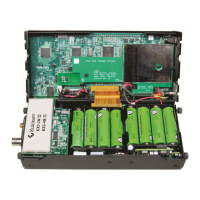
filter and module settings, you may have to remove the transceiver’s top cover (and sub receiver, if
installed) to verify which modules as well as crystal filters are installed, as well as the frequency offsets
noted on the crystal filters (depends on filter type).
• Turn the K3S OFF (using the POWER switch on the K3S, not the one on your power supply).
• While holding in the SHIFT/LO knob (which is also labeled NORM below), turn power ON by tapping the
POWER switch on the K3S. Let go of the SHIFT/LO knob after about 2 seconds. You should now see EE
INIT on the LCD.
• When EE INIT completes after a few seconds, you may see ERR PL1 or other error messages due to
initialization. Tap DISP to clear each message.
• If you have a computer, restore all parameters using the Configuration function of the K3 Utility program.
• If you don’t have a computer, manually re-enter all menu parameters that you wrote down, above, then re-
do firmware configuration and calibration (starting on pg. 48). You can omit any steps pertaining to
parameters you’ve already restored manually.
• See if the original problem has been resolved.




 To Next Page