9
C
Types of Installations
C1 Freestanding Installation
This appliance is only to be used in an above ground, open-air situation with natural ventilation and
without stagnant areas. Gas leakage and products of combustion must be rapidly dispersed by wind and
natural convection.
Certain materials or items, when placed under or near the appliance, will be subjected to radiant heat
and could become damaged.
In a freestanding installation, the appliance is installed in a completely unenclosed outdoor space with
the appliance in an open and naturally ventilated area. To install the fire in a partially enclosed area,
refer to sections C2 “Partially Enclosed Installations” on page 9 or C3 “Corner Installations” on
page 10.
C2 Partially Enclosed Installations
If the fire is installed in an outdoor but partially enclosed structure, the structure should comply with
one of the following suggestions. Rectangular areas have been used in the diagrams, however, the same
principles would apply to other shaped areas.
In the case of balconies, at least 20% of the total wall area must remain open and unrestricted.
NOTE: Installation instructions for a partially enclosed installation are Escea recommendations only and
may or may not comply with your local council standards. Please check with your local council for actual
building standards.
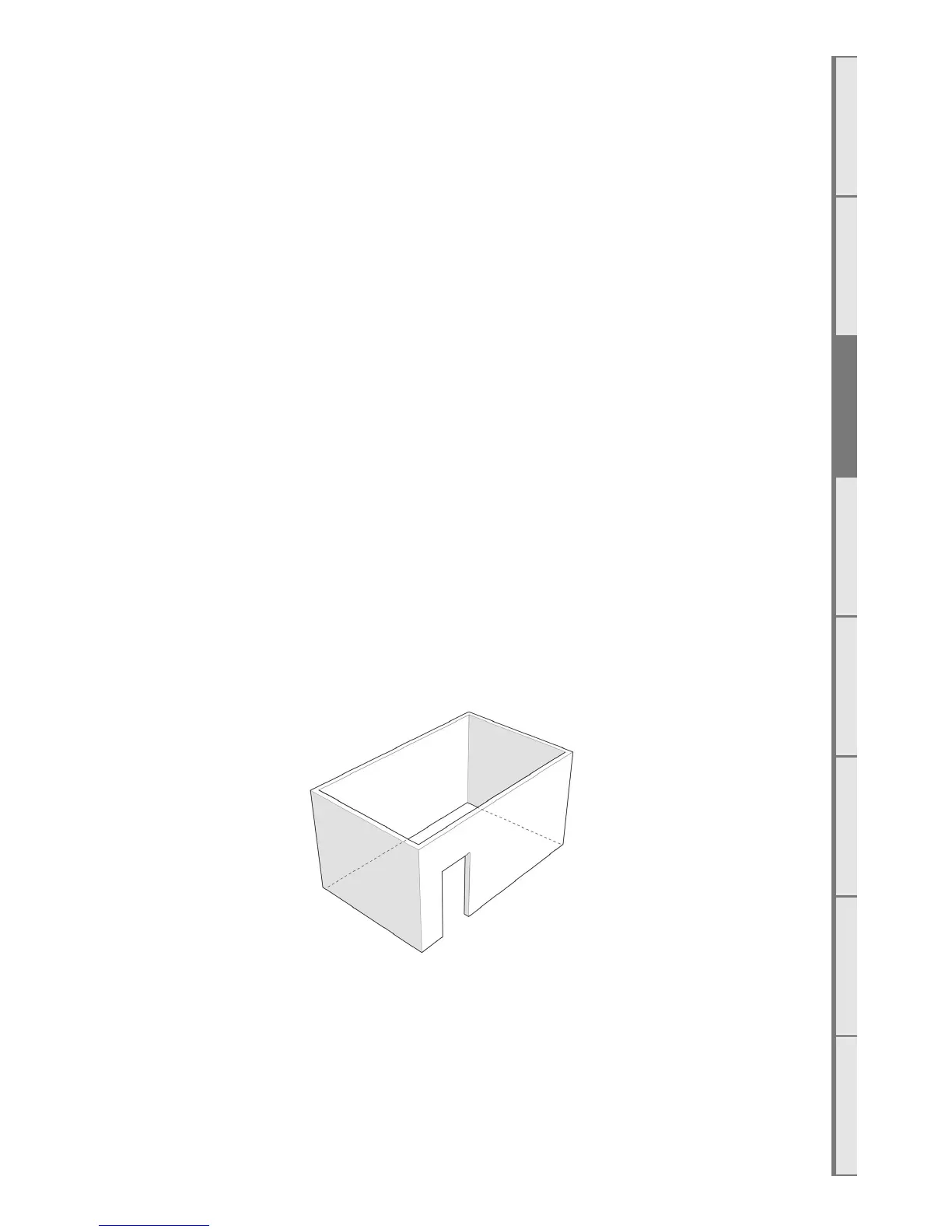
Option 1: An enclosure with walls on all sides, but at least one permanent opening at ground level and
no overhead cover.



 To Next Page