Page 6 of 53 ST-SM45g
SES 2000 Vac (LS3) AUTOCLAVE
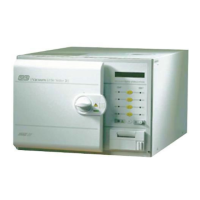
GENERAL (Fig. 1)
1 This Manual contains descriptive, maintenance
and spare parts information for the SES 2000 Vac (LS3)
autoclave units only.
2 The autoclave is a portable, electrically operated
steam unit designed for sterilizing wrapped, unwrapped
or porous loads. A drying phase is included in the porous
and wrapped cycles, which is optional for an unwrapped
cycle.
3 Wrapped loads must be packed single-wrapped
in L.M.G. SMITH BROTHERS “VIEW-PACK SELF
SEAL” pouches, and sterilized using the special pouch
rack accessory. The autoclave will also take cassettes
using a cassette carrier. A wire basket is provided for
sterilizing porous loads.
4 The autoclave operates automatically at the touch
of a single programme selector touch button, and has
eight sterilization programmes.
5 The autoclave is available with short or long
chambers and with or without an integral printer for
recording details of the sterilizing cycle. Details of the
printer are given in Appendix A page 50.
ASSOCIATED PUBLICATIONS
6 Separate installation and user instructions are
given in the SES 2000 Vac (LS3) autoclave ‘Instructions
for Use’, ST-IM62.
SERVICING
WARNING
When replacing parts during maintenance
procedures ONLY use parts supplied by
Eschmann Equipment or the safety of the
autoclave may be affected.
7 Ensure that routine servicing is carried out at
regular intervals by either Eschmann trained personnel
or suitably trained engineers only, otherwise the warranty
could be infringed.
8 Keep the Instructions for Use and this Service
Manual readily accessible for reference purposes prior
to and during operation, cleaning and servicing of the
autoclave.
CAUTION
In common with other systems containing static
water reservoirs, water used in this unit can become
contaminated over a period of time, or following an
aborted cycle, and should be treated as a potential
risk of infection.
Note: When sterilizing lubricated dental handpieces,
the reservoir water should be changed every week to
prevent contamination of the door seal, and other rubber
components, used in the pressure system.
9 Eschmann recommend filling the reservoir with
‘Sterile Water for Irrigation’. This is low in dissolved solids
and has a low microbial count. In the U.K. the Department
of Health recommend that ‘Sterile Water for Irrigation’ is
used in bench-top Autoclaves (NHS Estates document
HTM2031).
If ‘Sterile Water for Irrigation’ is not being used then
Eschmann strongly recommend the use of either distilled
water, deionized water, purified water or water treated
by the reverse osmosis process. These types of water
are low in dissolved solids and can help reduce the
effects of tap water detailed below.
DO NOT USE TAP WATER, this is high in dissolved
solids and can deposit lime scale, block filters and cause
damage to the pressure vessel.
Eschmann also recommend that the reservoir is drained,
allowed to dry and is refilled on a weekly basis, with the
type of water detailed in ‘a’ (or ‘b’) above. At every service
interval the reservoir must be removed, be thoroughly
cleaned and dried, and then refilled. This will reduce
the build-up of contaminants in the water that may cause
blocked filters and/or damage to the pressure vessel.
Your local Health Authority may suggest that you change
the reservoir water more frequently. Eschmann advise
you to follow your local Health Authority’s
recommendations (also see PART 3, MAINTENANCE
para. 5 to 7).
PART 1 INTRODUCTION
Fig. 1 SES 2000 Vac (LS3) autoclave
Part 1


 To Next Page