102
Ventilation System
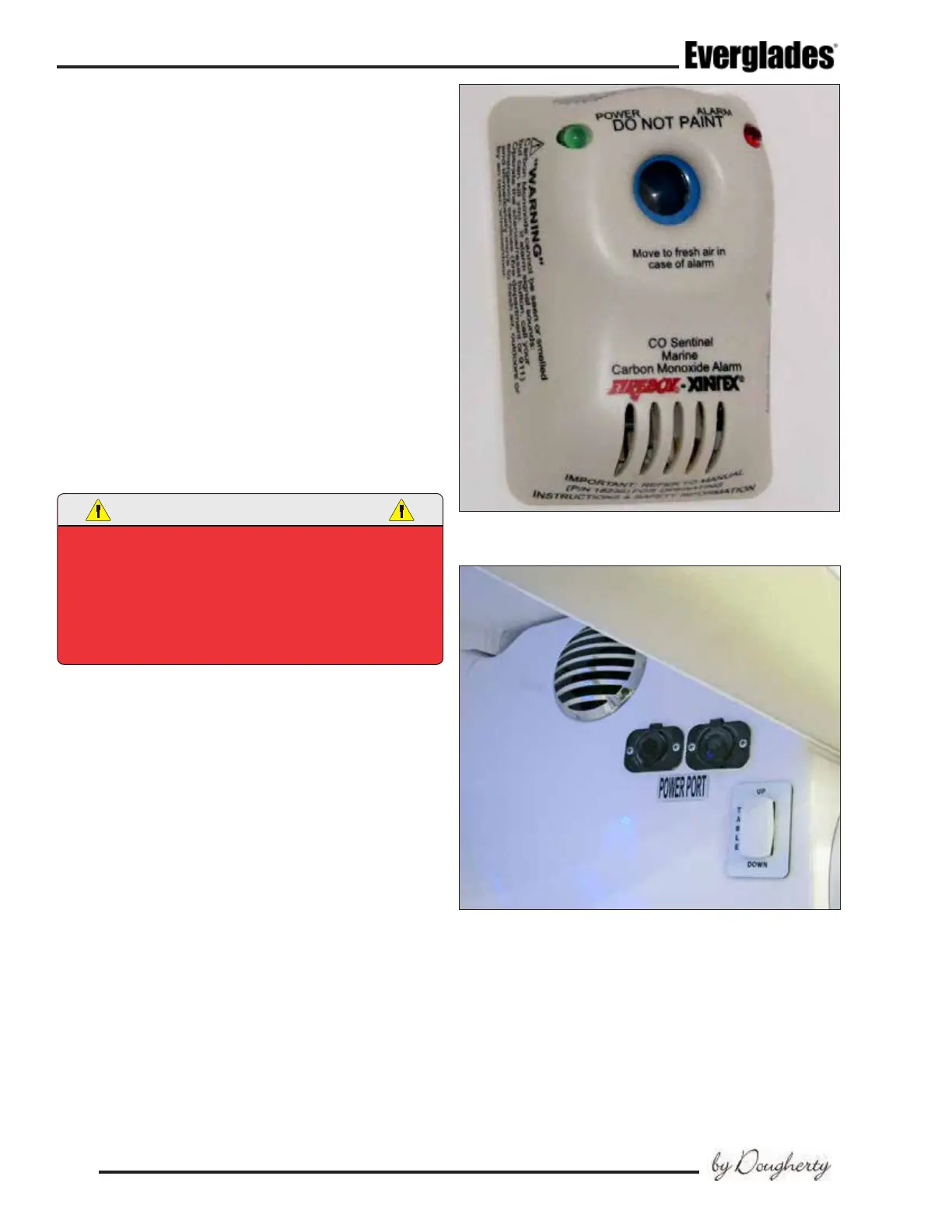
A carbon monoxide detector has been installed
in the cabin as standard equipment. While a
CO detector enhances your protection from CO
poisoning, it does not guarantee it will not occur.
Do not use the carbon monoxide detector as a
replacement for ordinary precautions or periodic
inspections of equipment. Never rely on alarm
systems to save your life, common sense is still
prudent and necessary. Remember, the operator
of the boat carries the ultimate responsibility to
make sure the boat is properly ventilated and the
passengers are not exposed to dangerous levels
of carbon monoxide. You should always be alert
to the symptoms and early warning signs of car-
bon monoxide poisoning. You should also read
the “Carbon Monoxide Monitoring System” in the
Safety Equipment chapter of this manual and
the owner’s manual supplied by the CO detector
manufacturer for operation instructions and ad-
ditional information regarding the hazards and
symptoms of carbon monoxide poisoning.
ACTIVATION OF THE CARBON MONOXIDE DETECTOR
INDICATES THE PRESENCE OF CARBON MONOXIDE (CO)
WHICH CAN BE FATAL. EVACUATE THE CABIN IMMEDIATELY.
DO A HEAD COUNT TO CHECK THAT ALL PERSONS ARE
ACCOUNTED FOR. DO NOT REENTER THE CABIN UNTIL
IT HAS BEEN AIRED OUT AND THE PROBLEM FOUND AND
CORRECTED.
Periodically test the carbon monoxide alarm per
the manufacturer’s instructions. Please refer to
the carbon monoxide alarm manual or contact the
manufacturer for more information on maintaining
and calibrating the alarm.
10.4 Bilge & Mechanical Systems
Compartment Ventilation
Ventilation to the bilge and mechanical systems
compartment is provided by vents located on each
side of the cockpit liner, below the gunnels and
aft of the cockpit near the engines. The venti-
lation system consists of intake ducts, exhaust
ducts and an exhaust blower. The system is de-
signed to meet or exceed the requirements of the
United States Coast Guard in effect at the time
of manufacture to remove fuel vapors and excess
heat from the mechanical systems compartment
while the generator is operating. Additionally, the
vents provide air circulation to reduce odors and
mildew. Make sure to keep these vents clear and
unobstructed.
Typical Free Air Vent Below Gunnels in Cockpit
Typical Carbon Monoxide Detector & Alarm
Free Air System
A ow of air that circulates in and out of the bilge
and mechanical systems compartment is provided
by the vents located on either side of the cockpit
and two vents just aft of the cockpit near the
engines. The pressure differential created at the
vents as the wind passes over the cockpit provides
adequate air movement while operating at or near
cruise speeds.


 To Next Page