141
Chapter 14:
SEASONAL MAINTENANCE
14.1 Storage & Lay-up
Before Hauling:
• Pump out the head holding tank. Flush the
holding tank using clean water, soap and a
deodorizer. Pump out the cleaning solution.
• The fuel tank should be left nearly full to
reduce condensation that can accumulate in
the tank. Allow enough room in each tank
for the fuel to expand without leaking out
the vents. Moisture from condensation in
the fuel tank can reach such concentrations
that it becomes heavy enough to settle out of
the fuel to the bottom of the tank. Since fuel
pickup tubes are located near the bottom of
the tank, this accumulated moisture can cause
the engines to run poorly or not at all after
extended storage.
Chemical changes also occur as the gasoline
ages that can cause deposits and varnish in
the fuel system as well as reduce the octane
rating of the fuel. Severely degraded fuel can
damage the engines and boat fuel tank and
lines. Therefore, if your boat is not being run
enough to require at least one full tank of
fresh fuel a month or during winter storage, a
fuel stabilizer should be added to the gasoline
to help protect the fuel system from these
problems. Operate the boat for at least 15
minutes after adding the stabilizer to allow
the treated fuel to reach the engines. Yamaha
recommends using Yamaha Fuel Conditioner
and Stabilizer for their engines.
Your dealer or the engine manufacturer
can provide additional information on fuel
degradation and fuel stabilizers recommended
for your engines. For more recommendations
for your specic area, check with your local
Everglades dealer.
• Drain water from the fresh water system.
• Consult the engine owner’s manual for detailed
information on preparing the engines for
storage.
Lifting
It is essential that care be used when lifting your
boat. Make sure the spreader bar at each sling is
at least as long as the distance across the widest
point of the boat that the sling will surround. Put
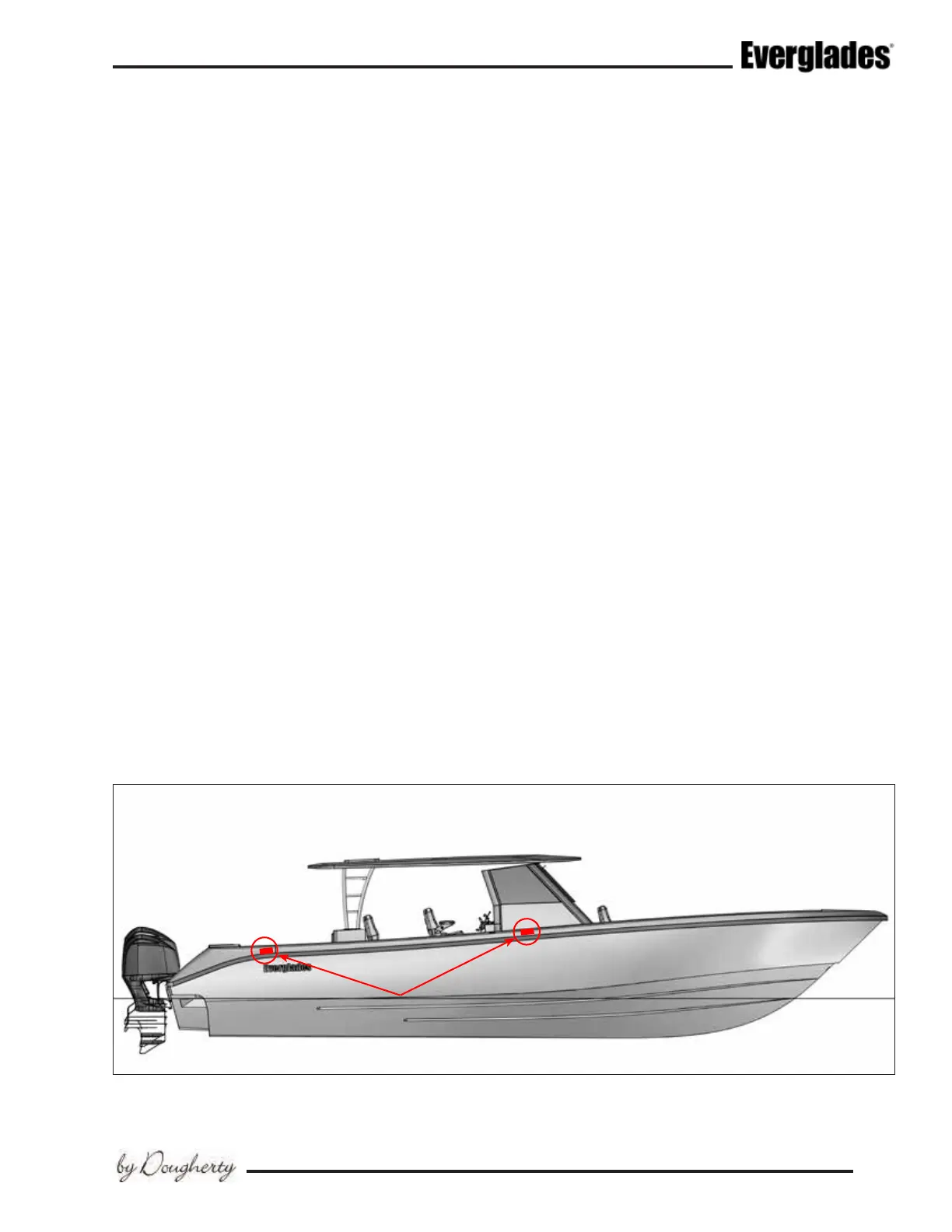
the slings in position. Sling labels on the gunnels
just above the rubrail identify the correct posi-
tion for the lifting slings. The fore and aft slings
should be tied together to prevent the slings from
sliding on the hull.
Sling Locations



 To Next Page