60
Fuel System
5.5 Fuel System Maintenance
Periodically inspect all primer bulbs, connections,
clamps and hoses for leakage, damage or deterio-
ration. Replace as necessary. Spray the valves,
tank fuel gauge sender and ground connections
with a metal protector.
Frequently inspect and lubricate the fuel ll cap
seal with Teon or silicone grease. The seal
prevents water from entering the fuel system
through the fuel ll cap and it should be immedi-
ately replaced if there is any sign of damage or
deterioration.
Contaminated fuel may cause serious damage
to your engine. Fuel lters must be checked for
corrosion and deterioration frequently. Fuel lters
must be changed at least once a season or more
frequently depending on the type of engine and
the quality of the fuel. Please refer to the engine
or fuel lter manufacturer’s instructions for infor-
mation on servicing and replacing the fuel lter.
The age of gasoline can effect engine performance.
Chemical changes occur as the gasoline ages that
can cause deposits and varnish in the fuel system
as well as reduce the octane rating of the fuel.
Severely degraded fuel can damage the engine
and boat fuel tank and lines. Therefore, if your
boat is not being run enough to require at least
one full tank of fresh fuel a month, a fuel stabilizer
should be added to the gasoline to protect the
fuel from degradation. Your dealer or the engine
manufacturer can provide additional information
on fuel degradation and fuel stabilizers recom-
mended for your engine.
In many states, most gasoline is blended with
ethanol alcohol. Ethanol is a strong solvent and
can absorb water during periods of storage. You
should refer to the engine operating manual for
information regarding alcohol blended fuels and
how it affects the operation of your marine engine.
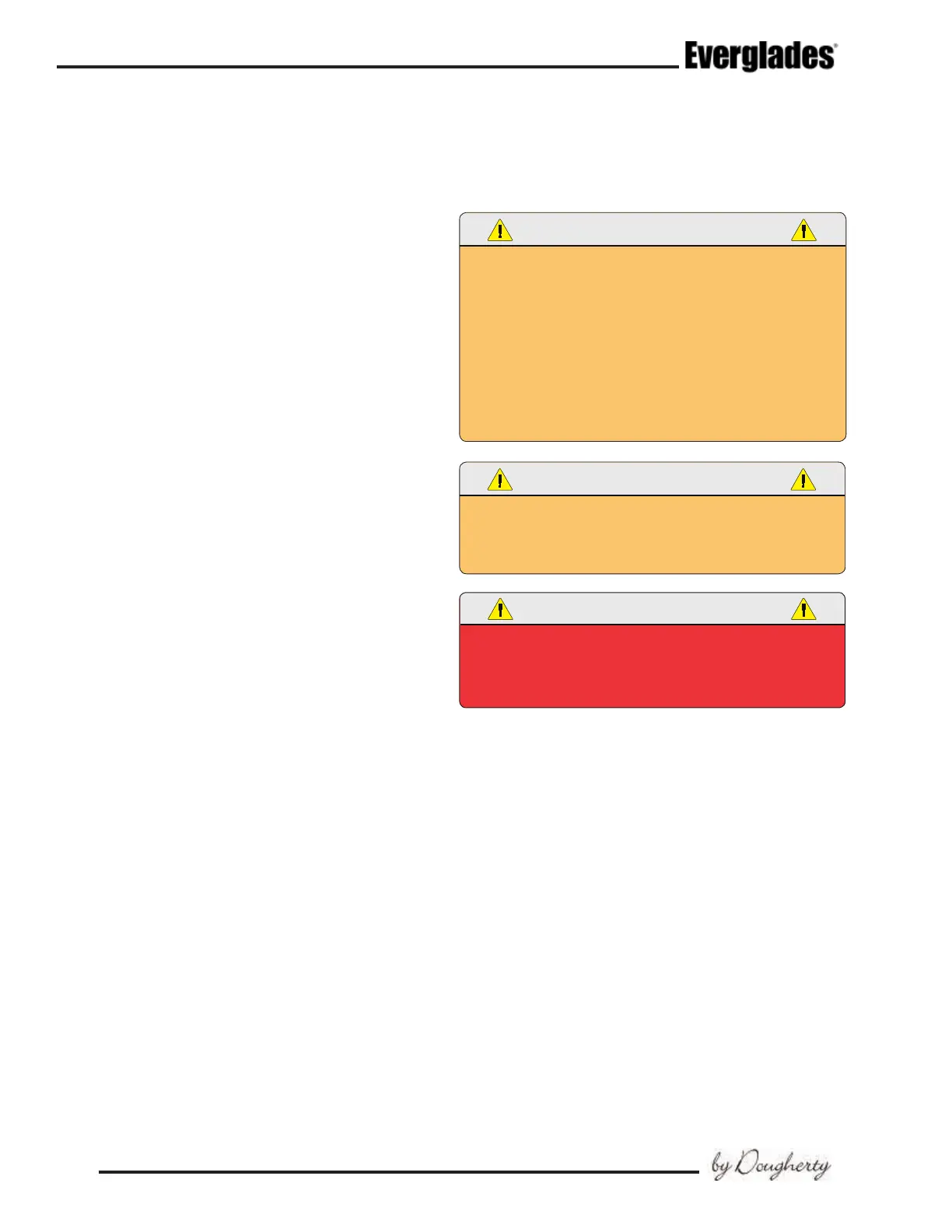
DO NOT DRAIN ANY FUEL INTO THE BILGE WHEN SERVICING
THE FUEL SYSTEM. THIS COULD LEAD TO A FIRE OR
EXPLOSION.
AFTER THE FILTER ELEMENTS HAVE BEEN CHANGED, PRIME
THE FUEL SYSTEM AND CHECK ALL FITTINGS FOR LEAKS
BEFORE AND AFTER STARTING THE ENGINES.
BEFORE STARTING THE ENGINES, ALWAYS OPEN ALL
HATCHES, WINDOWS AND DOORS TO COMPLETELY VENTILATE
THE BOAT AFTER SERVICING THE FUEL SYSTEM.
TO REDUCE THE POSSIBILITY OF A FIRE OR EXPLOSION,
MAKE SURE ALL ELECTRICAL SWITCHES ARE IN THE “OFF”
POSITION BEFORE SERVICING THE FUEL SYSTEM.
AVOID SERIOUS INJURY OR DEATH FROM FIRE OR EXPLOSION
RESULTING FROM LEAKING FUEL, INSPECT SYSTEM FOR
LEAKS AT LEAST ONCE A YEAR.



 To Next Page