28
Important information on use, care
and maintenance
The brake system
Brakes are used for adjusting one’s speed respective to the surrounding terrain
and traffic. In an emergency situation, the brakes must also bring the bike to a halt
as quickly as possible. Such emergency braking is also a study in physics. In the
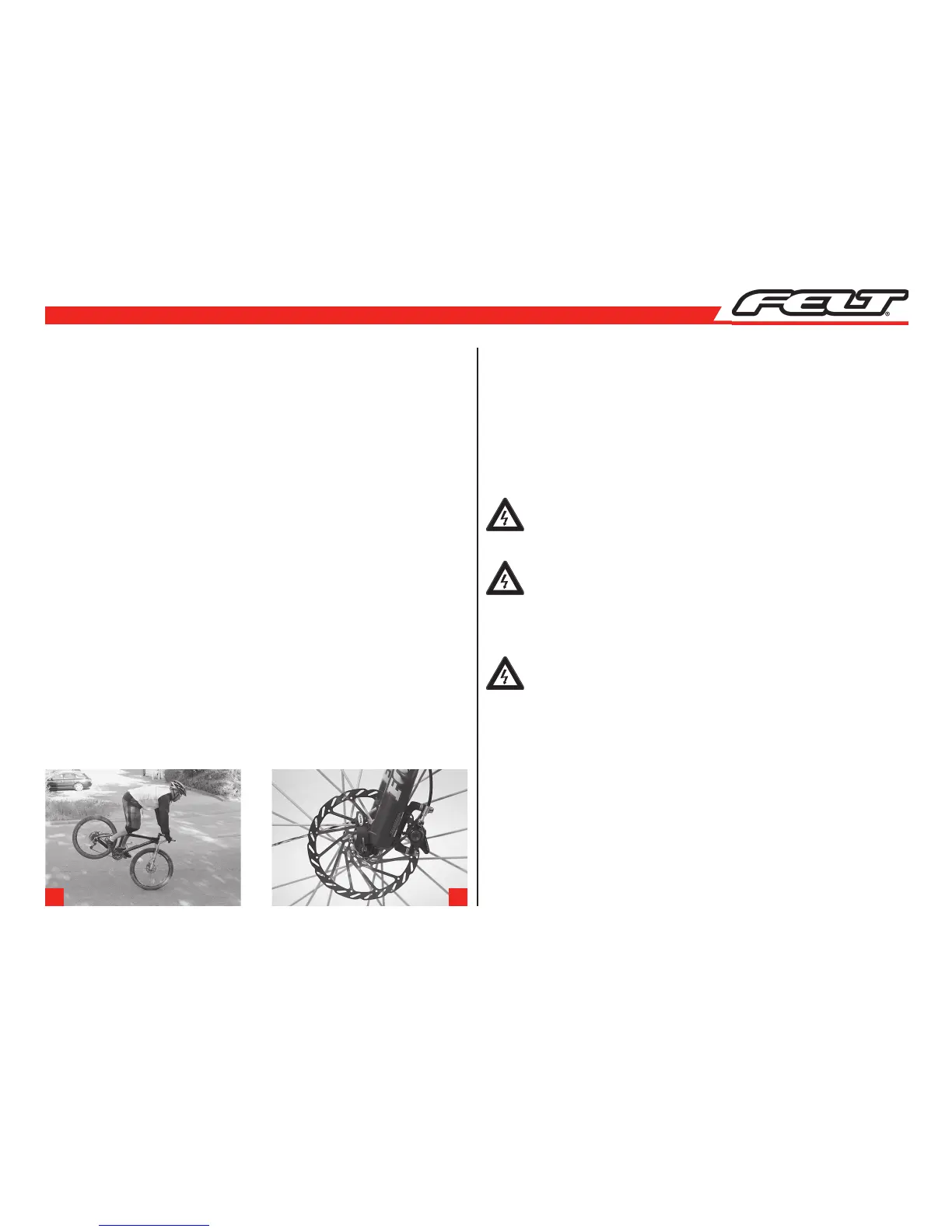
process of braking, the rider’s weight shifts forward, thus reducing the load on the
rear wheel (a). The rate of deceleration is primarily limited by the danger of skid-
ding and sliding, and secondly by the tires’ grip on the road. This problem becomes
particularly acute when riding downhill. If an emergency braking situation occurs,
you have to put your weight back as far as possible on the bike to help maintain
rear wheel grip.
Pull both brakes simultaneously. Bear in mind that, due to the weight transfer, the
front brakes can generate a far better braking effect.
With all types of rim brakes, long periods of constant braking or a slight and con-
tinuous contact of the brake pads with the rim, can overheat the system. This
can damage the tube or cause the tire to slip on the inner rim. This may lead to a
sudden loss of tire pressure during the ride, possibly resulting in an accident.
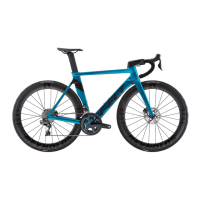
With disc (b), drum and roller brakes continuous braking or a constant light use of
the brake lead to overheating of the brake system. The consequence of this could
be a reduction of braking power or complete failure of the brake system and a
serious accident.
Practise your braking skills. Get used to braking hard and then releasing the brake
again, whenever the road surface and the situation allows for it. If you are unsure
about the braking action, stop and let the brake system cool down.
Apply the brakes carefully when riding on wet or slippery roads, as the
wheels can easily slip away. Generally reduce your speed when riding in
such conditions.
The assignment of brake lever to brake calliper can vary, e.g. right lever
acts on front brake, as is the case in some English speaking countries
and with multi-speed hubs. Please make yourself familiar with the lever-
to-brake assignment on your FELT bike, or ask your dealer to change the
brakes as you want them.
Be careful while getting used to the brakes. Practise emergency stops in
a place clear of traffic until you are comfortable controlling your bike. This
can save you from having accidents in road traffic.
Brakes – how they work and what to do about wear
Actuating the hand lever on the handlebars causes a brake pad to be pressed
against a brake surface, and the ensuing friction slows down the wheel. If water,
dirt or oil gets in contact with one of the braking surfaces, this changes the coef-
ficient of friction and deceleration is reduced. This is why brakes respond with
a slight delay and less powerfully in wet weather. This applies above all to rim
brakes.
In order to maintain their effectiveness, brakes need to be checked and readjusted
regularly. If in any doubt contact your FELT dealer.
a b


 To Next Page