53
Repairing punctures
Tire punctures can happen to any cyclist. Flat tires are by far the most common
mishap during cycling.
As long as you have the necessary tools for changing tires and tubes and a spare
tube or a repair kit, this need not be the end of your cycle ride. For bikes with quick-
releases all you need in addition are two tire levers and a pump.
Dismounting wheels
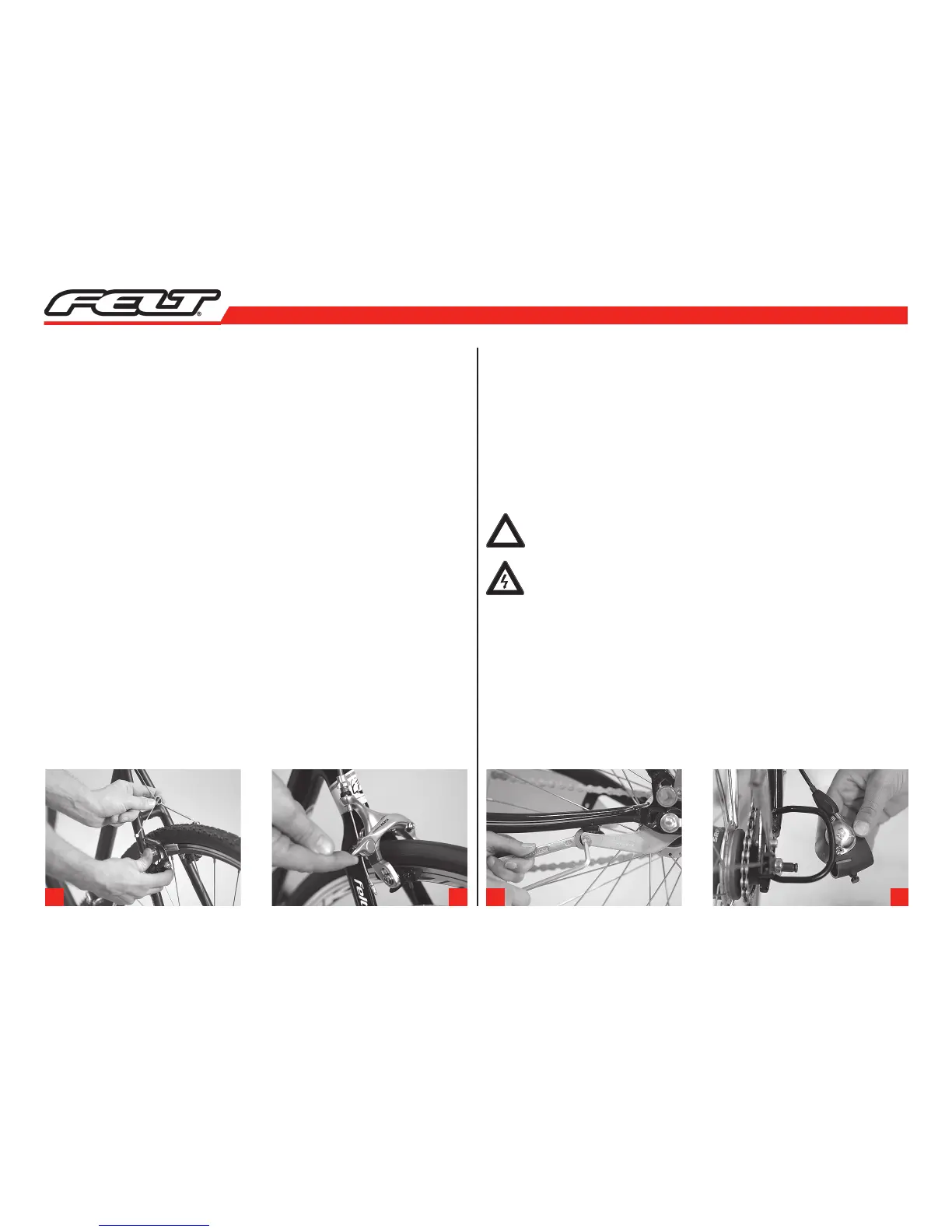
If your bike has cantilever or V-brakes (a), you first have to disengage the brake
cable from the brake arm. To do this, grip the brake with one hand and press the
brake pads and arms together. In this position, it should be easy to disengage the
usually barrel-shaped nipple (with cantilever brakes) or, in the case of V-brakes, the
outer cable and guide pipe.
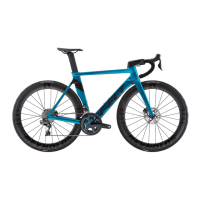
With road bike brakes (b) (Shimano & SRAM), first of all open the quick-release
on the brake calliper or shift the pin in the combined gear-and-brake-lever mount
on the handlebars (Campagnolo).
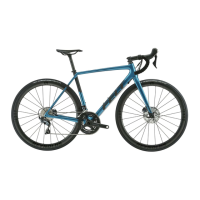
With roller and drum brakes as well as internal gear hubs (c), you have to loosen
the brake bracket supporting the drive and braking force on the frame. In addition,
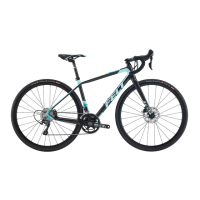
with internal gear hubs you have to disconnect the shifting cables and the click box
respectively before dismounting the wheel (d).
If you have disc brakes, you should first check the condition and position of the
brake pads. See the chapter “Checking hydraulic disc brakes”.
In this way you will be able to tell that they are functioning correctly and that they
will permit removal of the wheel. Read the brake manufacturer’s manual.
Do not pull on the disc brake lever with its rotor and wheel removed from
the bike.
Brake discs and drum brakes can become hot in use, so let them cool
down before you remove a wheel.
If you have derailleur gears, you should shift the chain to the smallest sprocket
before removing the rear wheel. This shifts the rear gear changer right to the out-
side where it does not interfere with the removal of the wheel.
!!
a b c d


 To Next Page