74
Children’s bikes
Children are among the most vulnerable of road users - not only because of their
lack of experience and skills, but also for the simple reason that they are smaller,
making it difficult for them to see things or to be seen.
If you want your child to use their bicycle on the road, you should be willing to
invest time in road safety instruction and help them improve their riding skills. Chil-
dren are not as observant as adults, and you should therefore get into the routine
of checking the bicycle and performing adjustments and maintenance as neces-
sary. If you should have any questions, your local FELT dealer will be pleased to
help you. Bear in mind that it is your responsibility to supervise your child on their
first rides.
Inform yourself about the traffic rules in your area, each country has varying regula-
tions. For example, in Germany, children must use the pavement until they are eight
years old and they are permitted to do so until the age of ten!
It is essential that your child has good control of their bicycle before riding on the
road. As a first step in this direction we recommend giving your child a scooter or
pedal-less bicycle so that they can train their sense of balance.
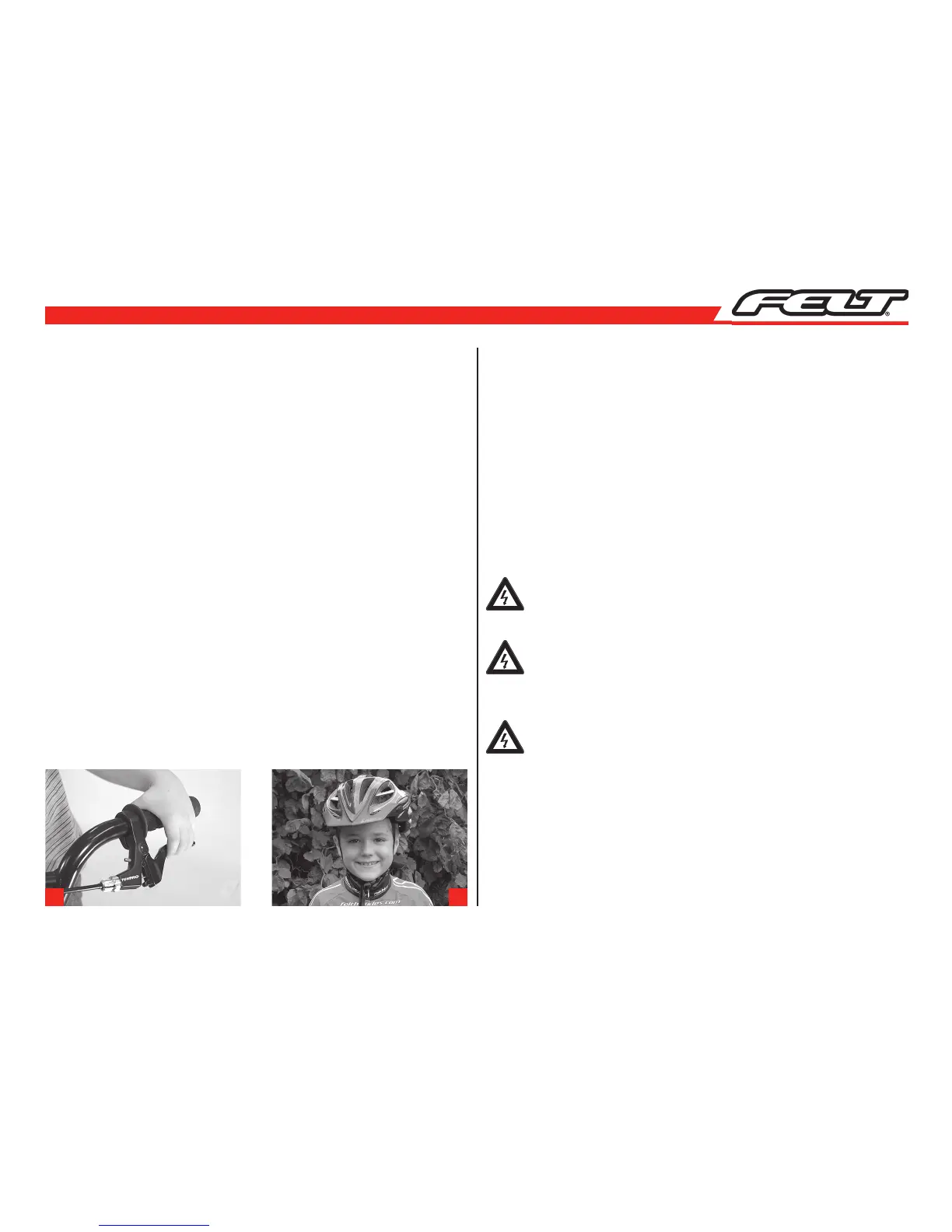
This being accomplished, you will need to make your child familiar with the func-
tioning of the brakes and gears before you let them sit on the bicycle. Find a place
away from the road, ideally a backyard or park, where you can practise braking and
shifting gears with your child under your supervision (a).
Once your child has progressed to a point where they can ride in traffic, teach them
how to negotiate curbs and other obstacles. Your child should also learn to look
around checking for any danger before attempting this kind of obstacle. Your FELT
dealer will be able to help recommend useful books to assist in this.
Set a good example by using bicycle lanes wherever possible. It is also advisable
to let your child take part in road safety lessons offered at schools or by local clubs
and associations.
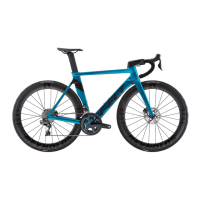
Make sure the child always wears a properly fitting bicycle helmet and
well visible, i.e. bright, clothing. It is also advisable to wear reflector
stripes to increase visibility.
Make sure you buy a tested bicycle helmet that the child feels happy with.
Take your child with you to make sure you buy one which is comfortable
and fits correctly. This will increase the chances that the helmet is actu-
ally worn, which might one day be a life-saver (b)!
Make sure your child is wearing the helmet while biking only. For example,
wearing the helmet at a park or playground can be hazardous; the helmet
may get caught on features or obstacles.
a b


 To Next Page