47
Chain maintenance
Regular and correct lubrication of your bicycles chain makes for enjoyable riding
and prolongs its service life. It is not the quantity; rather the distribution and regular
application of lubricant that counts.
Clean the dirt and oil off your chain with an oily rag from time to time. Special
degreasers are not a necessity but can help speed up the job and remove built up
dirt more completely. Having cleaned the chain as thoroughly as possible, apply
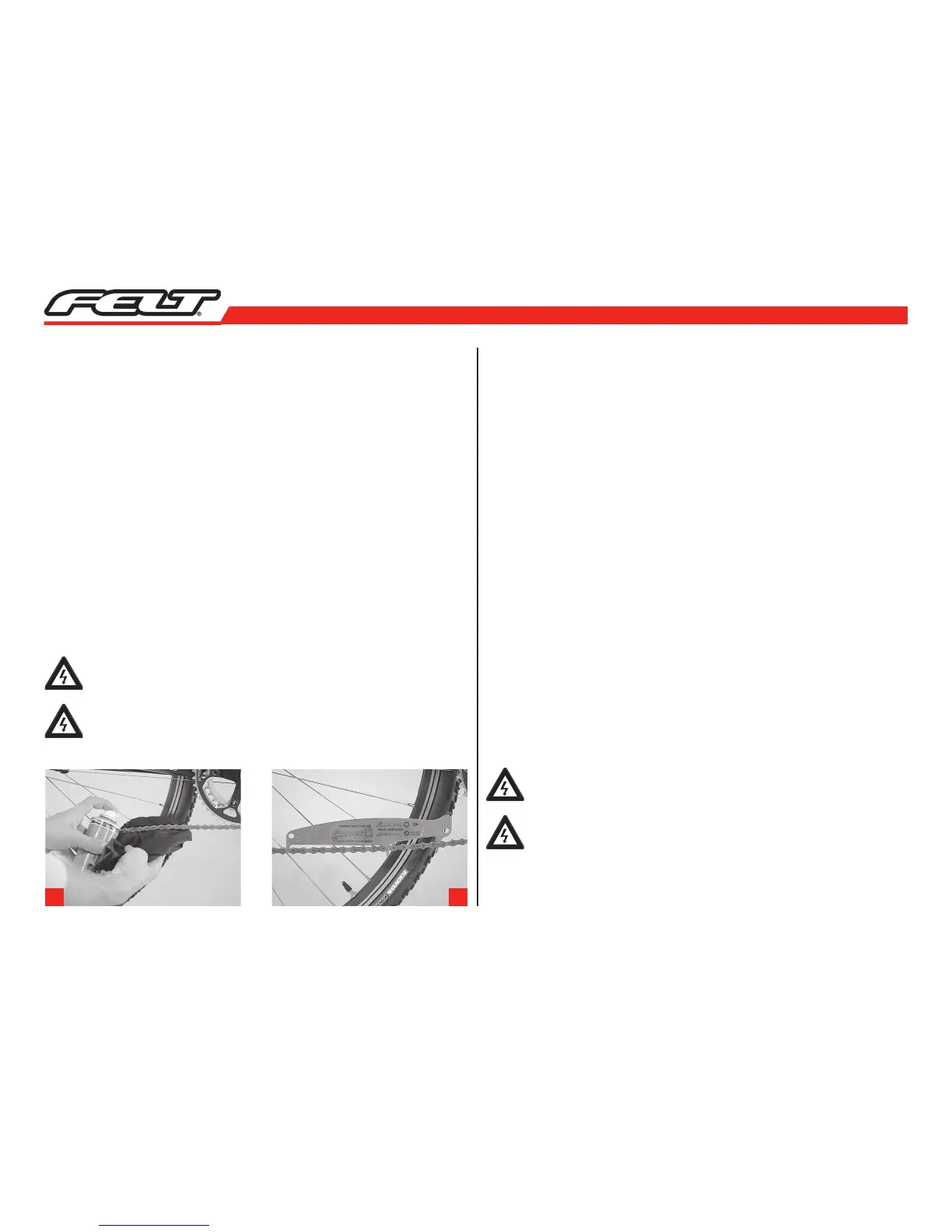
high quality chain oil, wax or grease to the chain links (a).
To lubricate the chain, drip the lubricant onto the rollers of the lower run of the chain
whilst you turn the cranks. Once this is done, turn the cranks a few more times then
let the chain rest for a few minutes so that the lubricant can disperse.
Finally wipe off excess lubricant with a rag (a) so that it does not spatter around
during riding or can collect road dirt.
For the sake of the environment, try to only use biodegradable lubricants.
Bear in mind that some of the lubricants can end up on the ground.
Make sure the braking surfaces of the rims and disc brakes remain clear
of lubricants, as the brakes will fail otherwise!
Chain wear
Although the chain is one of the parts of a bike that wears and stretches in use,
there are still ways of prolonging its service life. Make sure the chain is lubricated
regularly, but not excessively, especially after riding in the rain. Try only to use gears
which run the chain in the straightest line between the sprockets and chainrings.
Get in the habit of high cadence pedalling.
Dependent on usage, weather conditions and maintenance you will get approxi-
mately 1,000 to 3,000 km of use from your bicycles chain. Heavily worn or stretched
chains impair the operation of derailleur gears. Cycling with a worn-out chain also
accelerates the wear of the sprockets and chainrings. Replacing these compo-
nents is relatively expensive compared with the costs of a new chain. It is therefore
advisable to check the condition of the chain at regular intervals.
To check chain wear, run the chain on the largest chainring. Take the chain between
your thumb and index finger and try to lift it off the teeth. If you can lift it off,
clearly exposing more than two of the gaps between the chainrings teeth then it is
stretched and probably at the end of its useful life and should be replaced.
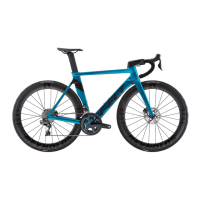
Your FELT dealer has accurate measuring instruments for precise chain inspection
(b). Replacing the chain should ideally be left to an expert because not all chains
have a master link nowadays. Instead they have a continuous design and require
special tools for fitting. If you need help, ask your FELT dealer to select and fit a
chain matching your gear system.
An improperly joined or heavily worn chain can break and may cause an
accident.
It is advisable to only replace your chain with one identical to that which
was originally fitted. An unsuitable chain may lead to a reduced preci-
sion in gear changing and may make the chain slip temporarily, possibly
resulting in an accident.
a b


 To Next Page