66
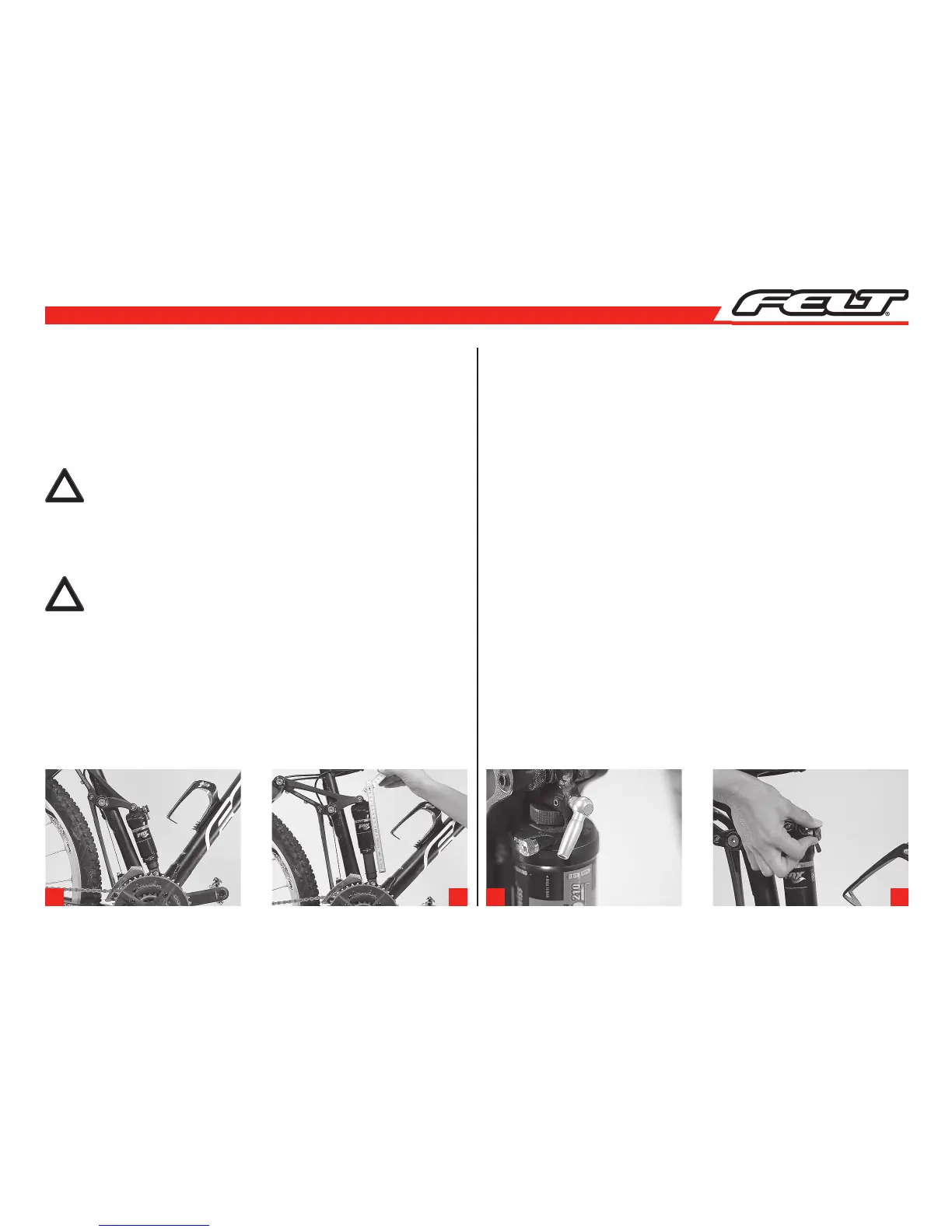
To measure the maximum shock travel push the rubber o-ring up to the shock
body. Then screw on a shock pump to the shock and release all the air pres-
sure. Very carefully compress the rear shock by pressing down on the saddle until
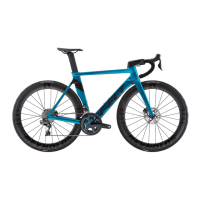
it stops (a). Then inflate the shock absorber to the recommended air pressure
and measure the distance between rubber o-ring and the shock body. This is the
shocks maximum shock travel (b).
The rear shock should be setup and adjusted in such a way that it rarely
reaches the end of its travel (known as bottom out). A spring rate which
is too soft (or too low an air pressure) can usually be heard or felt as a
“clunk” type noise caused by the sudden complete compression of the
shock absorber as it reaches bottom out. If the rear shock frequently
reaches bottom out, it will become damaged over time.
The mounting of rear shocks on full-suspension frames is designed in a
way that the rear shock absorbs shocks from the terrain. If the damper
is too rigid or jammed, the terrain induced shocks pass directly into the
frame without any damping. The frame is not designed to withstand such
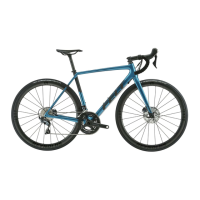
undamped stresses. If your bike is equipped with a rear shock including
a lockout (c), you must therefore keep in mind not to activate the lockout
function when riding in rough terrain, but only when riding over smooth
terrain (tarred roads, smooth tracks).
!!
!!
Adjusting the damping control
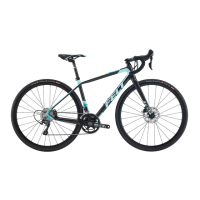
You can adjust the damping characteristics externally (on some shocks) by means
of small adjusters (d). This changes the rate of flow of the oil contained within the
shock as it passes through valves and chambers internally. Some models provide
separate adjustment for the compression stroke and rebound stroke. Experience
has shown that it is best to begin with the compression stage entirely open and first
adjust the rebound stage.
Adjusting the rear shock is a delicate job, as even a small change on the adjuster
can have a big effect. Try approaching the exact setting you need in steps no larger
than a quarter turn at a time.
Rebound is considered satisfactory when the rear suspension cycles once after
descending from a high curb or a single impact .
Starting from the open position, turn the adjusting wheel in very small steps until
you reach the level of rebound that suits you best. Test after each adjustment how
the behaviour of the rear shock has changed. If you turn the adjusting wheel too far,
the oil will flow very slowly and the rebound will be at maximum. This will result in
a sluggish rebound movement, and the rear shock will not recover when exposed
to a quick series of impacts.
Turning the adjusting wheel in the other direction reduces rebound, making the rear
shock rebound faster.
ca b d


 To Next Page