65
c c
The rear shock
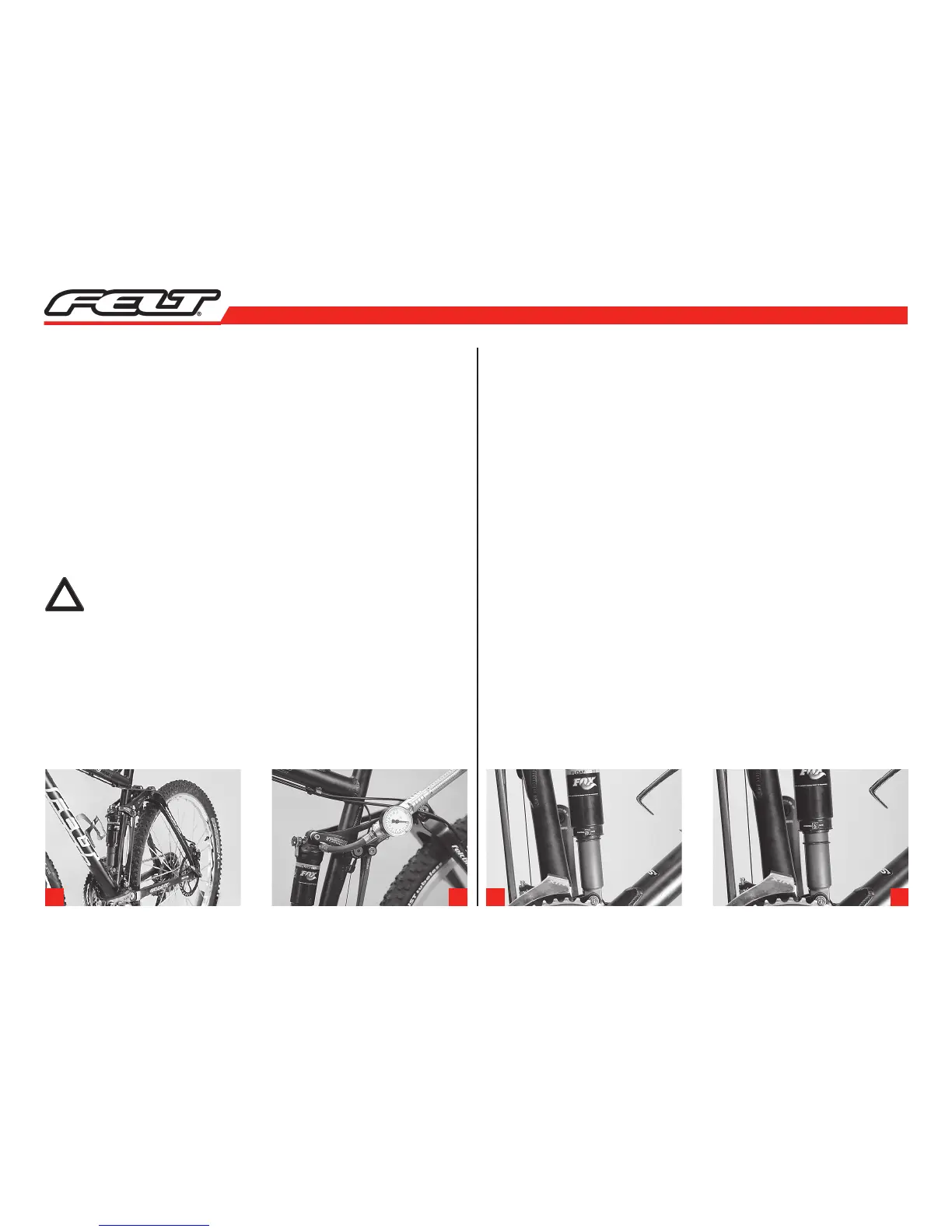
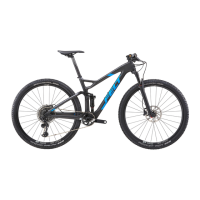
Full suspension bikes are equipped not only with a suspension fork but also with
movable rear stays which are sprung and damped by a shock absorber (a). With
FELT bikes this normally works with an air spring element. Damping is usually con-
trolled by the use of oil.
What to bear in mind when adjusting the saddle
Full suspension bikes sag a little when you sit on the saddle. This causes the
saddle to tilt a little backwards, an effect which can be compensated by adjusting
the position of the saddle. If you have trouble sitting, try lowering the nose of the
saddle a little compared to your usual position.
Full suspension bikes have a greater ground clearance than bikes without
rear suspension. If the saddle is adjusted to its proper height you will not
be able to reach the floor with your feet. Set the saddle a little lower to
begin with and practise getting on and off the saddle.
ii
How to adjust the spring rate
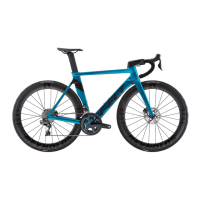
With an air shock you have to inflate the rear shock of your bike before your first
ride (b). Ask your FELT dealer to do the first adjustment.
Please follow a few simple rules when doing so. The rear shock of the rear swing
arm should sag under the rider’s weight. When the rear wheel passes through a
depression in the ground the spring can then extend and the suspension mecha-
nism will smooth out the uneven surface. If the selected air pressure is too high,
this effect is lost because the wheel will already be fully extended. This means the
loss of an important feature affecting both safety and comfort.
Cross-country racers usually run less sag than downhillers or more comfort loving
freeriders. For cross-country the rear shock should yield by about 10 to 25 % of its
total travel when you sit on the bike.
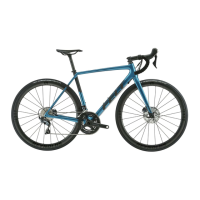
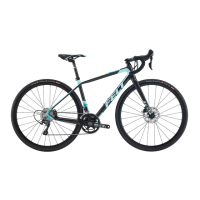
To aid measurement you can use the rubber o-ring (c) often available on the
shock’s shaft, which slides further down the shaft as the rider gets on the bike or
slip a cable tie onto the thinner tube of the shock absorber so that you can still shift
it easily along the tube.
a b


 To Next Page