29
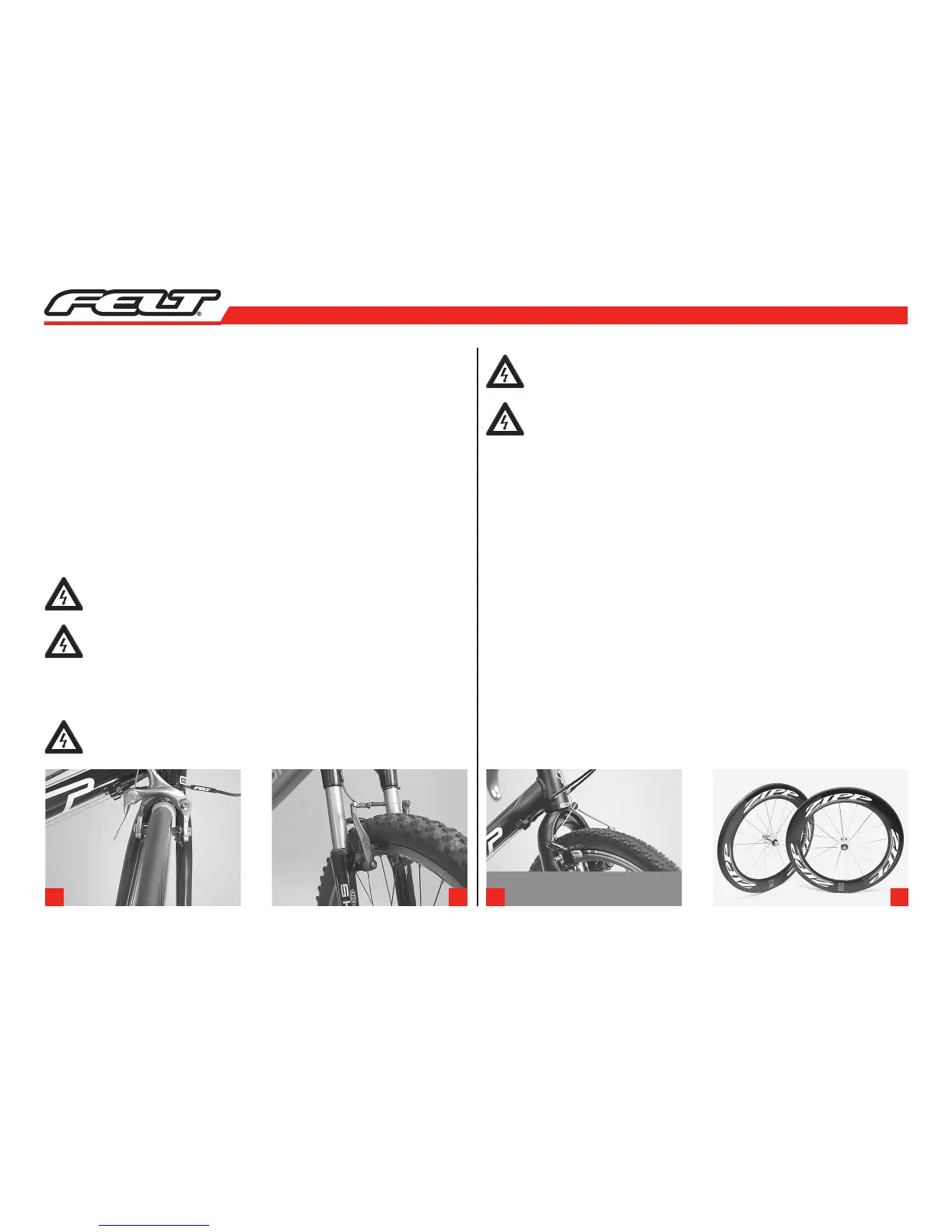
Rim brakes (a)
The friction generated by braking causes wear to the brake pads as well as to the
rims. Frequent rides in the rain and dirt can accelerate wear on both braking sur-
faces. Once the abrasion of the rim has reached a certain critical point, the rim can
rupture under the tire pressure. This can make the wheel jam or the tire burst, both
of which can cause an accident.
See your FELT dealer and ask them to examine the remaining thickness of the rims
when you have worn through your second set of brake pads at the latest. Your
dealer will have a special measuring device for determining the remaining thickness
of the rims. Some rims are equipped with wear indicators. Ask your FELT dealer to
explain them to you.
Wet weather reduces your braking power. Be aware of longer stopping
distances when riding in the rain!
When replacing brake pads, be sure to only use brake pads that bear the
appropriate mark and match your rim. Use original spare parts to be on
the safe side. Contact the manufacturer of the wheels and ask for the
brake pads which go with the wheels. Your FELT dealer will be pleased
to advise you.
Ensure that braking surfaces are absolutely free of wax, grease and oil.
Have your rims regularly inspected and measured by an expert.
Brake cables which are damaged, e.g. frayed, should be replaced imme-
diately, as they can otherwise fail in a critical moment, possibly causing
a crash.
If you mount a wheel set with carbon rims (b) onto your road or triathlon bike, bear
in mind that you might have to mount special brake pads as well. Typical brake
pads for aluminium rims probably will not perform at the level needed for a safe
ride! Take note of the wheel set manufacturer’s user manual.
Practise using the brakes to get used to the modified braking behaviour.
For more information on your brake model, visit the websites of the respective
manufacturers, e.g.:
www.campagnolo.com
www.sram.com
www.tektro.com
www.shimano.com
a a a b


 To Next Page