Twinflex V3 Control Panel Engineering and Commissioning Manual
40
Finding Zone Faults
A fault on a zone of the Twinflex system may be found as follows:
1. In order to prove whether the fault is control panel based or within in the field & wiring, swap the
wires from the zone in fault with those in a clear zone (active but no fault) at the control panel.
If the fault moves with the wiring then the fault is in the field, if the fault stays on the same zone
then the fault is in the control panel.
2. Examine the LEDs carefully for signs of the fault as follows:
If the buzzer has been silenced create another fault to cause it to return, ie, remove a battery
lead until the buzzer starts again.
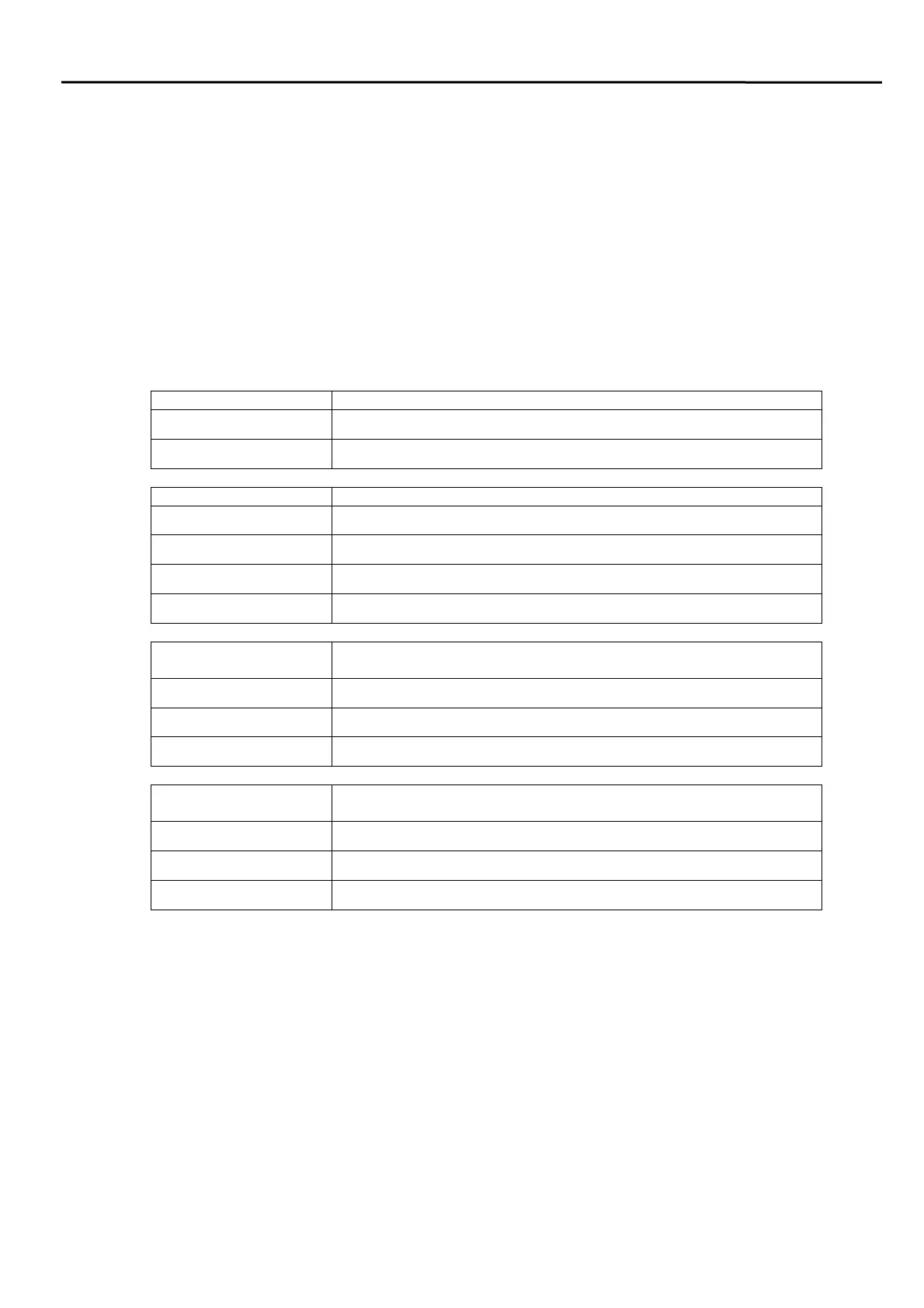
Zone Fault LED action Reason
LED flashing faster than
buzzer
The control panel is receiving too many EOL signals or a device is in fault.
LED flashing at the same rate
as buzzer
The control panel is not receiving an EOL signal. Could be o/c, s/c or no EOL
Multipoint LED action Reason
20 second flash
The detector is operating normally and is not set to EOL.
5 second flash
The detector is operating normally and is set to EOL.
1.5 second flash The detector is in fault, check for dust contamination and that the optical chamber is
locked on correctly.
0.3 second flash or
continuous
The detector has triggered into the fire state and is not yet reset. Check for smoke
and contamination.
Manual Call Point
LED action
Reason
No LED
The MCP is operating normally, or is not powered at all. Test the MCP to clarify.
5 second flash
The MCP is operating normally and is set to EOL.
0.3 second flash
The MCP has triggered into the fire state and is not yet reset.
Output Module LED
action
Reason
No LEDs The O/P module is operating normally, or is not powered at all. Test the module by
making the ‘fault loop’ open- circuit to clarify.
Yellow LED The module is in fault, check for continuity of fault loop, and check 24V DC supply is
present.
Red LED
The module has been triggered from the control panel and has not yet been reset.
3. If steps 1. and 2. do not clarify the matter then split the zone wiring at a suitable mid point,
removing the outgoing cables from the terminals completely, and then setting the EOL switch to
the on position before reassembling that device.
If the fault clears then it is after that point, but if the fault persists then it is before that point.
The split may then be moved in the relevant direction, halving the remaining devices, and the
procedure repeated until the fault is found.



 To Next Page