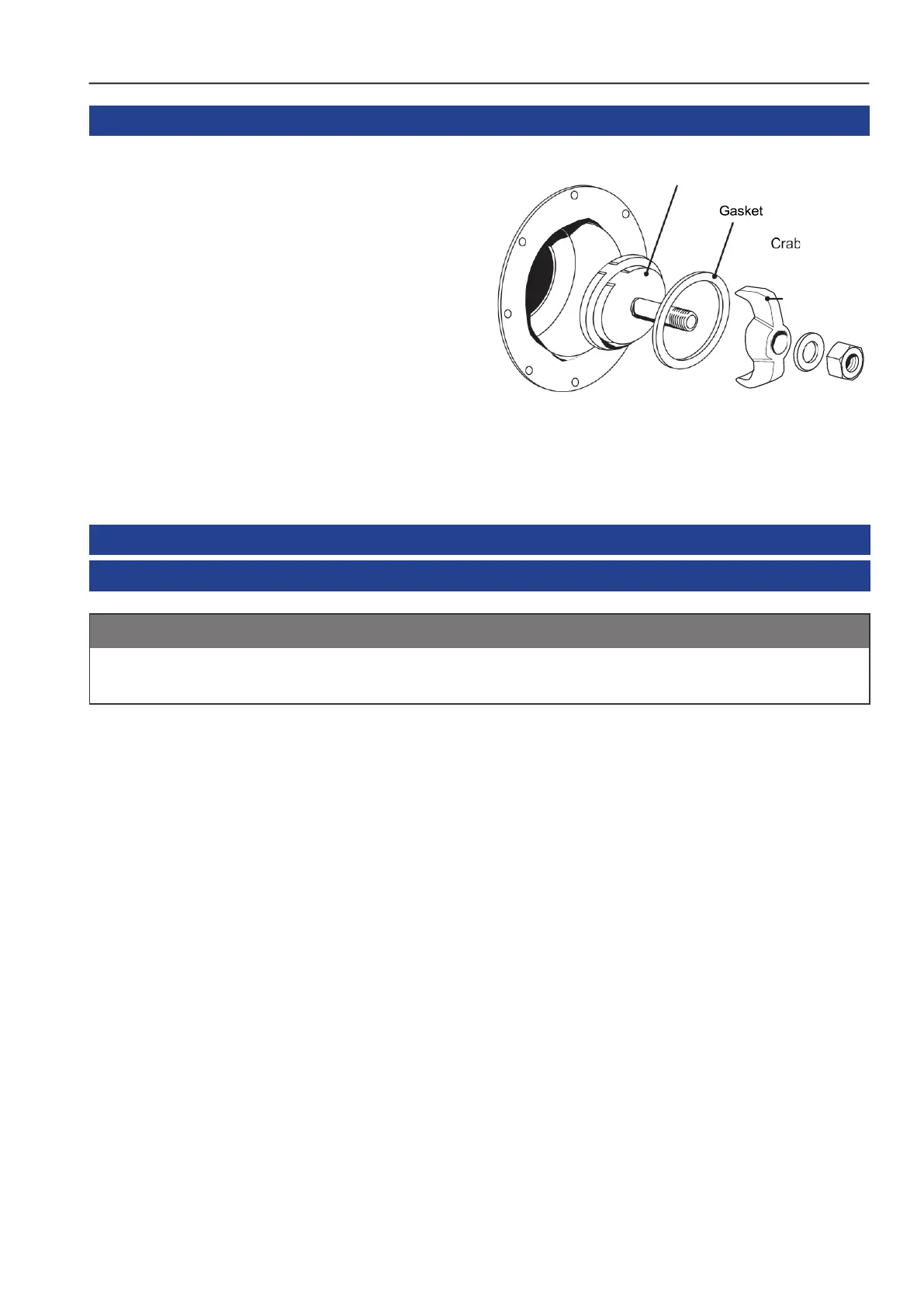
6.6 BOILER INTERNAL INSPECTION
The lower hand hole doors should be
removed after one month of operation
and the interior of the boiler thoroughly
examined. If scale or sludge build-up is
observed, it should be removed and
the water treatment supplier advised.
New gaskets must be fitted every time
a
hand hole door is removed (see
Section 6.7 - Fitting New Gaskets To
Boiler Inspection Holes).
Subsequent interior examinations
should be carried out on a regular
basis until satisfactory conditions are
observed. Thereafter, inspections
should be carried out at three monthly
intervals.
Hand Hole Cover Plate
Figure. 20 - Hand Hole
6.7 FITTING NEW GASKETS TO BOILER INSPECTION HOLES
6.7.1 IMPORTANT INFORMATION
TOPOG-E gasket have a finite life after installation and must be renewed annually.
It is important that the instructions given in this section are adhered to.
The VSRT boilers are fitted with TOPOG-E gaskets in all the steam and water side inspection
openings of the boiler. These gaskets work very well and millions have been safely used over
the last 30 years, however, it is absolutely essential to observe a few simple rules in order to get
the best performance from your installation.
Elastomeric Vulcanizates, which form the basis of TOPOG-E gaskets, undergo degradation
from many sources including heat, oxygen, stress, and overdosing from certain types of water
treatment. This takes the form of material oxidation, hardening/embrittlement and cracking which
may result in gasket failure. Steps must be taken to minimise the effects of such attacks.
Water treatment and oxygen attack can be minimised by ensuring that the gasket is aligned
correctly so that only the extreme edges of the gasket are exposed. If a new gasket leaks after
fitting this is almost certainly due to incorrect seating or alignment. As such gaskets are very
flexible it is possible to cure the leak by excessive tightening, but such an action will seriously
reduce the life of the gasket and cause problems later.
Undue stress can be avoided by tightening just sufficiently to stop any leakage when fitting cold
and
before firing the boiler. Start the boiler and gradually bring it up to working temperature,
allowing the increasing steam pressure to take over and complete the seal. This will allow the
gasket material to contract naturally and follow the topography of the mating surfaces. The
securing nut can then be tightened gently by approximately a quarter of a turn, to ensure a ‘snug’
fit and prevent the seal from being broken when the boiler is cold and under negative pressure.
Gentle warming of the boiler on initial firing after maintenance will also help to ensure that the
ru
bber ‘cures to shape’. If the rubber post-cures, the elastic memory will be destroyed and any
initial over tightening will cause the gasket to become hardened and embrittled, leading to cracks
and eventual failure.




 To Next Page