93
Appendix
Gigaset SL910/910A / GBR/IRL / A31008-M2300-L101-1-7619 / appendix.fm / 23.08.2011
Version 4.1, 21.11.2007
Disposal
Batteries should not be disposed of in general household waste. Observe the local
waste disposal regulations, details of which can be obtained from your local author-
ity.
All electrical and electronic products should be disposed of separately from the
municipal waste stream via designated collection facilities appointed by the gov-
ernment or the local authorities.
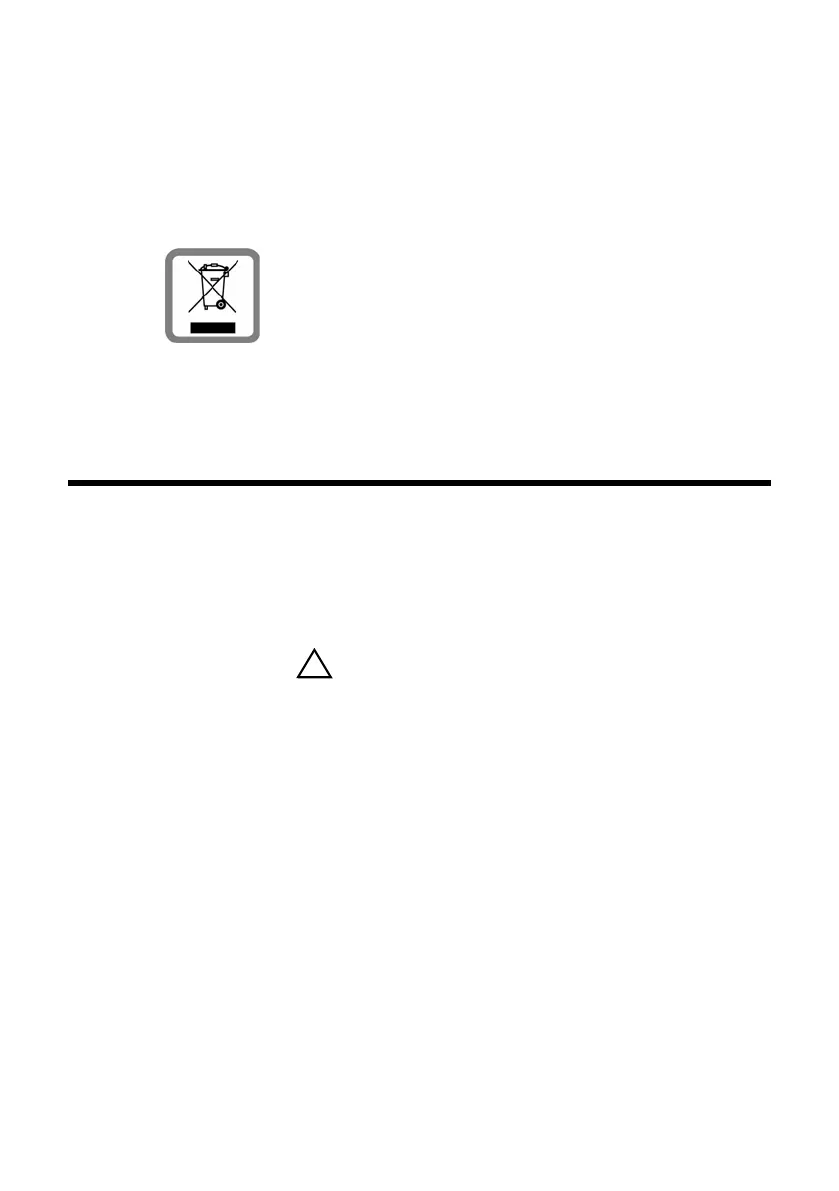
This crossed-out wheeled bin symbol on the product means the
product is covered by the European Directive 2002/96/EC.
The correct disposal and separate collection of your old appliance
will help prevent potential negative consequences for the envi-
ronment and human health. It is a precondition for reuse and recy-
cling of used electrical and electronic equipment.
For more detailed information about disposal of your old appliance, please contact
your local council refuse centre or the original supplier of the product.
Appendix
Caring for your telephone
Wipe the base, charger and handset with a damp cloth (do not use solvent or a
microfiber cloth) or an antistatic cloth.
Never use a dry cloth, this can cause static.
Contact with liquid
If the handset has come into contact with liquid:
1. Deactivate the handset and remove the battery immediately.
2. Allow the liquid to drain from the handset.
3. Pat all parts dry, then place the handset with the battery compartment open in
a dry, warm place for at least 72 hours (not in a microwave, oven etc.).
4. Do not switch on the handset again until it is completely dry.
When it has fully dried out, you will usually be able to use it again.


 To Next Page