4.0
ENG
GLT
Ω
L
IFT
O
PERATION
M
ANUAL
Page | 27
4.3 OPERATIONS IN THE EVENT OF DANGER
OPERATION IN THE EVENT OF FIRE (EN 81-73)
In the event of a fire, two types of operation can be carried out, depending on the devices installed where the lift is
used:
1. manually activated, using a bi-stable manual device (not supplied as standard);
2. automatically activated, using an automatic fire detection device.
- MANUALLY ACTIVATED OPERATION
PICTURE
The device should be located in the building management centre or at the
designated main evacuation floor, and placed behind a glass panel or inside a safe
area to protect it from misuse if accessible to everyone.
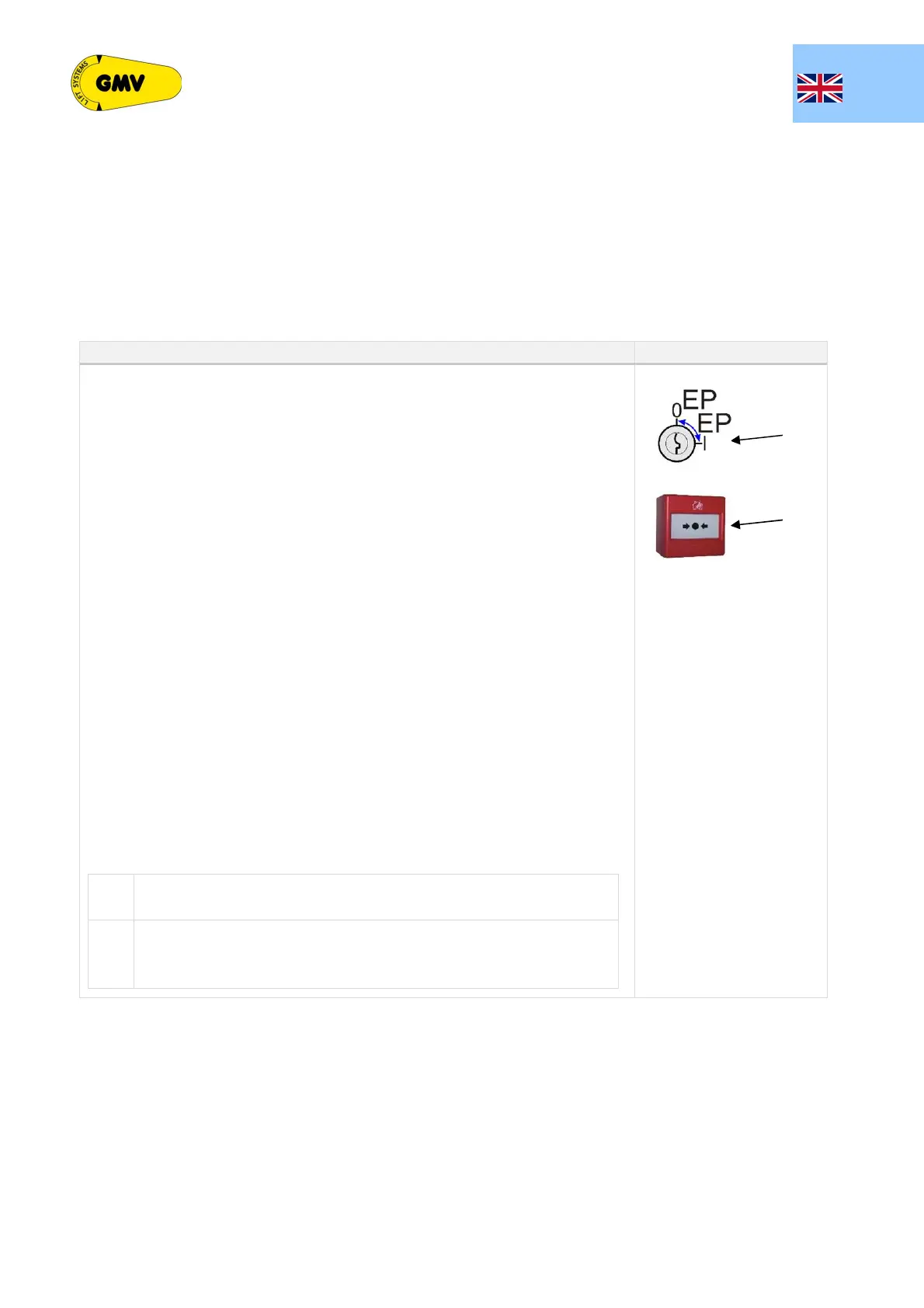
The manual device could be:
• a “2 Extractions – 2 Positions” key switch (a);
• a fire alarm button (b).
To perform the operation:
1. Press the button or use the key (inserting it and turning it to EP
2
).
2. If the key is used, remove it after turning it to stop the lift from returning to
normal operation.
3. Once the alarm is triggered, all recorded calls are cancelled.
4. The car reaches the designated evacuation floor, the doors open and the lift
remains “out of service” until the fire alarm status is deactivated and the
lift is restarted by authorised personnel.
5. While the lift is “out of service”, a luminous “no access” signal on the
designated evacuation floor push-button panel warns users that the car
cannot be entered and the lift cannot be used.
6. The lift normally remains stationary on the evacuation floor with the
“doors open”, but it can be set to “doors closed” if required by local
regulations.
To restart normal lift operation:
a
• Insert the key, turn to EP1 and remove it.
• Turn the lift’s power switch off and back on again.
b
• Reset the button either with the key or following the instructions of
the device installed.
• Turn the lift’s power switch off and back on again.
b
a



 To Next Page