For example, the user can pre-configure the WP to automatically connect to the Wi-Fi network at the client site, making it easier for the client to use the phone
without going through the setting up manually the Wi-Fi network. Also, the client could have the SSID hidden by default, and the handset would still be able
to connect to the Wi-Fi network since they have SSID and password information configured. Up to 20 SSIDs are supported.
Figure 17: Default Wi-Fi Network
Note
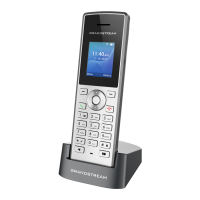
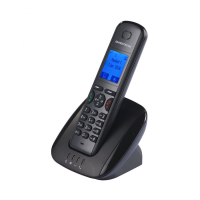
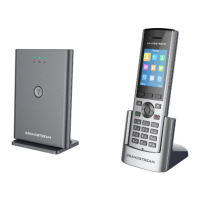
For easy deployment, WP810/WP822/WP825 out of the box is preconfigured to connect to a default SSID named wp_master with a password (WPA/WPA2 PSK)
equal to wp!987@dmin, users can adapt these settings from the web UI as well to make it easier for deployment on customer site.
Note
WP810/WP822/WP825 support now 802.11k and 802.11v Wi-Fi standards.
802.11k: It is intended to improve communication between wireless access points (APs) and clients, resulting in more effective use of the wireless spectrum.
In particular, it gives APs a set of metrics and statistics that let them choose the ideal channel, power level, and other factors for data transmission. This could
lessen interference and boost network efficiency.
802.11v: The 802.11v standard offers a framework that enables network devices to communicate and make decisions based on information about network
conditions, such as signal strength or congestion. A client may utilize 802.11v to choose the AP with the strongest signal or an AP may use it to guide clients
to a less crowded channel.


 To Next Page
 Loading...