47
(6) Inflate the cuff to 60 mmHg. Then, turn the
stopcock so that it blocks the sphyg and routs
cuff pressure to the PV interface box.
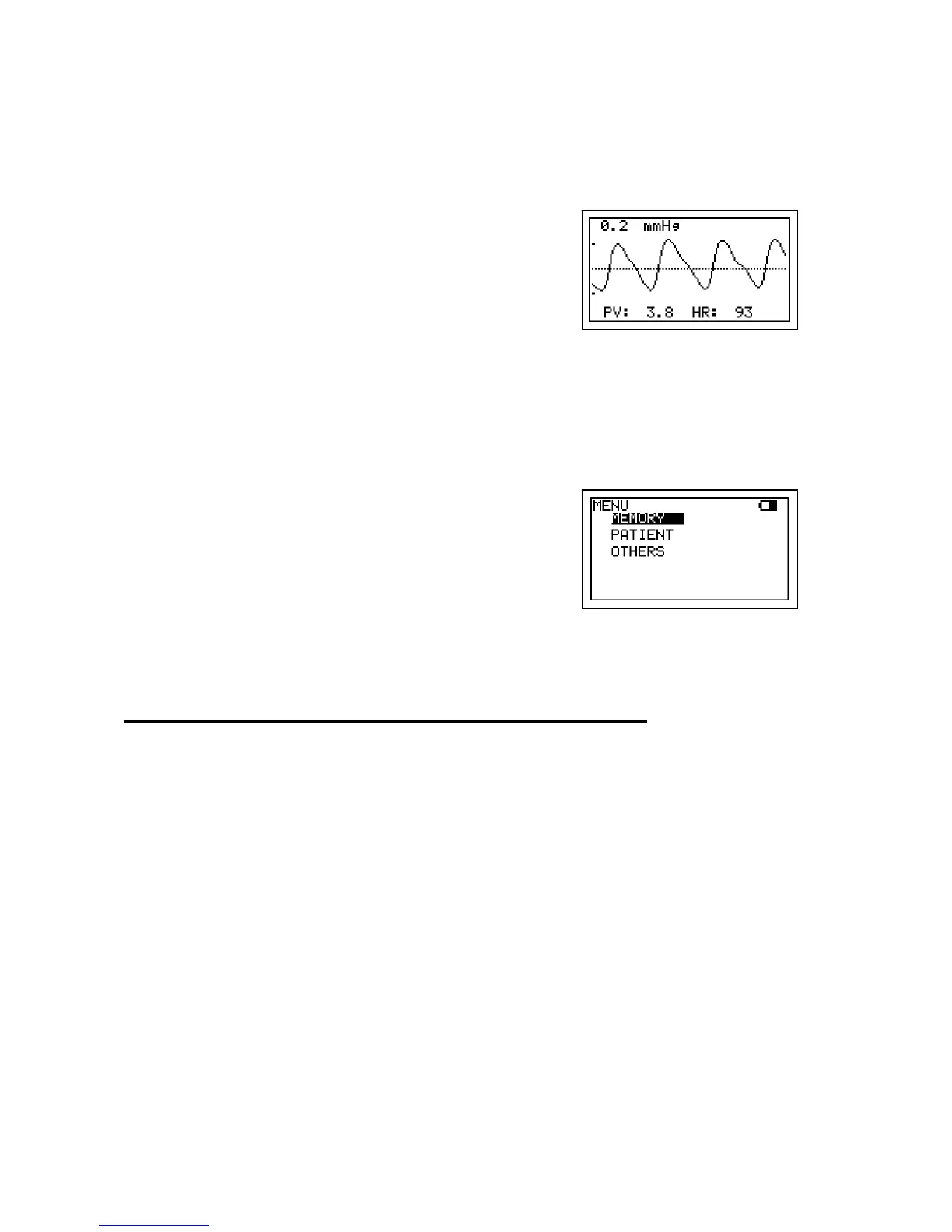
(7) The gain is automatically adjusted and the PV
waveform is shown on the LCD.
(8) When the waveform gets stable and rhythmic,
press the Right to freeze the waveform. Press
Print Button to print the waveform of last 5 sec. if
necessary.
(9) If you wish to save the data on the memory, see
“ 3-2-3-a. MEMORY - STORE”.
(10) Deflate the cuff and repeat steps #3 through #10
of this section for each cuff on each limb.
5-4-4. PV - Measurement of Maximum Venous Outflow
Purpose
Because deep venous occlusion cannot be diagnosed reliably on the basis of presenting
signs and symptoms, pain and swelling being frequently due to other causes, objective
screening tests are of value in confirming or ruling out suspected venous obstructions in the
lower extremities. The test consists of first inducing temporary venous pooling by means of
a constricting thigh cuff followed by measurement of the rapidity of emptying when the
constricting cuff is suddenly vented. Measurement of maximum venous outflow is
frequently employed as an adjunct to Doppler venous compression studies.
Preparation
(1) Connect the PV probe to the main unit, and turn
the unit on.


 To Next Page