Email: service@haskris.com
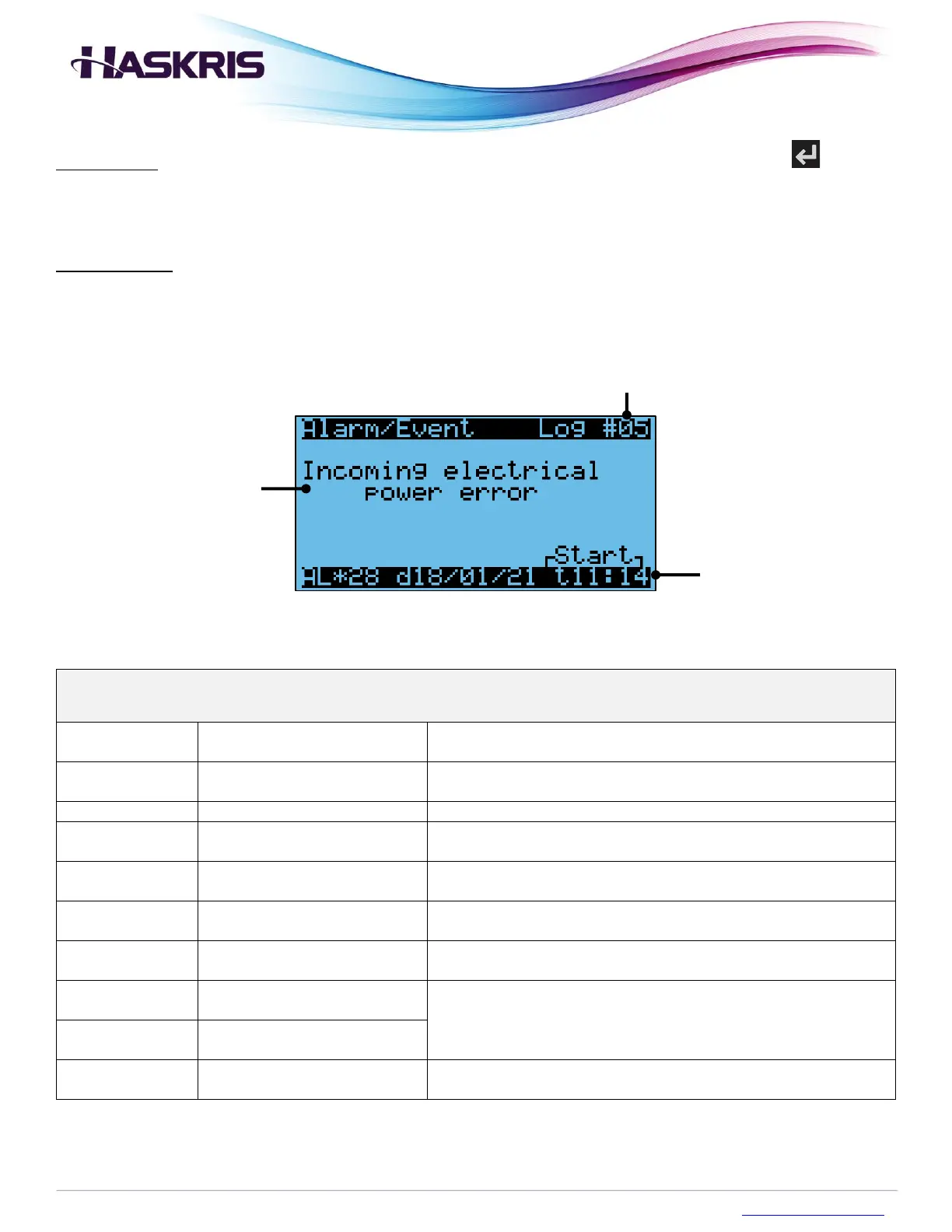
Fault history: When the screen says NO ALARMS, there are no faults currently. Press the button
to see the fault history if needed.
Start and stop: In the bottom right-hand corner, certain faults will display “Start” or “Stop”. Start
indicates when the fault occurred. Stop indicates when the fault was cleared.
Phase monitor detected improper
power
Check the phase monitor in the high voltage electrical box, see the LED
status light and error codes
Upper liquid level switch opened
This is a warning, check for a leak and add fluid so the level is at the fill
line
Lower liquid level switch opened
Check for a leak and add fluid so the level is at the fill line
Pressure sensor reading low on
pumping circuit
Confirm pump is primed and check ball valve adjustment
Pressure sensor reading high on
pumping circuit
Inspect external piping for a restriction to flow. All external shut off
valves should be fully open. All filters and strainers should be clean.
High fluid return
pressure
Pressure sensor reading high on
return line
Check the internal wye strainer on the return of the chiller, clean the
strainer screen
Pump overload contact opened
Reset alarm, check overload, measure pump amp draw
Pressure sensor reading high on a
refrigeration circuit
Confirm the fan is spinning and check the condenser for debris or
blockage that could reduce air flow
High refrig safety
switch open
Pressure safety switch on a
refrigeration circuit opened
Pressure sensor reading low on a
refrigeration circuit
Contact Haskris for diagnostics and troubleshooting
Description of common faults
Log #, higher number is more recent
Example fault history screen



 To Next Page