Sails and Rigging
12.13
The traveler provides controls on the range of motion for
end boom sheeting. The helmsman can easily adjust
the mainsheet traveler, the jib sheets, and the mainsheet
(see Fig. 12.21 and 12.22). The setup allows short hand-
ed sailing with only a couple of people in the cockpit or
with autopilot steering.
The jib sheet tracks are located on the side decks port
and starboard. These tracks allow cars to travel forward
and aft providing control on the range of motion for the jib
to be able to adjust the lead position.
12.9.3 Winches
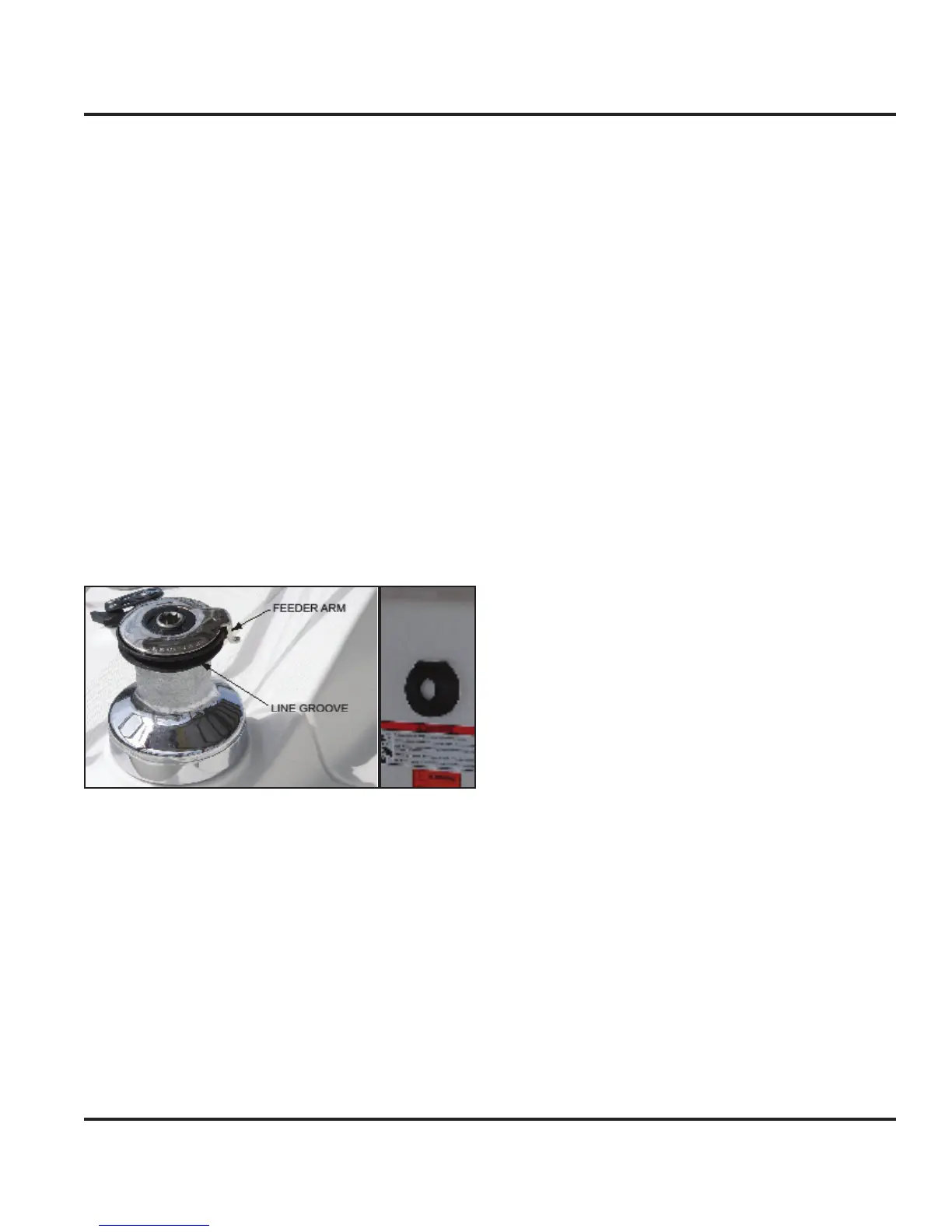
The winches (Fig. 12.12) perform the heavy lifting with
working sails. They provide the extra purchase needed
when trimming. Your boat comes standard with 2 coach
roof self tailing manual winches and 2 cockpit self tailing
manual winches. Two manual winch handles are includ-
ed in loose gear. Hunter offers optional electric self tailing
winches as an upgrade. Rather than hand cranking the
winch, one simply activates the winch by depressing the
winch power button (Fig. 12.13) located in close proximity
to the winch.
Figure 12.12 Figure 12.13
Self tailing winches allow winching by one person rather
than two. Generally, standard winches would require one
person to winch and another to pull the “tail”. The self
tailing method involves a feeder arm which guides the
line into a groove in the crown of the winch. When winch-
ing, the line rotates around to the feeder arm which then
redirects it off the winch.
12.9.4 Blocks, Jammers and Organizers
The rigging is facilitated by a number of blocks (or pul-
leys) of various designs, line jammers and line organiz-
ers. These are all intended to organize the running rig-
ging to allow cockpit control of the sailing experience.
12.9.5 General Hardware Maintenance
Check all fittings regularly to be sure screws are tight.
Occasionally lubricate (100% silicone spray) all mov-
ing parts on hardware such as blocks, turnbuckles, cam
cleats, track slides, etc.
Inspect cleat and fairleads for roughness. Smooth with
fine-grained emery paper if necessary. Also, replace any
missing or damaged cotter pins in turnbuckles and shack-
les. Tape them or use protective covers manufactured
for that purpose. Grease winches a minimum of once
annually.



 To Next Page