Sails and Rigging
12.12
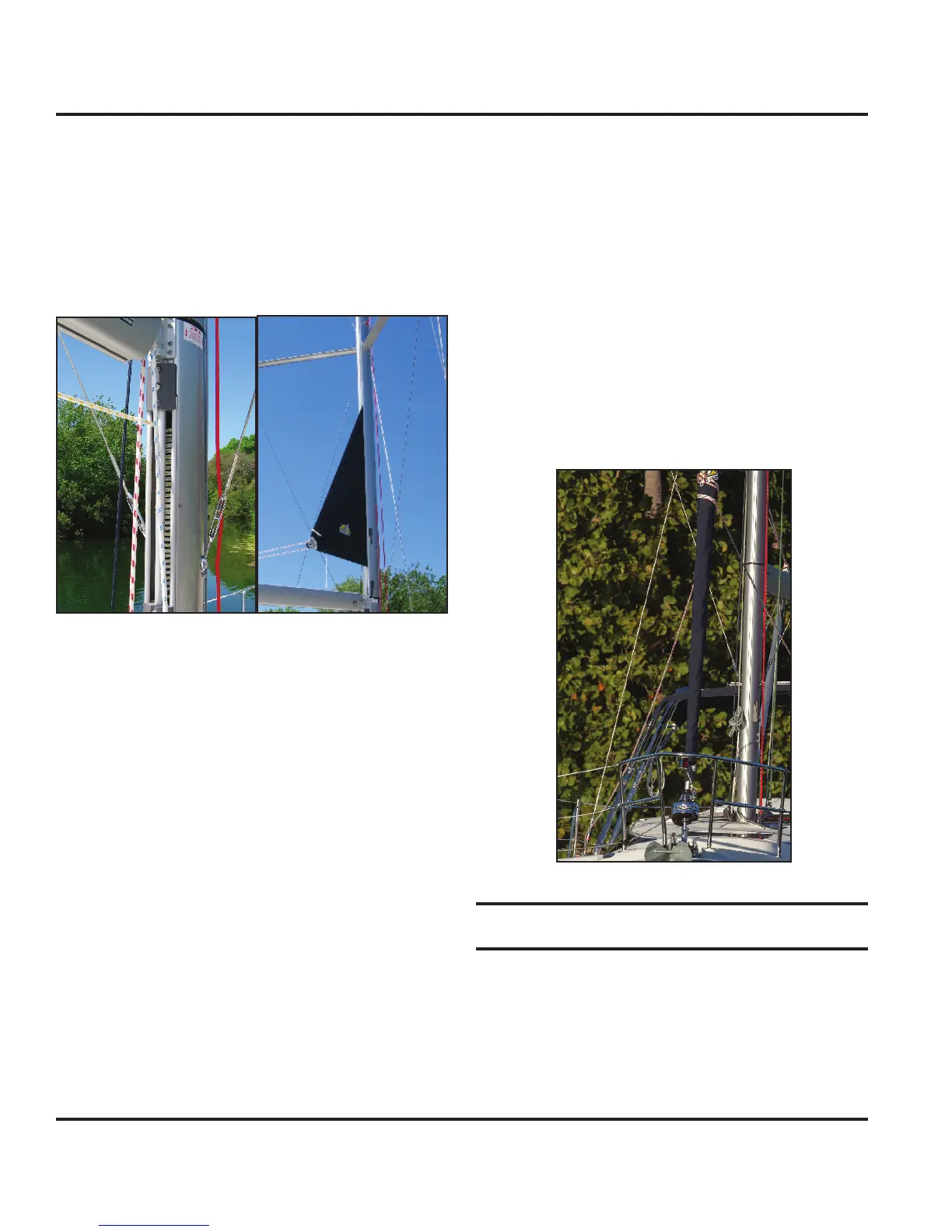
When reaching a desired reef point, mark the main
furling line at the stopper with a 1” (25mm) single band
of indelible marker ink. By taking up the main furling
line to this mark every time, consistent positioning is
made easier. Similarly, mark the outhaul line in the
same fashion for a consistent correct position.
Repeat the procedure for the second desired reef
point, using double bands to mark the main furling
line and outhaul in the correct position.
Figure 12.10
12.8.3.3 Unfurling Instructions
Ensure the vang is sufficiently slackened.
Free up the main furling line.
Take up the outhaul line while providing backtension
on the main furling line (to avoid line gnarling)
12.8.4 Roller Furling Jib
Control of the headsail sail area is also through a roller
furling system and, hence, an infinite reefing system.
Stowing the headsail involves furling it within its roller
furling mechanism.
12.8.4.1 Furling Instructions
Ensure the windward sheet is running freely.
Take up the furling line while slightly releasing the
leeward sheet. Keep some tension on the sheet to
allow a tight and even furl (Fig. 12.11).
3.
4.
1.
2.
3.
1.
2.
Tie the furling line to the starboard cleat.
12.8.4.2 Reefing Instructions
Same as the furling instructions.
12.8.4.3 Unfurling Instructions
Release the furling line and windward sheet.
Place a turn of the furling line around the cleat or
winch to produce some drag.
Place a turn of the leeward sheet around a winch and
unfurl the sail by drawing in the sheet.
Place a few more turns of the sheet around the
winch.
Figure 12.11
12.9 Supporting Hardware
Please refer to the Boating Safety chapter in this manual
for the deck hardware layout illustration.
12.9.2 The Traveler/Tracks
The mainsheet traveler is located overhead on the arch.
3.
1.
2.
3.
4.



 To Next Page