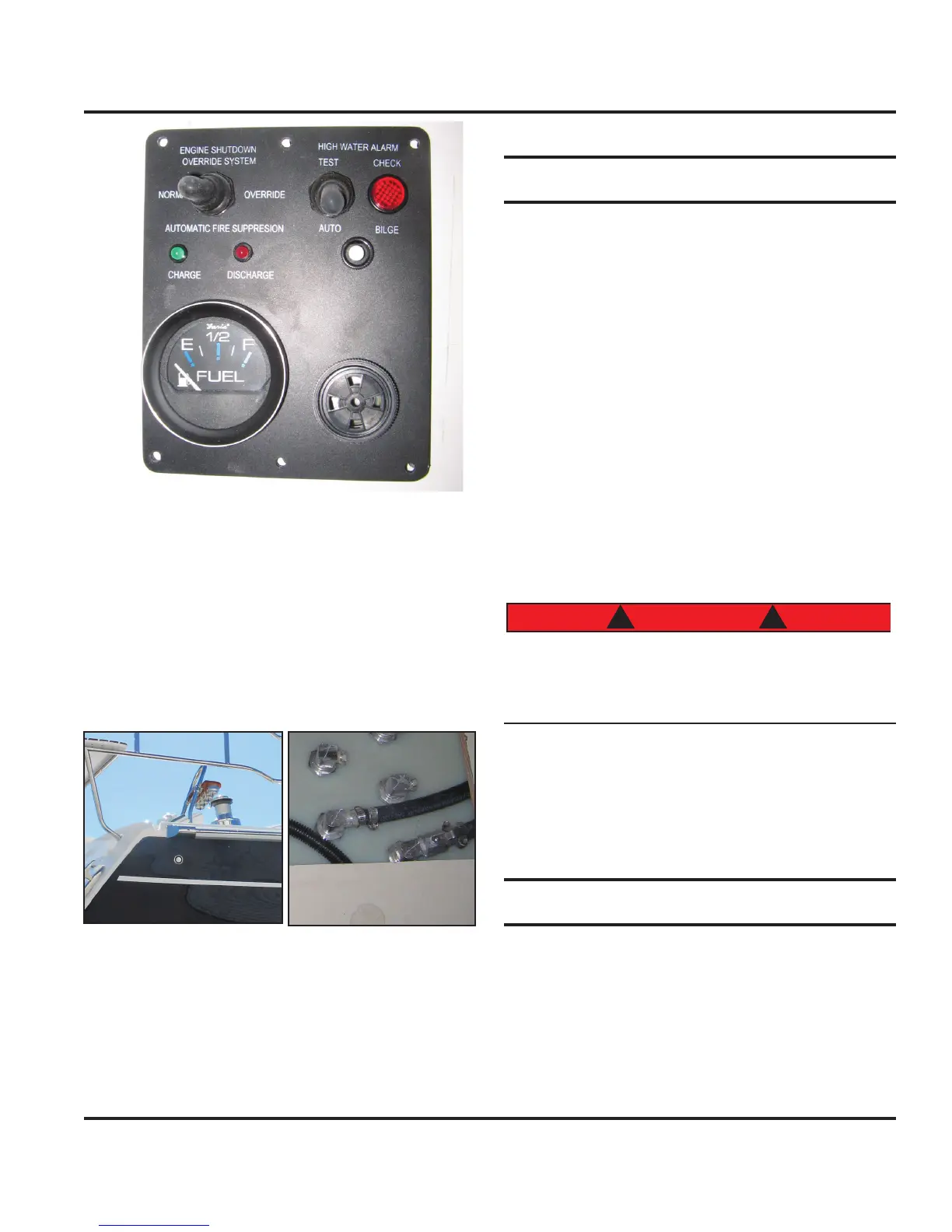
Figure. 5.3
5.1.5 Fuel Tank Vent
The fuel tank incorporates a thru-hull vent fitting and is
located starboard aft (see left side Fig. 5.4). The fuel
tank vent serves as a pressure / vacuum release and
safety overflow. The vent incorporates a flame arrestor,
thus it is imperative that you keep the screens clear and
in excellent repair. Replace the screens immediately if
they become damaged or displaced. Periodically check
the vent for clogging.
Figure. 5.4
The deck fill and vent hose, fittings, and connections
should be inspected for leaks, signs of dry rot or swell
-
ing at least once a year. If any of these conditions are
present, have an authorized service technician inspect
the fuel system immediately. If a leak is found, turn off
battery switches, disconnect shore power, and disable
any possible source of ignition. Contact your dealer or
Customer Service immediately.
5.2 Fuel Supply Lines and Hoses
If any fuel fill or vent hose's are in need of replacement,
ensure that only USCG Type A1 or A2 are used.
The engine has a fuel supply hose that runs from the
pickup tube in the fuel tank to the water separator (com
-
monly referred to as the fuel filter), then from the water
separator to the engine. Also, the engine has a fuel
return hose that runs from the engine back to the fuel
tank. If your boat has the optional generator, the genera
-
tor will have the same basic setup with supply and return
hoses (Fig. 5.11).
The fuel supply lines or hoses, fitting, and connections
should be inspected often for leaks, signs of wear, dry rot,
chafing, or swelling. A good way to inspect the fuel hoses
is to run your hand along the length of the hose and fit
-
tings. Leaks will be revealed as wet spots on your hand.
If any evidence of hose deterioration is present, have
a qualified technician replace all the hoses with USCG
Type A1 or A2 hoses immediately!
The use of any hose other than the USCG Type A1
or A2 could result in fuel leakage. Leaking fuel is a
fire and explosion hazard. Personal injury or death
could result.
NOTE: If a leak is found, turn off battery switches, discon-
nect shore power, and disable any source of ignition. Do not
start your engines, the generator, or any devices that could
create a spark. Contact your dealer or our Customer Service
Department immediately! If hoses need to be replaced, make
sure only USCG Type A1 or A2 are used.
5.3 Fuel Valves
Your boat has fuel shutoff valves located at the tank in
the supply line route (see engine fuel line lower right Fig.
5.4). These valves start or stop the flow of fuel through
the supply lines.
NOTE: Even if the fuel supply valves are closed, there may
be fuel in the supply lines to the filter and engine (and optional
generator). Disconnecting these fittings without properly bleed-
ing the system of fuel could result in emptying the fuel filter and
causing a fuel spill. Only a qualified technician should ever
Fuel Systems
5.2



 To Next Page