11.2 Engine Fluids
Monitoring the status of your engine fluids on a consistent
basis is critical. Follow the engine manufacturer’s guide-
lines and procedures for managing your fuel, engine oil,
gear or saildirve oil and coolant.
11.2.1 Fuel
In addition to the OEM manual, refer to the Fuel System
chapter in this manual for information on the fueling pro-
cess and other details.
11.2.2 Oil
Refer to the OEM manual.
11.2.3 Coolant
The engine cooling system involves two separate but
related systems:
The raw water cooling system - refer to the Water
Systems and Waste Systems chapters of this manual
for a detailed description of the raw water system
supply and removal.
The internal engine cooling system - supplied by
the engine manufacturer. This closed system fea-
tures an antifreeze coolant reservoir attached to the
engine. Internal coolant is circulated through the
engine in separate channels from the raw water cool-
ing system.
The raw water cooling system works with the internal
engine cooling system by cooling the internal system’s
coolant through the heat exchanger. Additionally, the anti-
freeze coolant cycles through the water heater where it
heats the fresh water system through its heat exchanger,
taking advantage of the engine operation (see the Waste
Systems chapter in this manual for a heat exchanger
hose layout).
NOTE: Ensure the raw water engine intake valves are open
(refer to the Water Systems chapter in this manual) before you
start the engine. Failure to open them will cause damage to the
water pump impeller.
NOTE: Refer to the engine manufacturer’s OEM manual for
details on monitoring and maintaining your engine’s coolant
system.
1.
2.
Hot coolant under pressure may boil over and cause
burns or other personal injury if the pressure cap
is removed when hot. Allow engine to cool. Open
pressure cap slowly to allow pressure to vent before
removing cap.
11.3 Engine Operations
11.3.1 Start / Stop
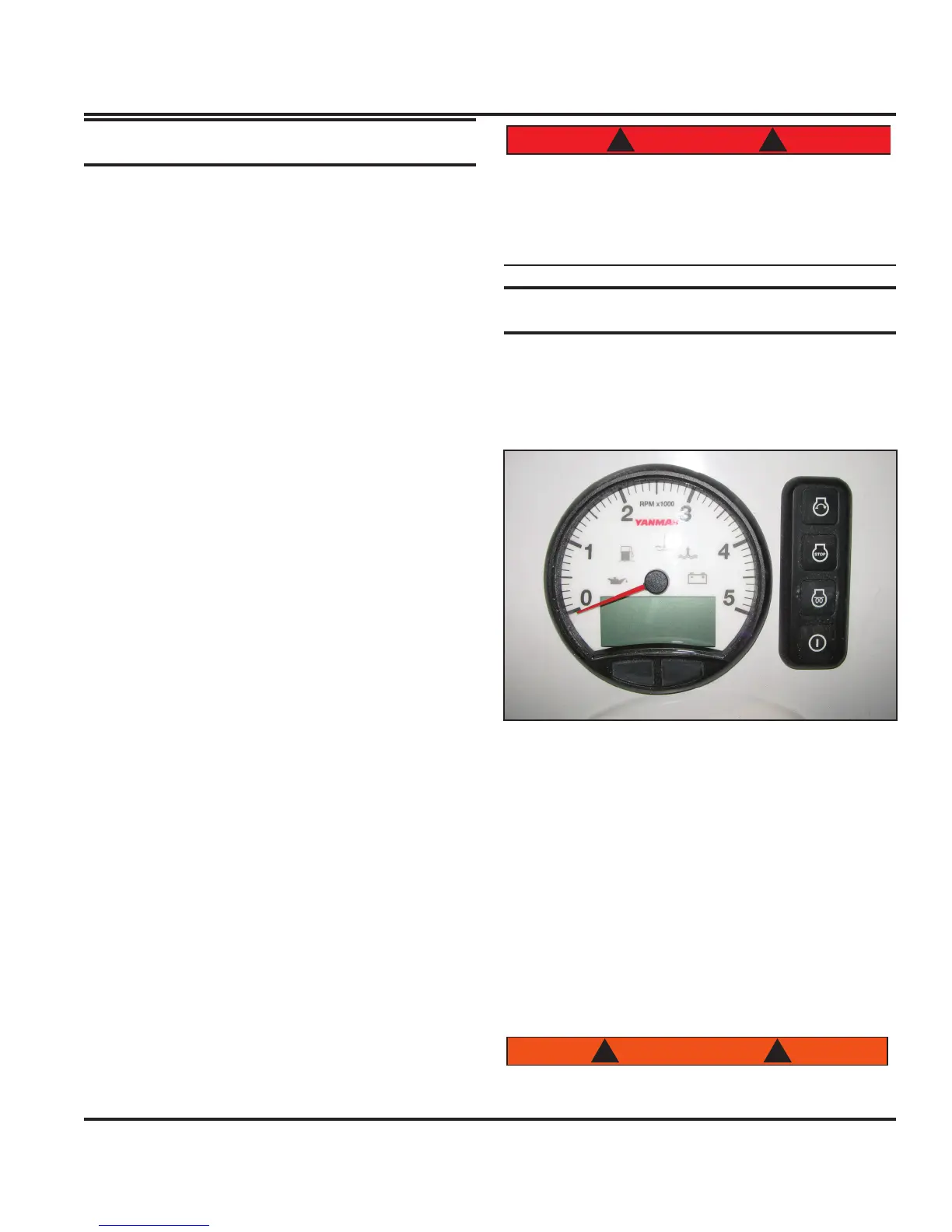
The engine start panel is located on the pedestal’s instru-
ment pod (Fig. 11.5).
Figure 11.6
For instructions on starting/stopping your engine, please
refer to the Getting Underway chapter of this manual.
NOTE: Excessive cranking could cause seawater to
enter the cylinders and damage the engine, also known
as hydrolock. If the engine does not start after cranking
for 15 seconds, close the thru-hull water intake valve to
avoid filling the muffler with water. Crank for 10 seconds
at a time until the engine starts. When the engine does
start, stop the engine immediately and turn off the power
switch. Be sure to re-open the seacock and restart the
engine. Operate the engine normally.
Engine manufacturers do not warranty items dam-
aged by hydrolock.
Engines and Transmissions
11.5



 To Next Page