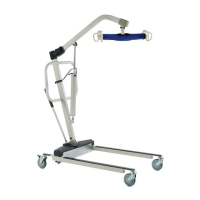
LiftingthePatient
WARNING!
RiskofInjuryorDeath
Improperlyattached,improperlyadjusted,or
damagedslingscancausethepatienttofallor
causeinjurytoassistants.
–IndividualsthatusethestandassistslingMUST
beabletosupportthemajorityoftheirown
weight,otherwiseinjurymayoccur .
–DONOTmovethepatientiftheslingisnot
properlyconnectedtotheattachmentpoints
ofthelift.Checkthattheslingisproperly
connectedtotheattachmentpointspriorto
liftingapatient.Ifanyattachmentsarenot
properlyinplace,correcttheproblem.
–Whentheslingiselevatedafewinches/cmoff
thestationarysurfaceandbeforemovingthe
patient,checkagaintomakesurethatallsling
attachmentsaresecure.Ifanyattachments
arenotproperlyinplace,lowerthepatient
backontothestationarysurfaceandcorrect
theproblem.
WARNING!
StandAssistSling
–DONOTusethestandassistslingin
combinationwiththepatientliftasatransport
device.Itisintendedtotransferanindividual
fromonerestingsurfacetoanother(suchasa
bedtoawheelchair).
–Beforeliftingthepatient,makesurethebottom
edgeofthestandassistslingispositionedon
thelowerbackofthepatientandthepatient’s
armsareoutsidethestandassistsling.The
beltMUSTbesnug,butcomfortableonthe
patient,otherwisethepatientcanslideoutof
theslingduringtransferpossiblycausinginjury.
TransferStandAssistSling
–Beforeliftingthepatient,makesurethe
bottomedgeofthetransferslingisatthebase
ofthespineandthepatient’sarmsareoutside
thetransfersling.
–DONOTraisethepatienttoafullstanding
positionwhileusingthetransfersling,
otherwiseinjurymayoccur.
1195052-B35





 To Next Page