114
The position of the propane container(s) and the hoses are critical
to proper operation and propane ow. Follow these instructions
to make sure your propane container(s) are connected properly.
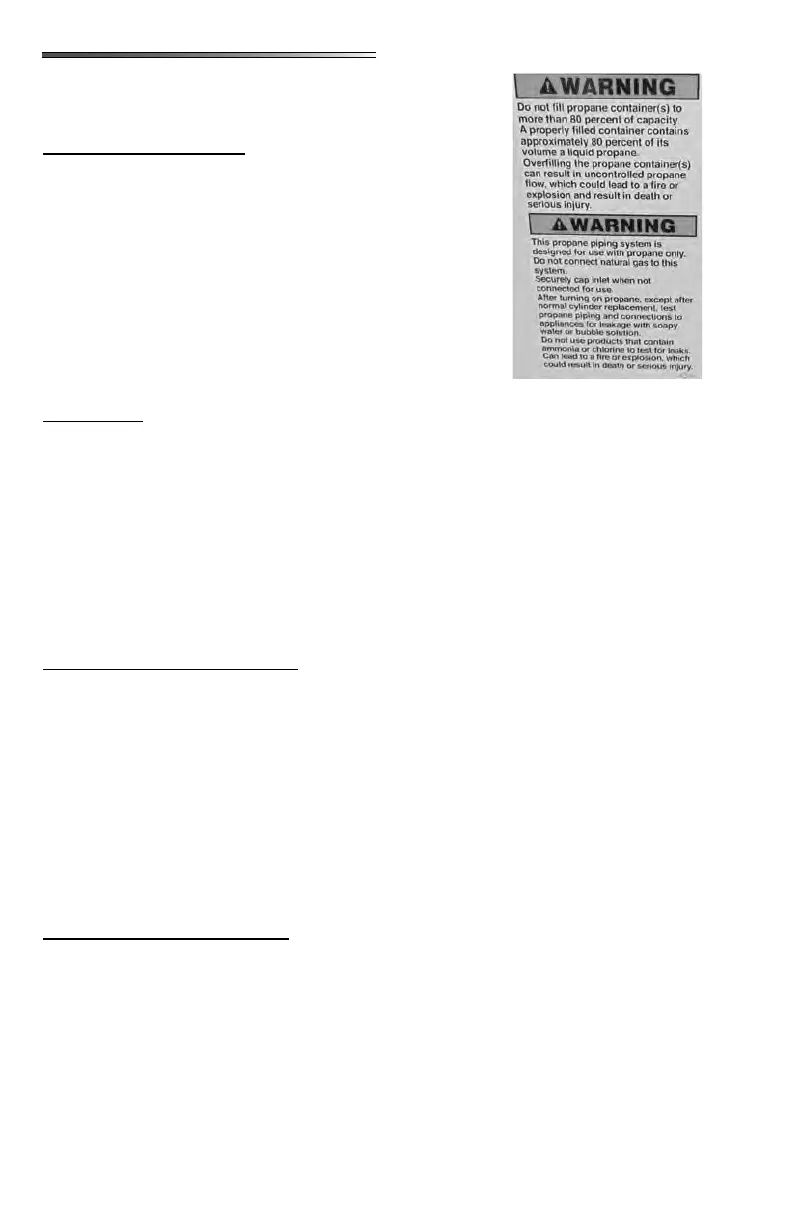
Never allow your propane tank to be lled above the maximum
safe level as indicated by the xed liquid level gauge. Do not
allow the visible gauge to be used for lling. Overlling the
propane container above the liquid capacity indicated on the
container, could allow liquid propane to enter the system that is
designed for vapor only creating a hazardous condition.
This label should be kept permanently axed to your RV.
Refer to your Warranty Packet for more information on the LP
gas system components.
Propane gas is normally non-corrosive - you need not worry about
the inside of your container. However, the outside should be kept
free from rust by a periodic coat of paint in a light reective color.
Rust, scratches and/or dents can aect the safety of the cylinder. In-
spect the cylinder at regular intervals.
Ifs a problem, have it evaluated by a qualied technician and discard it. DOT requires that a
visual inspection be made prior to each lling.
Any cylinder that has been exposed to re, leaks or seems damaged should not be relled.
Do not attempt to repair any containers, container valves, regulator or appliances by your-
self. Use only trained certied propane gas service technicians to perform repairs.
DOT cylinders may only be used for 12 years after their manufacture date (the number of
years for certication may vary in your area). After that, the cylinders must be “recertied”
which provides another ve years of use.
The cylinders can be recertied every ve years thereafter. Federal DOT (Department of
Transportation) regulations require periodic inspections and re-qualications of the propane
cylinders. DO NOT USE damaged or rusted containers.
Verify with your local propane dealer that all required inspections and certications have
been completed on the propane cylinder within the correct time period before relling the
cylinder. Have the LP system checked for leakage each time a cylinder is relled or after
any part of the propane system has been disconnected.
The hoses, pipes, tubes and ttings used in your propane system are designed to withstand
pressures exceeding those of the propane system. However, because environment and time
can both contribute to the deterioration of these components, they must be inspected for
wear at regular intervals.
Be sure to inspect the hose before each season and when having the tank relled. Look for
signs of deterioration such as cracks or loss of exibility. When replacing the hose or other
propane components, make sure to always replace them with components of the same type
and rating (check with your dealer).




 To Next Page