4 Description
11 of 88
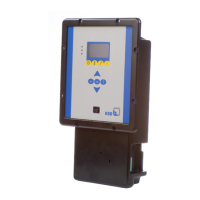
BoosterControl Advanced
▪ Inlet tank control (for corresponding system configuration)
▪ Energy-saving operation
▪ Dynamic pressure setpoint compensation
▪ Base-load or peak-load pump operation (jockey function)
Monitoring
Monitoring of external conditions via digital and analog inputs
The following monitoring functions can be used:
▪ General fault message
▪ Individual fault messages (lack of water)
▪ Thermal monitoring of pump motors
▪ Sensor fault/broken wire
▪ Fault/warning per pump
▪ Monitoring of service interval
▪ Dry running detection via pressure switch or pressure sensor
▪ Operational availability, indicated via LEDs and display
▪ Level monitoring
▪ Fire alert recognition (with corresponding system configuration)
▪ Monitoring of the inlet tank valve (with corresponding system configuration)
▪ Water flow detection (water flow detector), including temperature monitoring
▪ Dry running protection
You can also assign up to 3inputs with freely configurable statuses or signals as an
option.
Communication
Communication with field bus systems via the following interfaces:
▪ Profibus
▪ Modbus RTU– RS485
Bus communication with frequency inverters is possible for the following
manufacturers:
▪ KSB PumpDrive
▪ Danfoss VLT 2800
▪ Danfoss Microdrive FC 51
▪ Danfoss Aquadrive FC 200
4.5 Technical data
Table6: Technical data
Characteristic Value
Power supply
Rated voltage 1~ 230 V AC ±10 %
Mains frequency 50/60 Hz
Rated insulation voltage 500 V AC
Standby current input ~ 35 mA
Standby power 7,5 W
Enclosure
Housing IP20
For control cabinet installation IP55
Digital inputs
Motor protection 24 V DC
Pressure switch 24 V DC
Water flow detector 24 V DC
Fault reporting relay of frequency inverter 24 V DC


 To Next Page