17
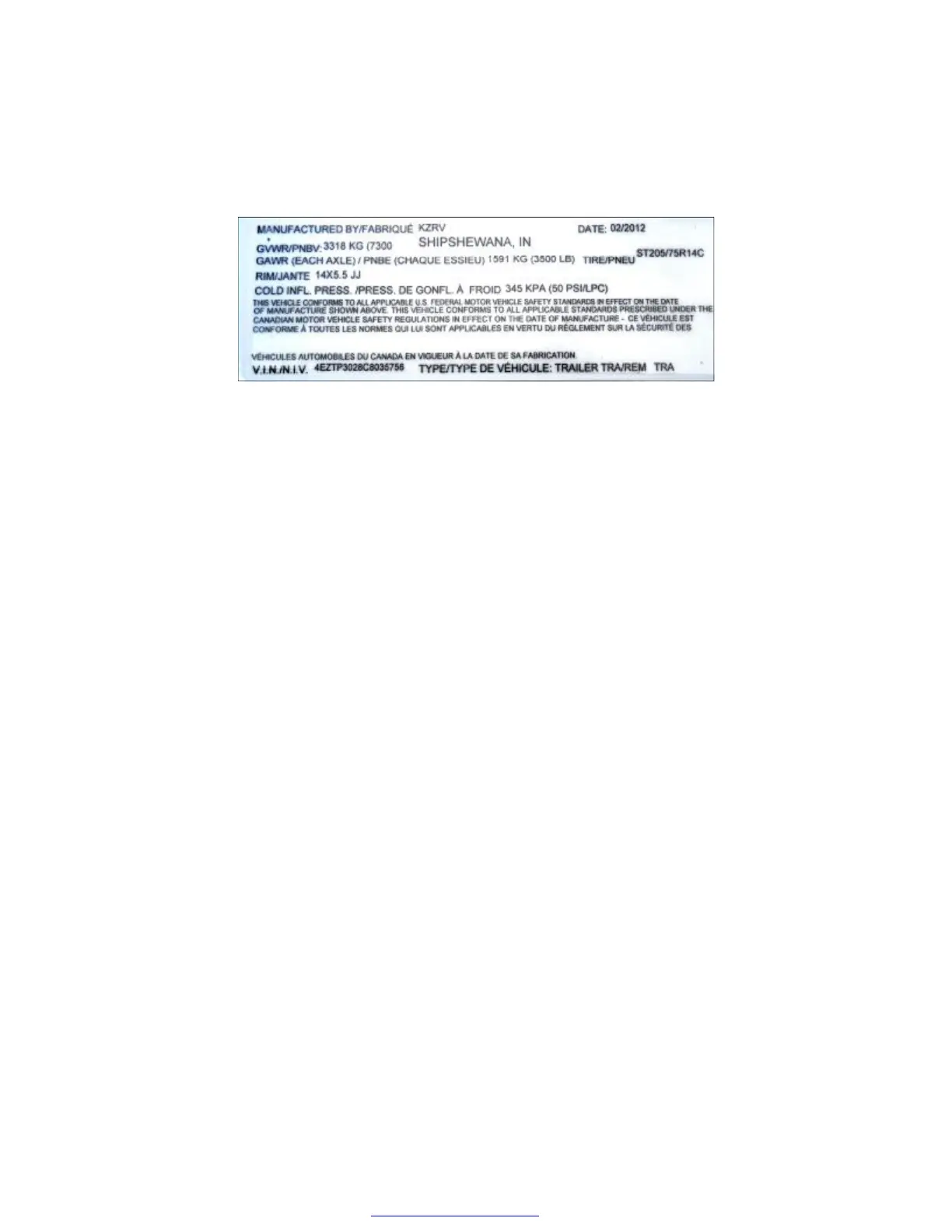
Gross Axle Weight Rating (GAWR): is the value specified as the
load carrying capacity of a single axle system, as measured at the
tire-ground interfaces. One of five components will determine this
rating: tires, axle, springs, brakes, or wheels. One of these five is
generally rated slightly less than the others.
Gross Vehicle Weight Rating (GVWR): is the maximum permissible
weight of this trailer when fully loaded. It includes all weight at the
trailer axle(s) and tongue or pin on Fifth Wheel. This includes ALL
cargo, options and liquids.
Unloaded Vehicle Weight (UVW): is the weight of this trailer as
manufactured at the factory. It includes all weight at the trailer axle
(s) and tongue or pin. If applicable, it also includes full generator
fluids, including fuel, engine oil and coolants.
Cargo Carrying Capacity (CCC): is equal to the GVWR minus each
of the following: UVW, full fresh (potable) water weight (including
water heater, and full propane weight.
Weighing Vehicle (Loaded or Unloaded)
The proper method to weigh the coach is to use a truck scale. Place
the coach axles (tires) and tongue jack or landing jacks with front
supports, 12” to 24” from the edge. Unhook the tow vehicle and
move forward 6” to 8”. Now record total weight. Re-hook the tow
vehicle and remove the weight from the front support. Be sure no
part of tow vehicle is on the scale. Now record the axle weight only.
The difference between the two weights is the hitch weight.
KZRV suggests you also weigh each side (2 tires) separate to find
balance of pounds per side. Its possible to have 1 side correct and
the other side over-loaded. Often the slide out side or refrigerator
side will be slightly heavier than the other.
PDF created with pdfFactory trial version www.pdffactory.com


 To Next Page