33
6.3.2 Residual Current Monitoring Device
With an integrated universal current-sensitive residual current monitoring unit included, the
inverter will disconnect immediately from the mains power once a fault current with a value
exceeding the limit is detected. However, if an external residual current device (RCD) (type A is
recommended) is mandatory, the switch must be triggered at a residual current of 300 mA
(recommended). RCD of other specifications can also be used according to local standard.
6.4 EPS Output Connection
If you want to use the energy storage system to power the house (as a standalone system or during
Grid failure), the EPS connector should be used and the EPS function should be enabled during
setup. Otherwise, you could leave the EPS port disconnected.
The EPS output port is only for critical loads connection.
• The grid voltage and frequency must be in the permissible range.
• Risk of inverter damage due to incorrect cable connection. Do not connect the grid power
wires to EPS port.
• An independent circuit breaker must be installed on the EPS side to cut off the inverter
from EPS loads when necessary.
• Decide which household appliances should be included in the EPS circuit and carry out
any required re-wiring.
Wiring Connection Procedure:
Step 1: Assembling the EPS Connector (reference to Grid connector).
Make sure Live/Neutral/PE wires are correct.
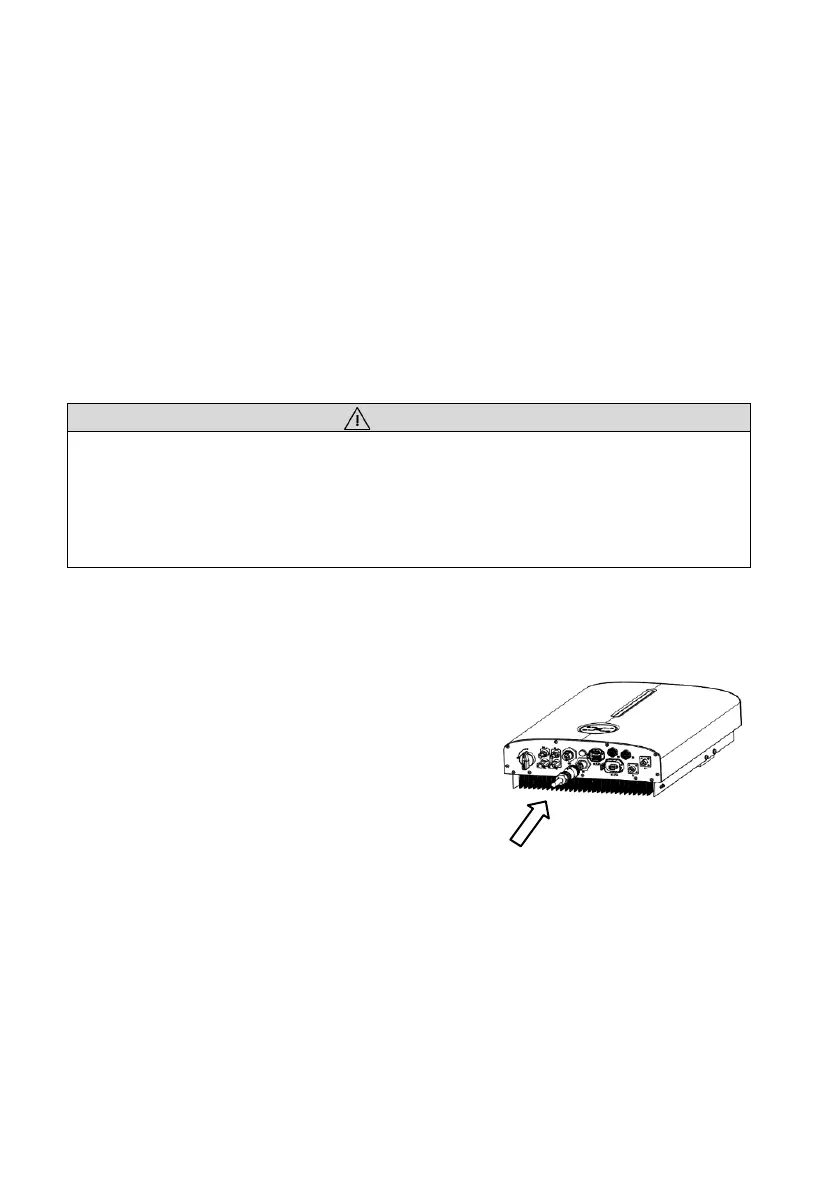
Step 2: Connecting the EPS cable to the inverter
•
Unscrew the cap on the EPS port.
•
Insert the EPS cable into the EPS port on the
inverter until there is a “Click” sound.
•
Check all the wires are firmly installed.






 To Next Page