Folio 931-7
WIRE ROPE INSTALLATION AND MAINTENANCE
3. Broken or cut strands.
4. Broken wires (see Periodic Inspection for additional
information).
5. Core failure in rotation resistant rope (indicated by lay
lengthening and reduction in diameter).
Periodic Inspection
The periodic inspection interval must be determined by a
qualified inspector and be based on the following factors:
• Expected rope life as indicated by the rope manufacturer
or past experience as determined by the qualified
inspector.
• Severity of the environment the rope is operated in.
• Size, nature, and frequency of lifts.
• The rope’s exposure to shock loading and other abuse.
• Rope maintenance practices.
The periodic inspection must be performed at least annually.
During the periodic inspection, the entire length of wire rope
must be inspected for the following types of damage. Any
damage found must be recorded and a determination made
as to whether continued use of the rope is safe.
1. All points listed under frequent inspection.
2. Reduction in rope diameter below the nominal diameter
caused by loss of core support, internal or external
corrosion, or wear of the outside wires.
3. Severely corroded or broken wires at end attachments.
4. Severely corroded, cracked, bent, worn, or improperly
applied end attachments.
Rope Not In Regular Use
Wire rope must be given a complete inspection if it has been
idle for a month or more due to shutdown or storage of the
crane on which the rope is installed. The inspection must be
performed by a qualified inspector looking for the damage
identified under both Frequent and Periodic Inspection.
Replacing Wire Rope
The final decision as to when a wire rope should be replaced
is the responsibility of the qualified inspector. Discovery of
the following conditions is sufficient reason for questioning a
wire rope’s safety and for replacing it.
Wire Rope Diameter
Measure and record the diameter of a new wire rope after
initial loading for comparison with future inspections. A
reduction in rope diameter is often the first outward sign that
the wire rope core is damaged. When reduction in diameter
is noted, the rope must be removed from service.
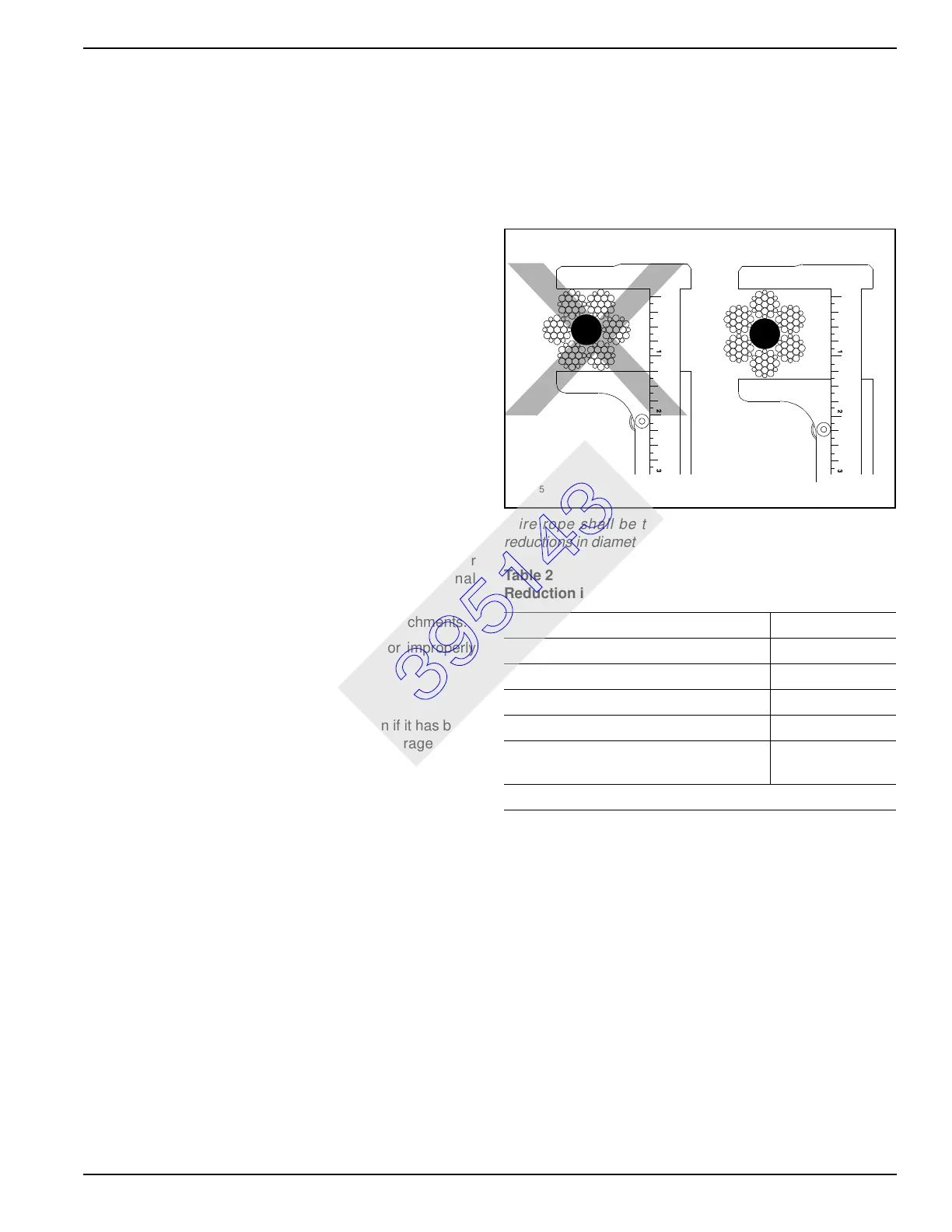
Measure the rope’s diameter across crowns of the strands so
the true diameter is measured as shown in Figure 9.
Wire rope shall be taken out of service when following
reductions in diameter occur:
Table 2
Reduction in Rope Diameter*
Wire Rope Diameter Reduction
Up to 5/16" (8 mm) 1/64" (0.4 mm)
3/8" (9.5 mm) through 1/2" (13 mm) 1/32" (0.8 mm)
9/16" (14.5 mm) through 3/4" (19 mm) 3/64" (1.2 mm)
7/8" (22 mm) through 1-1/8" (29 mm) 1/16" (1.6 mm)
1-1/4" (32 mm) through 1-1/2" (38
mm)
3/32" (2.4 mm)
* Consult wire rope manufacturer for diameters not listed.
FIGURE 9
WRONG
A925
RIGHT
395143





 To Next Page