PEDESTAL/BARGE MOUNTED CRANES
Folio 1064-4
Definitions
1.
Machine List
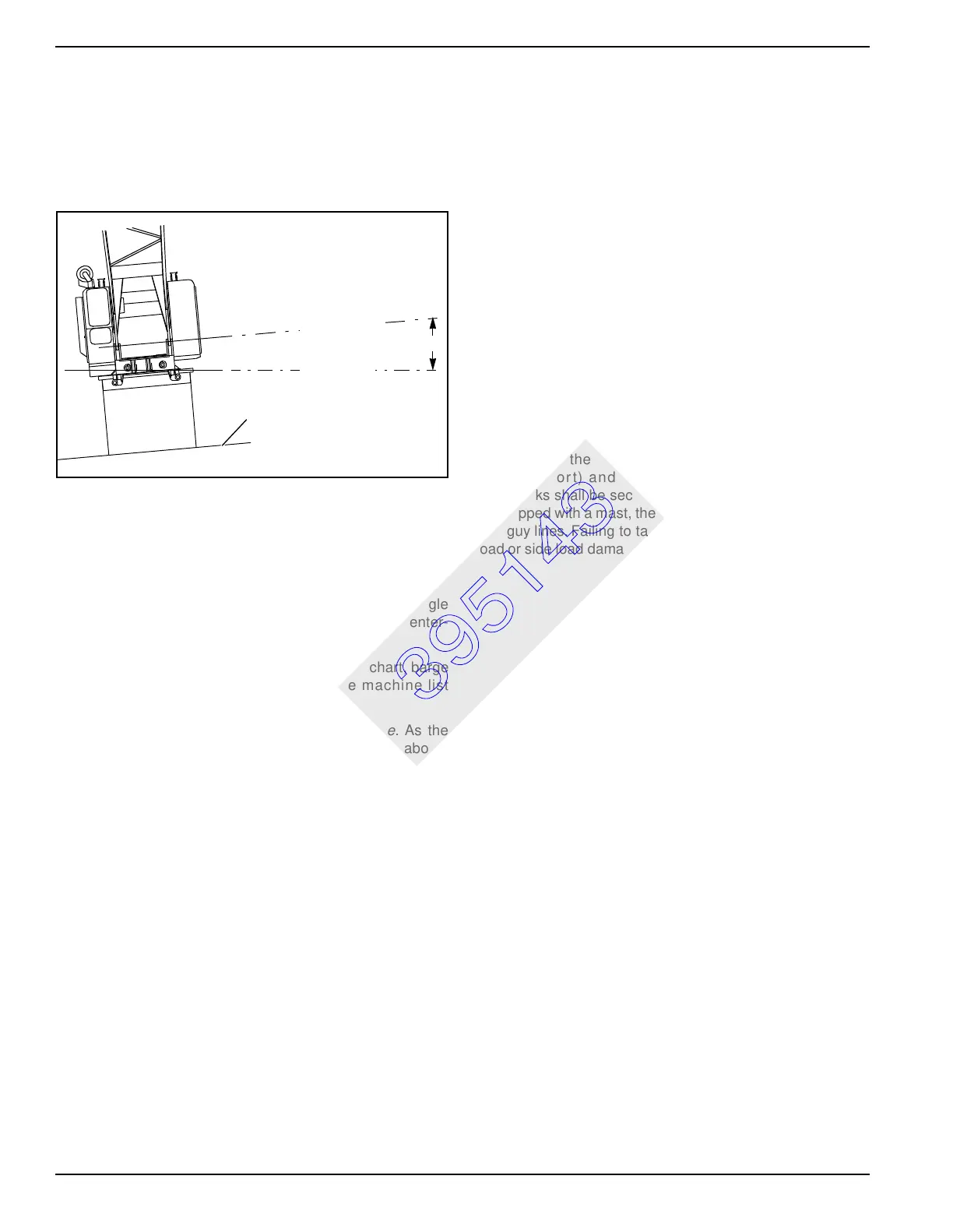
, as defined by Manitowoc Cranes, is the
crane’s out-of-level condition — from side-to-side — as
measured by the angle between horizontal and a line
drawn through the centerline of the crane’s boom hinge
pins (Figure 7). This out-of-level condition creates side
load and effects the crane’s lifting capacity.
2.
Barge List
(also referred to as heel or trim) causes
swing out of the load and may produce side load. When
Manitowoc Cranes provides a capacity chart showing
capacities for a 2 degree machine list for example, we
are referring to maximum allowable lifting capacity for
the crane when experiencing an out-of-level condition
(side-to-side) of 2 degrees as measured by the angle
between horizontal and a line drawn through the center-
line of the crane’s boom hinge pins.
Unless other side specified on the capacity chart, barge
list (heel or trim) must not exceed the machine list
degrees given on the capacity chart.
3.
Barge List and Machine List are not the same.
As the
machine rotates on the barge, it’s list (as defined above)
will change. The worst machine list condition generally
occurs when the machine swings over the barge’s
corner producing maximum side load.
CRANE INSPECTION
To aid in preventing harmful and damaging failure as
previously indicated, it is recommended that each hook roller
assembly be inspected daily for any sign of overloading, to
include:
1.
Deformation of roller path.
2.
Proper hook roller adjustment.
3.
Deformation or cracks in hook roller hanger.
4.
Bent hook roller shaft.
5.
Damaged bearings.
While hook roller inspection is of major importance, regular
inspection for signs of overloading in the following load
bearing components is equally important and must not be
overlooked. Correct each defect found before placing the
crane into service.
1.
Boom
2.
Gantry
3.
Backhitch
4.
Rotating Frame
5.
Wire Rope
6.
Pendants
7.
Roller Path
8.
House Rollers
TRANSPORTING CRANE
If it is necessary to transport the crane on a barge, ship or
floating platform when dynamic conditions will be
experienced, the boom shall be lowered onto a cradle (or
other support) and the boom, crane upperworks and
lowerworks shall be secured against movement. If the crane
is equipped with a mast, the mast shall be securely tied down
with guy lines. Failing to take these steps can result in shock
load or side load damage to the boom and mast.
Barge Deck
L = Degrees of Machine List
(Maximum allowable specified
on Capacity Chart)
FIGURE 7
A839
L
Thru Boom
Hinge Pins
C
L
Horizontal
395143




 To Next Page