12 | Page
www.mdcusa.co m
Ph: 833-632-8721
Page | 12
Ball (Coupling) Weight
The ratio of overall weight of the trailer to the weight exhibited on the tow ball or coupling
is an extremely important aspect of making a trailer handle correctly when towed.
Generally, the ball or tongue weight allowed by most vehicle manufacturers is 10% of the
maximum towing capacity. Given this ratio, the caravan industry builds campers and
caravans with this in mind. When loading your MDC caravan, you should have a target ball
or coupling weight of 10% or slightly higher to ensure the weight balance is at an ideal
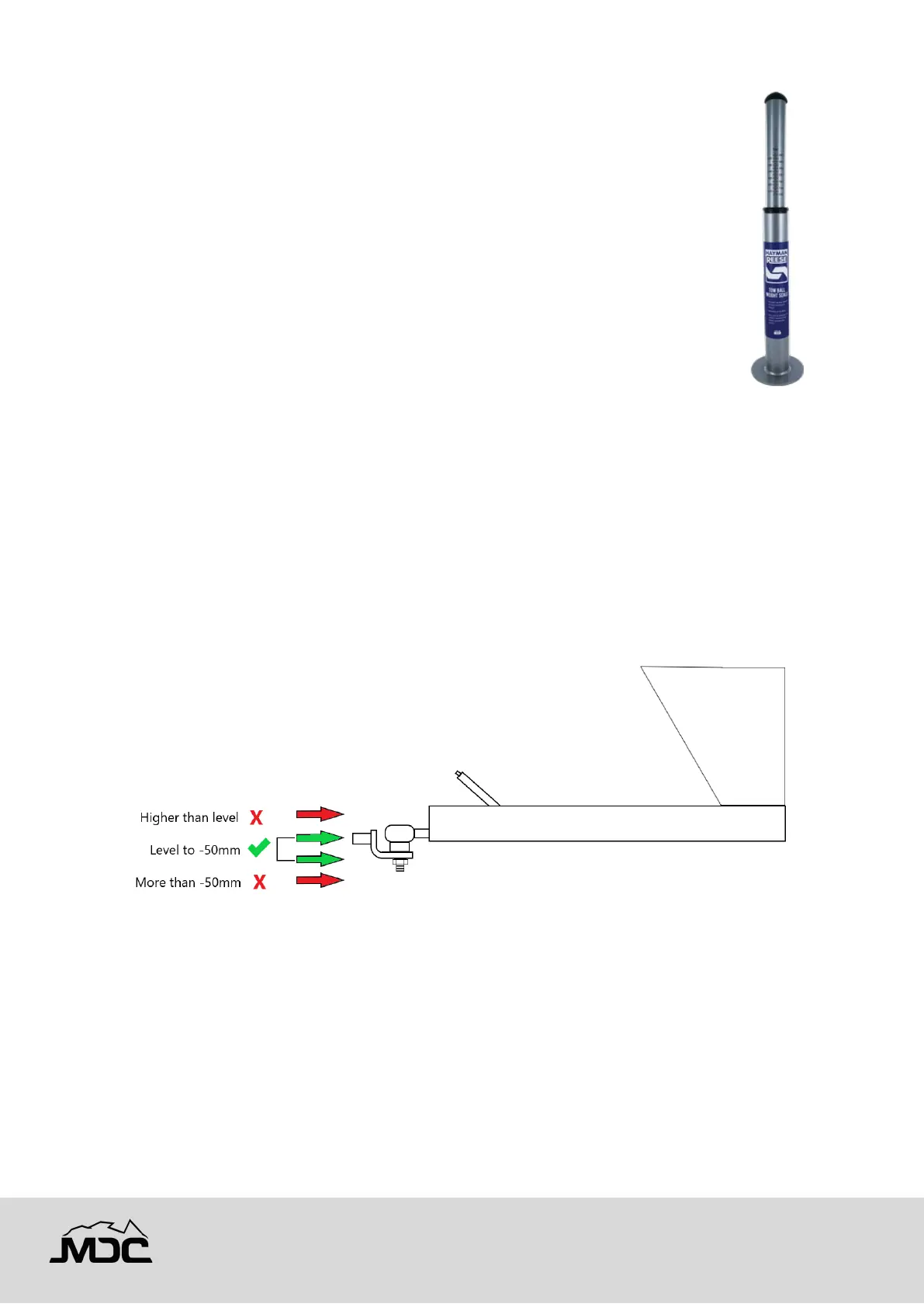
starting point. This figure should not be a guess, you should weigh your caravan with its
normal load when travelling and use a ball weight scale to achieve the desires ball weight.
These are an inexpensive item that will help you get the weight balance right when you
load up for your trip.
Load Placement
Where you place the items in your trailer will affect how it behaves. Loading too much weight in the extremities
of the trailer can have a very bad effect. MDC owner manuals have a loading guide to assist in this area. By
following the guide and ball weight recommendations you’ll achieve the best possible result. Use the load
placement guide in this manual as a reference for packing your caravan.
Trailer Level
The height of your hitch in respect to the level of the trailer will change the handling while being towed. The best
practice with your MDC trailer is when loaded and hitched to the vehicle, the drawbar is NO higher than level.
Ideally you should look to have the drawbar slightly lower than level between 0 and 50mm. Higher than level or
too low will have an adverse effect on how the trailer tows.



 To Next Page