05/06
•
5
LOCKOUT PROCEDURES
Lockout procedures shall be used at all times when maintenance is being done or
the machine is being shut down. This will prevent accidents and prevent the machine
from accidentally being started by other crewmembers or passersby. The authorized
employees that the machine is being locked out shall notify the affected employees. In
addition to verbal notication, a sign indicating a power lockout condition will be placed
near the machine/equipment controls.
The engine, electrical panel or other power source of any equipment to be maintained,
adjusted or repaired shall be locked out by each employee doing the work in order
to prevent unintended motion, startup or release of stored energy which could cause
personal injury.
Safety locks are for the personal protection of the employees and are only to be used
for locking out equipment. Each and every person shall have their own lock and key
and be trained on proper lockout procedures and the methods or means to control
them in accordance with ANSI Z244.1 and OSHA requirements.
Equipment with main disconnect switches shall be turned off and locked in the off po
-
sition only after the electrical power is shut off at the point of operation control. Failure
to follow this procedure may cause arcing and possibly an explosion.
After locking out the power source, the employee shall try to start the equipment,
machine, or operate the controls to ensure no unintended motion will occur, or test the
equipment and machine by use of appropriate test equipment to determine that the
energy isolation has been effective.
When two or more employees work on the same equipment, each person is respon-
sible for attaching his/her own lock. There shall be a separate lock for every person
working on the machine. Safety locks and adapters are to be afxed to levers, switch-
es, valves, etc., in the non-operative (off) position.
Upon completion of the work, each employee must remove his/her lock, rendering the
machine operable when the last lock is removed.
The employee responsible for removing the last lock, before doing so, shall assure
that all guards have been replaced, the equipment, machine, or process is cleared
for operation, and appropriate personnel notied that power is being restored. Work
activity will begin once each authorized employee involved has veried that the current
control of hazardous energy sources has been effective.
Employers must have specic procedures incorporated into the energy control pro-
gram to address emergency lock removal. Employees must be trained in these proce-
dures.
If a shift or personnel change occurs before the maintenance or servicing is nished,
it is the responsibility of the off-going and on-coming shift supervisors involved with
the locked or tagged out equipment/machine to ensure that the continuity of the en-
ergy control procedure is maintained. Decide whether to use the same lockout/tagout
device that was originally attached or use a separate device that should be attached
under the direction of the shift supervisor. Document the method used on the Energy
Control Procedures.
Each and every person performing any type of maintenance and whenever the ma-
chine is not in operation shall follow lock out procedures. Failure to lock out while per-
forming maintenance could result in serious personal injury or death! Morbark equip-
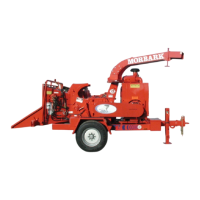
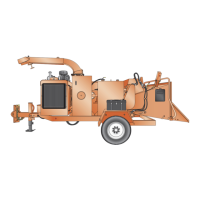
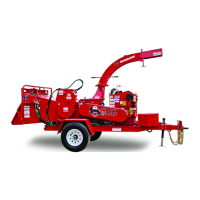
ment is designed to be quickly and easily locked out whenever maintenance or repairs
are performed. Train your crew to lock out every time!
1.
2.
3.
4.
5.
6.
7.
8.
9.
10.



 To Next Page