50
•
Tornado 15
ROUTINE MAINTENANCE
KNIFE GRINDING
When grinding the knives, extreme care must
be taken to ensure that excessive heat isn’t put
into the knife edge. Excessive heat (indicated
by discoloration of the knife edge) will lead to
microscopic cracks that can cause the knife to
break when it is put back into service. DO NOT
attempt to use knives that have been exposed
to excessive heat from sharpening! Once the
discoloration appears, the knife can not be
made serviceable again by simply removing
the discoloration.
There are three sharpening methods that will
provide a good cutting edge while reducing
the possibility of excessive heat buildup in the
knife edge.
Hand le.
Power belt sander with ne paper.
Conventional knife grinder with coolant
system.
The time between knife sharpening will vary
with the type of wood and operating conditions.
Sharp knives are essential to good chip qual-
ity and nothing is gained by running the chip-
per with dull knives. Indications of dull knives
are poor chips, excessive oversize, nes, and
poor feed characteristics of chipper. The chip-
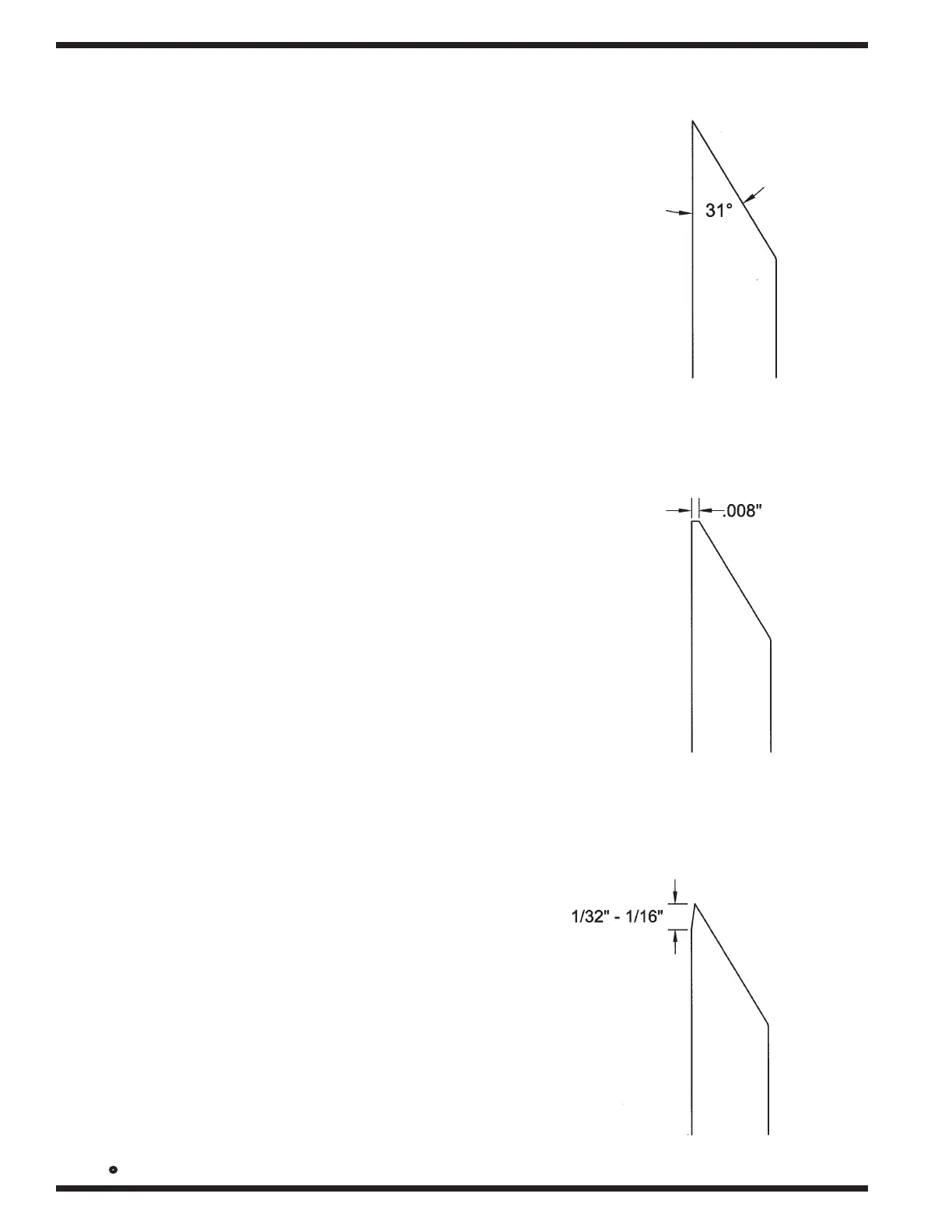
per knife is factory sharpened to a 31° bevel.
There are exceptional conditions where the
angle may vary from 29° to 31° to improve
performance.
CAUTION: Angle should never exceed
31°.
The most suitable angle for any particular con-
dition can only be determined by the trial and
error method right on the job.
To achieve longer knife life, follow these steps.
Begin with a knife sharpened to 31°.
•
•
•
1.
1
3
2



 To Next Page