46
•
Tornado 15
ROUTINE MAINTENANCE
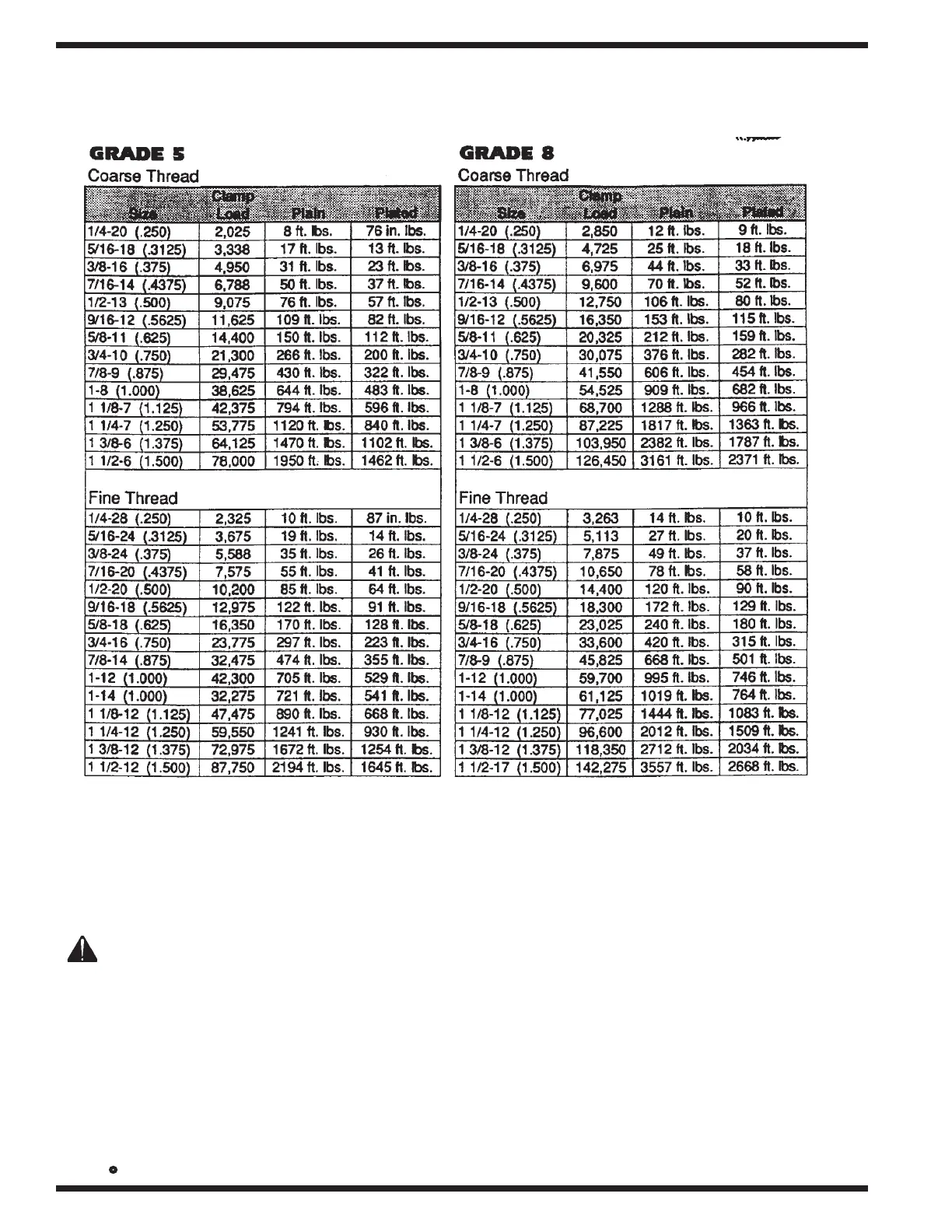
TIGHTENING TORQUE GUIDE
1. Parts using rivet nuts torque to 25 Ft. Lbs. Maximum.
2. Always use the torque values above when specic torque values are not available.
3. Do not use above values in place of those specied in other sections of this manual.
4. The above is based on use of clean, dry threads.
5. Reduce torque by 10% when lubricant is used.
6. Capscrews threaded into aluminum may require reductions in torque of 30% or more of Grade 5 capscrews torque
and must attain two capscrew diameters of thread engagement.
CAUTION: If replacement capscrews are of a higher grade than originally supplied, adhere to torque speci
cations for that placement.
**Based on IFI 5
th
Edition Technical Data N-12/N-16, using Equation (1) and a torque coefcient, K=0.20 for nonplated
steel fasteners and K=0.15 for plated fasteners. These Figures represent an estimate of torque (torque being the
measurement of friction, not tension) required to induce given preload (clampload) in a bolt for noncritical applications
only. For critical or special applications where greater control is desired this should be experimentally determined.
This applies to washer faced or double chamfered hex nuts (or bolts, if bolt is torqued) having a width across ats of
approximately 1.5 times the nominal diameter and having threads free of interference. Because of the many interrelated
variables that directly or indirectly affect friction, such as surface texture, type of coating or nish, lubrication, speed of
tightening, human error, etc., it is possible to experience as much as ± 25% deviation in preload (clampload) with the use
of a torque wrench.



 To Next Page