Optical interface
30
Optical interface
The laser has either one or two optical outputs (marked with an ‘A’ and a ‘B’ on
the front of the module). Assignment of the output type depends on the laser
configuration ordered from the factory. The optical outputs are assigned as
either:
• Main – this is the laser’s primary optical output (typically Class 3B) near
which, a laser aperture label is affixed.
• Monitor – this is a low power output intended for monitoring purpose only.
The output is classified as a laser CLASS 1 and therefore it does not require a
laser aperture label.
• Blank – if no output is assigned to either A or B outputs, a blank panel is
placed over the output.
Contact NKTP support for information on how the laser’s optical ports are
assigned. See “Support contact details” on page 106.
Optical fibers,
connectors and
adapters
If an optical output is assigned to port A or B, it can be configured as either:
• fiber patch cords with FC/APC connectors (FC/APC pig-tail)
– or –
• connector adapters (FC/APC adapter or SC/APC adapter)
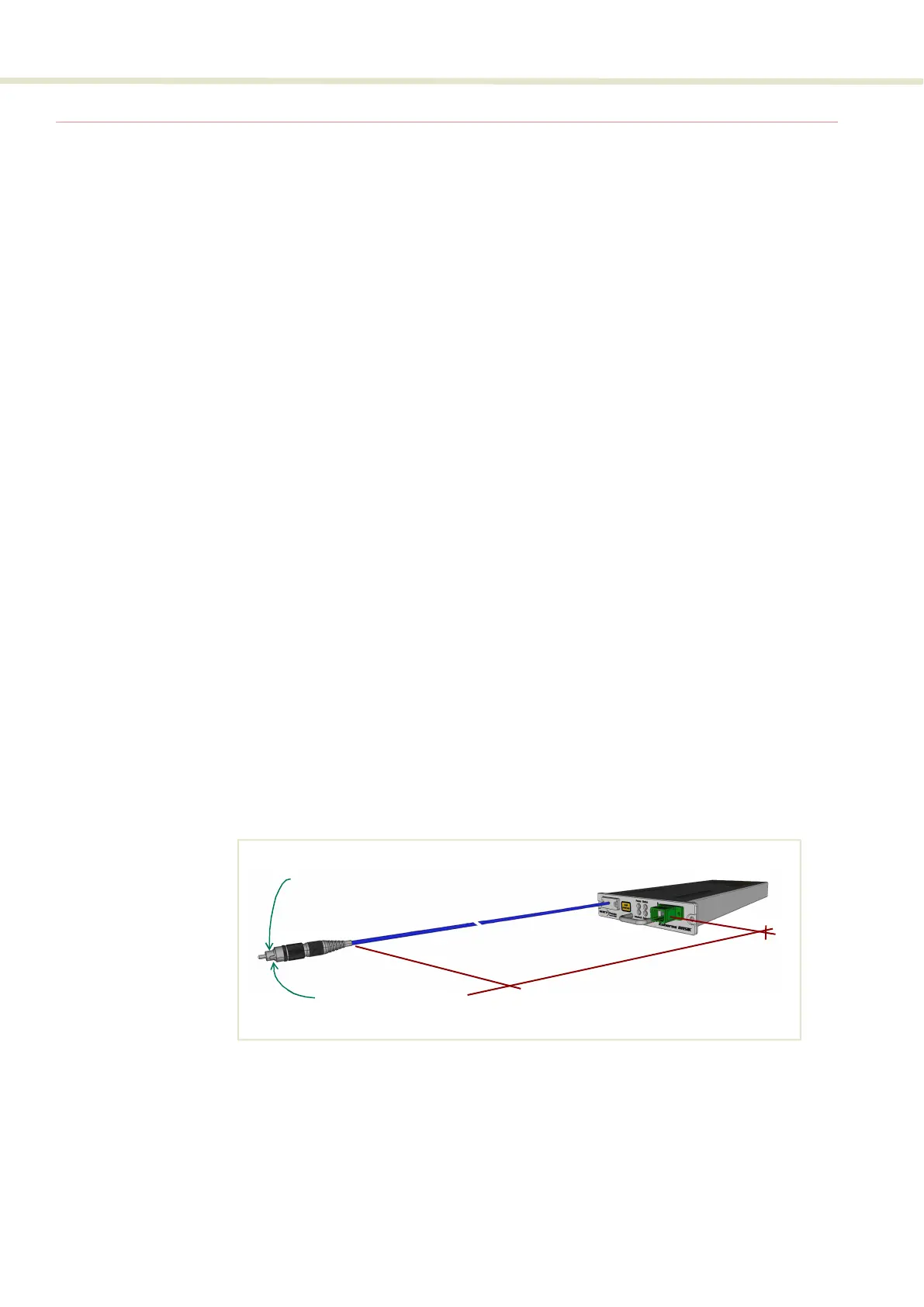
Figure 6 shows a Koheras BASIK assigned with a fiber patch cable and FC/APC
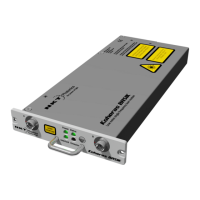
connector assigned to optical port A as the main output. Figure 2, shows the front
panel layout when both optical ports are assigned as SC/APC adapters.
Figure 6 BASIK equipped with fiber cord and FC/APC connector
Polarization Maintaining Output (Panda PM 1550)
If the module includes an optional Panda polarization maintaining fiber cord, the
slow axis is by default aligned to the connector key. Because of this, the laser
polarization (E-field) is parallel to the key.
FC/APC connector with
2 mm R-keyed
0.5 m x 3 mm
Angled Fiber Tip
jacketed fiber


 To Next Page