If warm, some early activity will be seen with bees starting to fly out.
Add 3 brood frames in front and behind the brood and add some supers.
May
What are the bees doing?
The brood nest will be growing. The bees will be taking full advantage of
the spring nectar flow. If the weather has been very good the bees may
be preparing to swarm.
What should you be doing?
You should pay very close attention to your bees to spot any signs of
swarming preparations. Inspect them once a week. If any signs of
swarming are seen, you should immediately artificially swarm your bees
to avoid the risk of them leaving the hive. If no signs of swarming are
evident but the colony has reached its peak (using between 13-15 frames)
you could artificially swarm your bees as a precaution see Page 42.
Remove any old frames that do not contain brood (make sure you check
thoroughly that there are no eggs in the bottom of the cells) and replace
with new frames.
Add more supers, especially if you live in an area of large nectar yield such
as near fields of oil seed rape.
Feed
There shouldn’t be any need to feed now.
Health
Take the opportunity to treat your bees for varroa during the artificial
swarming procedure using the powdered sugar method. If you are
not artificially swarming yet then repeat the process of drone brood
removal. See artificial swarming on Page 42 and health section for
more information.
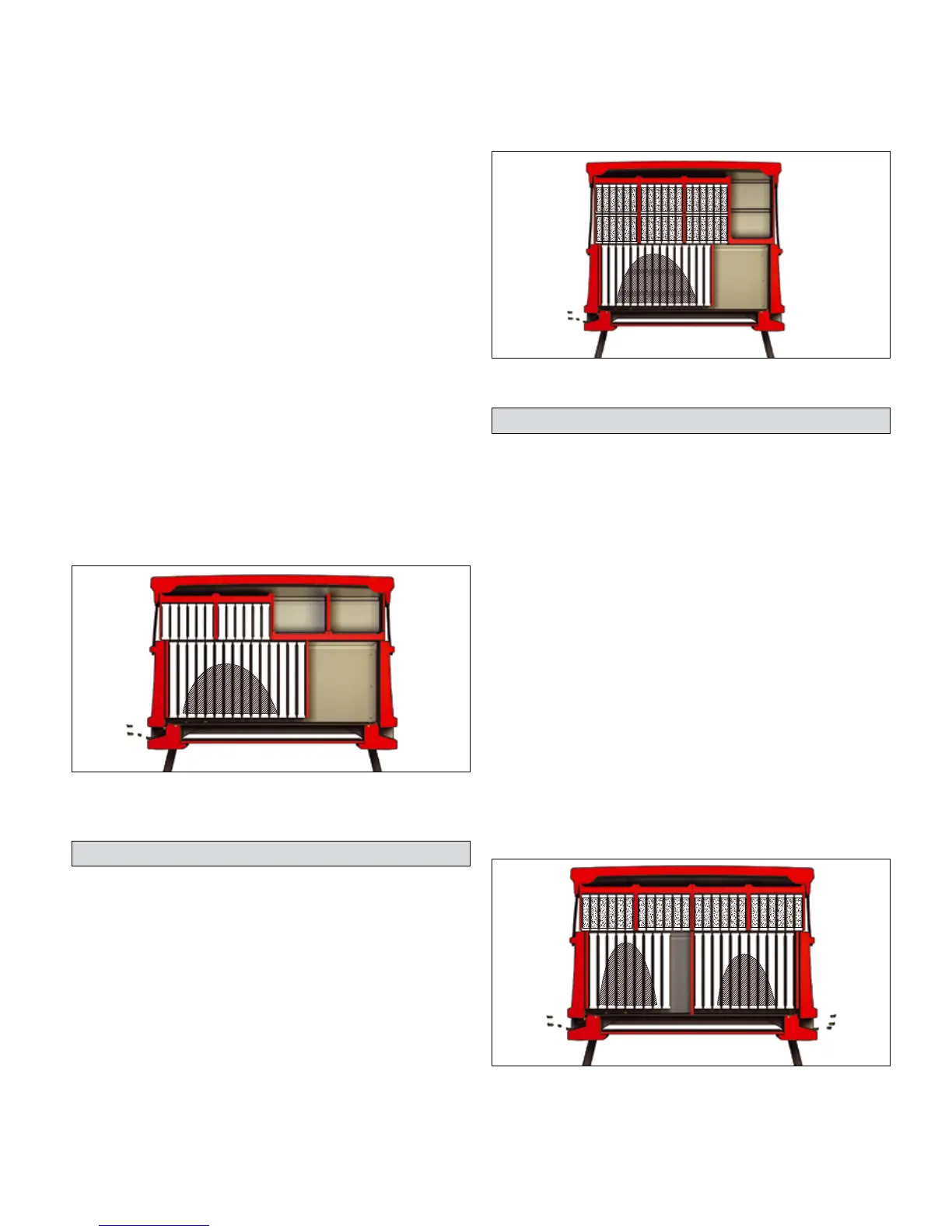
What will the Beehaus look like inside?
If your supers are becoming full, add some more on top.
June
What are the bees doing?
The bees could be making preparations to swarm. There may be a dip
in nectar availability leaving a lot of bees with little to do. New queens
reared under the artificial swarming technique will be ready to mate.
What should you be doing?
If you haven’t practiced swarm control because the colony was still
growing, you should now artificially swarm your bees. If you did artificially
swarm your bees in May, you should unite the two colonies once the new
queen’s side has produced a compact patch of brood – approximately 4-6
weeks after the original division. If the supers have capped honey in then
you can collect your first honey of the season now.
Feed
You shouldn’t need to feed now. However, if you have taken honey from
the supers and the weather then turns wet for more than a week, a big
colony can run out of stores.
Health
Take the opportunity to treat your bees for varroa during the artificial
swarming procedure using the powdered sugar method. If you are not
artificially swarming yet, then repeat the process of drone brood removal.
See artificial swarming and health section for more information. Keep an
eye out for any unusual brood patterns on the comb. Signs of foul brood are
difficult to spot, consult the health section on Page 46 for more information .
What will the Beehaus look like inside?
Diagram of the bees separated by artificial swarming.
Open Closed
Open Closed
Open Open
Queen
New
Queen
What should you be doing?
A spring clean of the Beehaus and full colony inspection are in order.
After winter the mesh floor can become littered with debris, you can give
the bees a hand by clearing this. It’s easier to do if you temporarily move
the colony and all the frames over to the empty side of the Beehaus.
Sweep the floor and make sure the entrance is completely open. You
should put this debris into the compost heap, don’t leave it under the
Beehaus. Scrape away any brace comb from the sides and if necessary
wash down with a solution of washing soda to remove propolis and then
dry. Finally, move the colony back across.
Now inspect the colony. You should assess the health of the colony very
carefully to ensure your bees are in tiptop condition before the population
increases dramatically. Finding the queen will be reassuring but if you
spot eggs or larvae in the cells you will know she is there. You should add
3 additional brood frames with foundation at the front of the brood and
3 behind, to give the queen room to expand the nest. Add 2 supers for
honey storage. The bees will move any honey left in the deep frames that
might otherwise restrict the queen from laying and you may be able to
take advantage of an early nectar flow.
Feed
There shouldn’t be any need to feed now.
Health
If the mite drop was more than 1 per day in March, put a brood frame
at the front of the Beehaus with a 5cm starter strip of foundation in.
The bees will draw out mainly drone brood in this frame. 21 days after
the drone eggs were laid remove this frame and cull the drone brood
to reduce the varroa infestation. See the health section on Page 48 for
more information.
Keep an eye out for any signs of Nosema. The tell tale signs are streaks
of bee poo on the inside of the Beehaus. See the health section for more
information on Page 50.
What will the Beehaus look like inside?



 To Next Page