July
August
What are the bees doing?
There should be a lot of activity now, with foragers eagerly collecting the
main summer nectar. The queen will start to reduce her rate of laying eggs.
The number of bees will still increase because the eggs will be hatching.
What should you be doing?
Add supers as necessary. If you did artificially swarm your bees in June, you
should unite the two colonies once the new queen’s side has produced a
compact patch of brood – approximately one month after the original
division. Enjoy watching your bees collecting all that delicious honey! It
may still be necessary to keep an eye out for swarming signs.
Feed
You shouldn’t need to feed now. However, if you have taken honey from
the supers and the weather then turns wet for more than a week, a big
colony can run out of stores.
Health
Keep an eye out for any unusual brood patterns on the comb. Signs of
foul brood are difficult to spot, consult the health section on Page 46 for
more information.
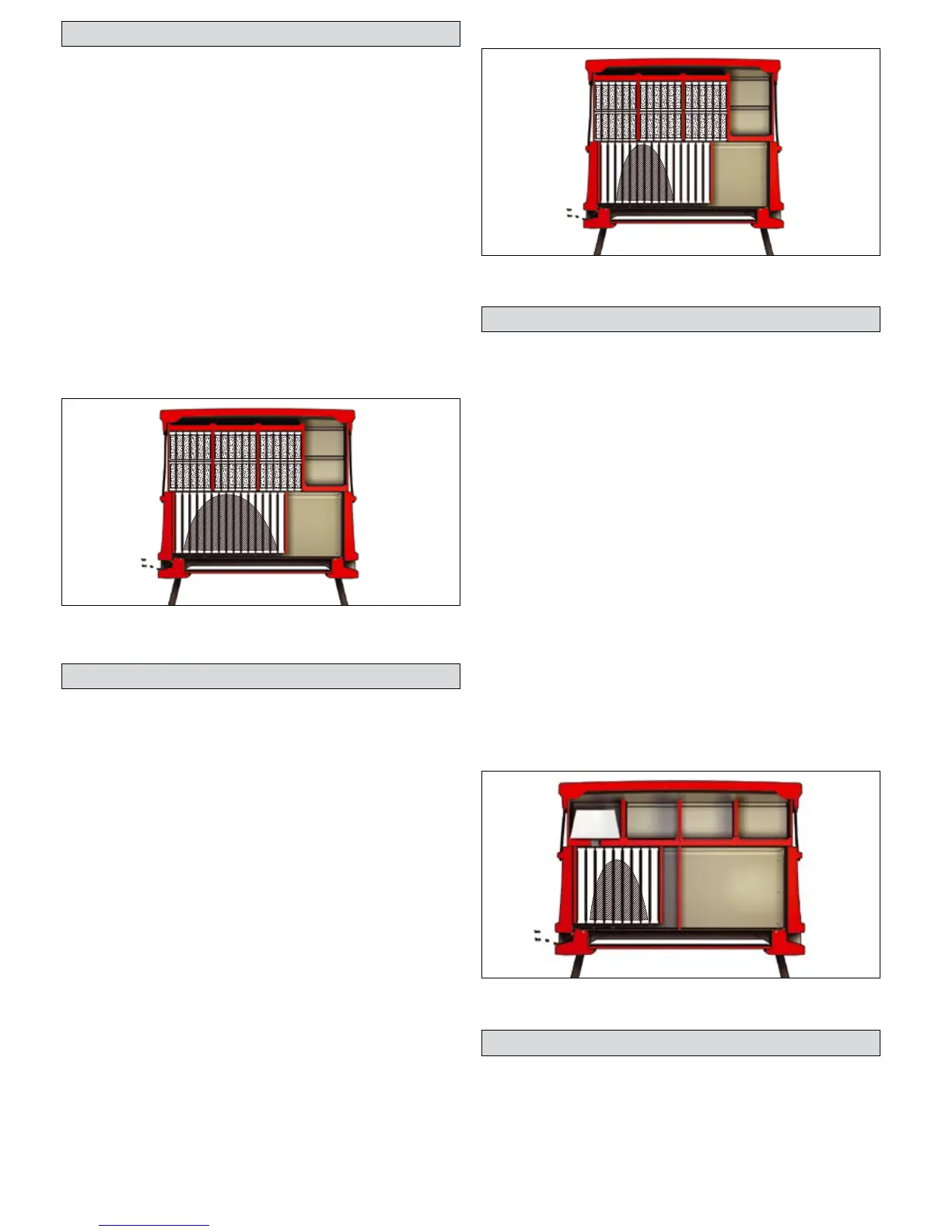
What will the Beehaus look like inside?
If your supers are becoming full, add some more on top. The hive is at full
production capacity! Enjoy some honey.
What are the bees doing?
The population in the hive will have reached its peak and will now
reduce quickly. There will be far fewer bees flying because there is little
nectar available. The drones start to be evicted from the hive by the
workers who realise that they are no longer needed and will just be a
strain on resources over the winter. Keep an eye out for robbing by wasps
or other bees.
What should you be doing?
If there are a lot of wasps around restrict the entrance with the entrance
adapter to prevent robbing. There is very little risk now of swarming so
you can go on holiday!
Feed
Nothing to do if you are leaving the honey on until September. If you
are taking all the honey off, or more than would leave the bees with
enough for winter, you will need to start feeding the bees with sugar
syrup to replace the lost stores. See the feeding section on Page 36 for
more information.
Health
Monitor the natural mite drop by putting the inspection tray under the
beehaus for 5-7 days. If the drop is higher than 10 mites per day apply a
treatment such as Apiguard, Apilife VAR or Exomite Apis but only after all
the honey to be collected has been removed from the Beehaus! Refer to
the health section on Page 46 for more information.
What will the Beehaus look like inside?
Make sure your wasp guard is in place in August.
September
October
What are the bees doing?
The queen will be laying very few if any eggs but there will still be brood
on around 5 frames at the beginning of September. These are the bees
that will over-winter in the hive. The drones will all be removed by the
end of the month.
What should you be doing?
September is the traditional month for collecting honey! The bees need
at least 20-30kg of stores to see them through winter which is equivalent
to around 6 - 9 full brood frames. Use the clearer board under the supers
24 hrs before you remove them. You can also collect honey from any
surplus brood frames. You should leave the bees on 9 brood frames for
the winter.
Feed
If the bees have less than 20kg of stores in the brood frames then you
should feed them until they have 20kg of stores for the winter (approx
5 full brood frames). See the feeding section on Page 36 for more
information.
Health
If you didn’t already in August, monitor the natural mite drop by
putting the inspection tray under the beehaus for 5-7 days. If the drop is
higher than 10 mites per day apply a treatment such as Apiguard, Apilife
VAR or Exomite Apis but only after all the honey to be collected has been
removed from the Beehaus! Please refer to the health section on Page 46
for more information.
What will the Beehaus look like inside?
What are the bees doing?
The bees will be finishing preparations for winter and will not spend
much time outside the hive. They will be processing any feed given at the
end of September.
What should you be doing?
The colony winters on nine deep frames, positioned half-way down the
body - nine frames are enough to hold the bees plus 20kg of stores.
The outermost combs are insulated by the pair of dummy frames and if
Bees clustering on 9 frames with contact feeder in a super.
Open Closed
Open Closed
Open Closed



 To Next Page